 Ferndale Siding
 Composite Decking Built for Everson's Wet Side of Whatcom County
Everson sits inland from Ferndale but shares the same Whatcom County weather pattern that makes decking decisions harder than they look: long stretches of steady rain from fall through spring, humidity that lingers under tree cover and around the Nooksack lowlands, and a moss season that can run six months or more on anything that stays shaded and damp. A deck out here isn't just an outdoor room — it's a structure that spends most of the year wet, and the material and build quality decide whether that's a non-issue or a five-year headache.
We install composite decking for homeowners around Everson and the greater Ferndale area because it's the material that handles this climate honestly, without pretending wood-grain looks solve a moisture problem. This page covers what that actually means for a real project: material choice, substructure, drainage, and the parts of the job that separate a deck that lasts from one that doesn't.
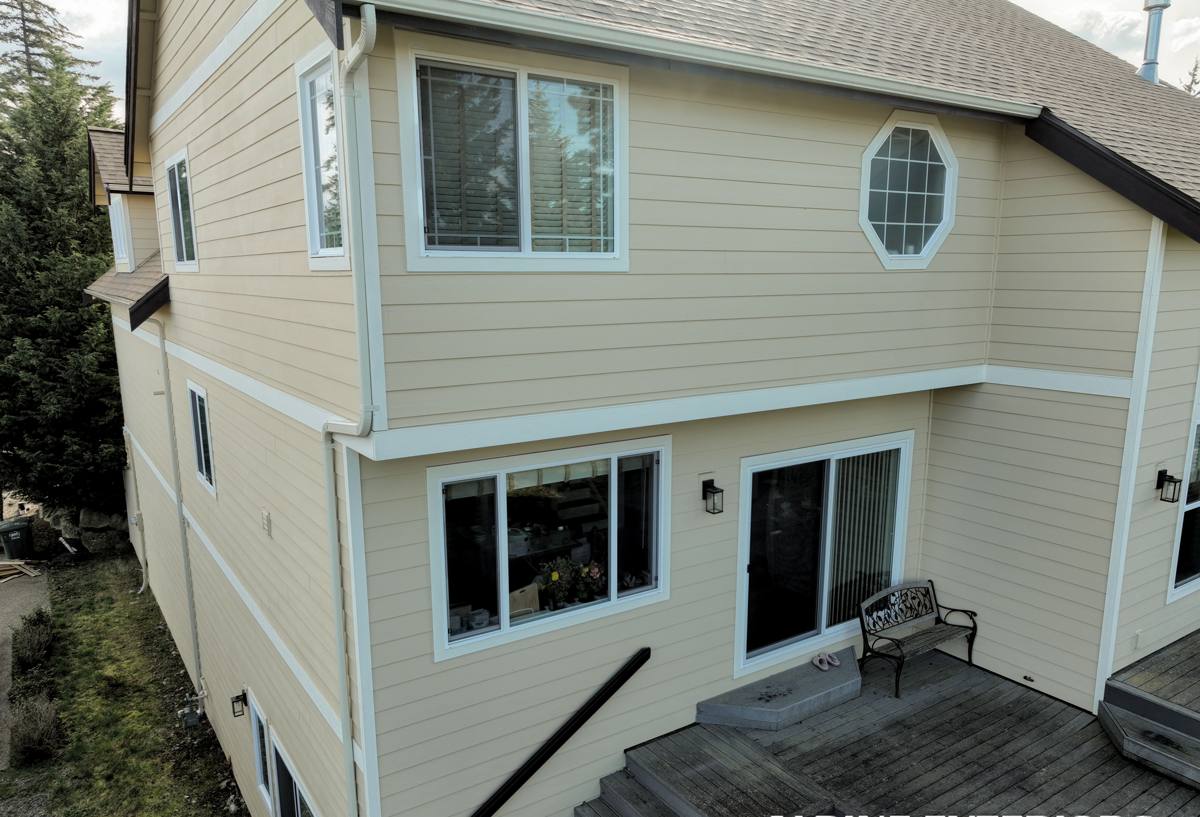
Why the Local Climate Changes the Decking Conversation
Salt-tinged marine air moves inland off Bellingham Bay and settles into the Nooksack valley, and combined with driving rain and short winter daylight, it creates conditions that are tough on fasteners, tough on finishes, and very good at growing moss and algae on any surface that doesn't drain and dry between storms. None of that is unique to Everson, but it's more pronounced here than in drier parts of the state, and it shows up fastest in decking because a deck is horizontal — it collects water and organic debris instead of shedding it the way a wall or roof does.
What This Means for a Deck Board
- Boards need consistent, engineered moisture resistance — not just a water-resistant coating that wears through
- Fastener and hardware corrosion resistance matters more here than in a dry inland climate
- Surface texture has to resist algae and moss growth, or it needs regular cleaning to stay safe underfoot
- Gaps, spacing, and airflow beneath the deck are not optional details — they're what lets the structure actually dry out between rain events
Composite vs. Wood: An Honest Comparison for This Climate
We install both wood and composite decking, and we tell homeowners the same thing either way: composite isn't "better" in every scenario, but for the wet, low-sun conditions common around Everson, it solves problems that wood decking here runs into year after year.
| Factor | Composite Decking | Wood Decking (cedar/pressure-treated) |
|---|---|---|
| Moisture absorption | Low — engineered to resist swelling and rot | Higher — absorbs and releases moisture seasonally, which drives cupping and splitting |
| Moss/algae resistance | Better on capped boards; textured surfaces still need periodic cleaning | Prone to moss and algae in shaded, damp areas without regular treatment |
| Maintenance | Occasional washing; no staining or sealing required | Annual or biannual staining/sealing to hold up in this climate |
| Upfront cost | Higher material cost | Lower material cost, higher long-term maintenance cost |
| Fastener/hardware needs | Hidden fastener systems, corrosion-resistant hardware | Corrosion-resistant fasteners still required; more prone to nail pop as wood moves |
| Long-term appearance | Consistent color over time with a quality capped board | Grays and weathers unless maintained on schedule |
The honest trade-off is maintenance time versus upfront cost. Composite asks less of the homeowner year to year, which is a big part of why it's become the default request we get from Everson-area homeowners who've already gone through a cycle or two of re-staining a wood deck.
What a Correct Composite Deck Build Actually Involves
The board itself gets most of the attention, but the parts of the job that determine whether a composite deck performs in this climate are mostly underneath it.
Substructure and Framing
We frame with lumber rated for ground contact and wet exposure, and we pay close attention to joist spacing — composite boards have manufacturer-specified span limits that are stricter in some cases than dimensional lumber, and shortcutting joist spacing is one of the most common causes of a bouncy or sagging composite deck down the road.
Joist Protection
Untreated or under-protected joists are one of the most common failure points we see on older decks in this region, composite or wood. A joist tape or flashing barrier on top of each joist keeps water from pooling against the framing lumber under the decking, which matters even more here given how many months out of the year the structure stays damp.
Ledger Attachment and Flashing
Where the deck ties into the house, proper flashing keeps water from working its way behind the ledger board and into the home's wall assembly. This is a detail that's invisible once the deck is finished but is one of the most common sources of hidden rot and water damage in older deck-to-house connections.
Drainage and Airflow Beneath the Deck
Low-clearance decks in wet climates need real thought given to airflow underneath — enough clearance and, where grading requires it, a plan for water to move away from the foundation rather than pool under the structure. This is especially relevant on Everson lots with less slope or heavier clay soil, where water doesn't drain away on its own.
Fastening System
We use hidden fastener systems or corrosion-resistant screws designed for composite board expansion and contraction. Composite moves with temperature more than most homeowners expect, and the fastening system has to accommodate that movement without loosening or telegraphing through the board surface.
Board Selection: What We Look At Beyond Color
Composite decking has come a long way from the earlier generation of boards that had real reputations for moisture absorption and mold at the core. Modern capped composite boards wrap the core in a protective shell, which is the feature that actually matters for a climate like this one — it's the difference between a board that resists moisture at the surface only and one that's protected on all sides.
- Capped vs. uncapped core: fully capped boards handle standing moisture and splash-back near grade far better than uncapped composite
- Surface texture: a texture with some grain or grip reduces slip risk during the wet months, which is most of the year here
- Color considerations: darker boards absorb more heat in summer sun exposure but can also make moss and water spotting less visually obvious; lighter boards show organic staining more readily and may need more frequent washing
- Warranty structure: understand what's covered — fading, staining, and structural integrity are often warrantied separately, and the fine print matters more in wet climates where staining claims are common
We talk through these trade-offs with every Everson homeowner before ordering material, because the "right" board depends on how much sun the deck gets, how it's oriented, and how much upkeep the homeowner actually wants to do.
Our Process for an Everson Composite Deck Project
- On-site assessment: we look at grade, drainage, sun exposure, existing structure (if replacing a deck), and the house's ledger connection
- Design and material selection: board brand, color, and railing/fascia options based on the home and the homeowner's maintenance preferences
- Permitting: deck projects in Whatcom County typically require a permit depending on size and height — we handle that process rather than leaving it to the homeowner
- Demo (if applicable): removal of the old deck, with an honest look at the framing underneath before we build back on top of it
- Framing and joist protection: built to span and load requirements for the specific composite board being installed
- Decking installation: board layout, hidden fastening, and edge/fascia detailing
- Final walkthrough: we go over care and cleaning expectations specific to this climate before we consider the job done
Common Issues We Find on Older Decks Around Everson
- Joists with no protective barrier, showing early rot at fastener points
- Ledger boards without proper flashing, leading to hidden water intrusion at the house connection
- Insufficient clearance or grading beneath the deck, trapping moisture against the structure
- Under-spanned joists causing bounce or sag under composite boards not rated for that spacing
- Heavy moss buildup on shaded sections due to poor airflow and infrequent cleaning
Maintenance: What Composite Actually Requires Here
Composite decking is lower-maintenance than wood, not maintenance-free — that distinction matters in a climate that stays damp as long as this one does. A seasonal wash with a deck brush and mild soap (or a gentle pressure wash setting, kept well back from the surface) clears organic buildup before it has a chance to stain or get slick. Homeowners with heavily shaded decks, which is common on wooded Everson lots, should expect to clean more often than someone with full sun exposure. Gutters and downspouts near the deck should be checked periodically too — misdirected roof runoff onto a deck surface accelerates staining and moss growth regardless of what the deck is built from.
Why Hire a Crew That Already Works This Area
A lot of decking problems in this part of Whatcom County trace back to a build that didn't account for how wet the site actually gets over a full year, not just during the install. We work throughout the Ferndale area, including Everson, and we've seen firsthand which details — joist protection, ledger flashing, drainage planning — actually matter here versus what gets skipped by crews building to a generic spec sheet. That local pattern recognition is worth more than it sounds like on paper; it's the difference between a deck that needs real repair in year five and one that's still solid at year fifteen.
If you're planning a new composite deck or replacing an aging one in Everson, we're happy to walk the site, look at drainage and sun exposure, and put together a straightforward estimate — no pressure, no hard sell. Use the form below to request a free estimate and we'll get back to you to schedule a time.