 Ferndale Siding
 Board & Batten Siding for Nooksack Homes
Board and batten is one of the most requested siding styles we install in the Ferndale area, and Nooksack homeowners ask for it for the same reasons people have used it on Pacific Northwest farmhouses and barns for over a century: the vertical lines read clean and tall, it suits both older homes and newer builds, and it holds up visually in a way that flat lap siding sometimes doesn't on taller gable walls or accent sections. But there's a gap between board and batten that looks good in a photo and board and batten that's actually built to survive a Whatcom County winter. That gap is almost entirely about material choice and installation detail, not design.
This page is specifically about installing board and batten siding on homes in and around Nooksack — what the local climate does to this style of siding over time, what a correct installation actually requires, and why we only do it in one material.
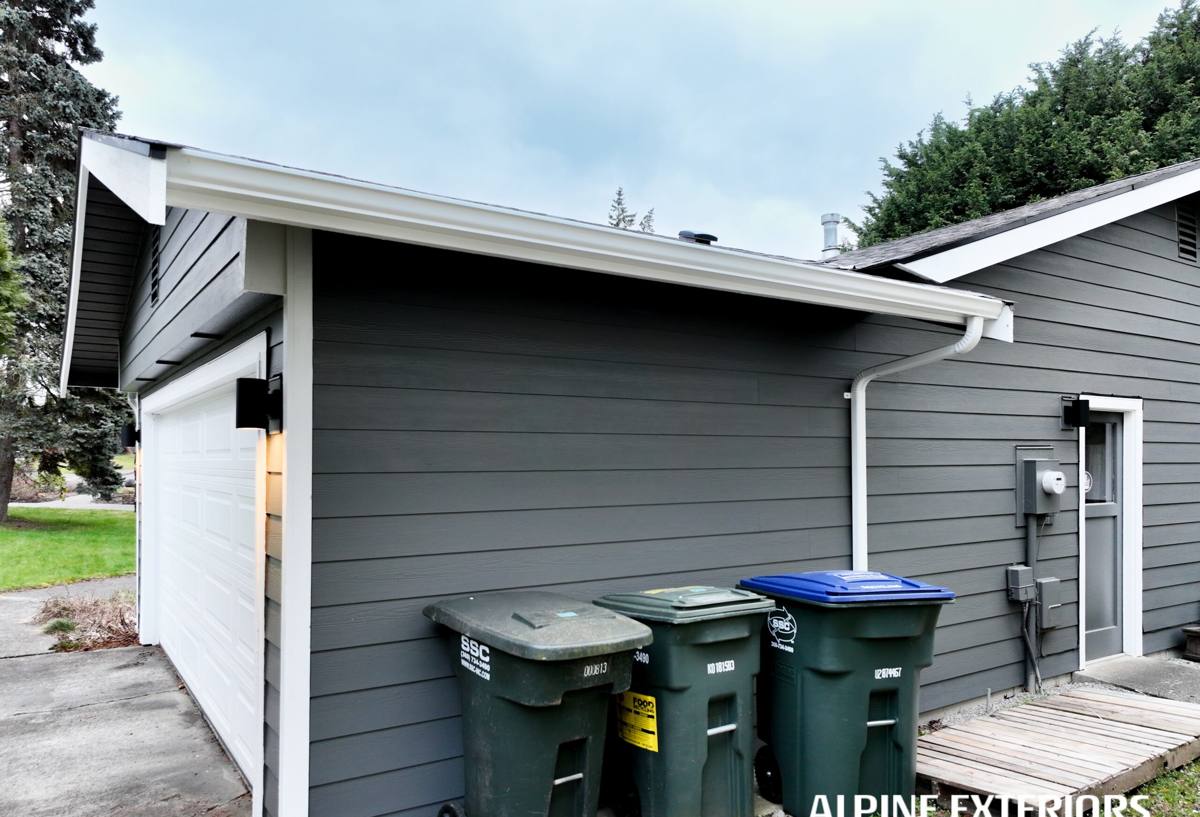
What This Climate Does to Board & Batten Siding
Nooksack sits inland from Bellingham Bay, but it's still squarely inside the marine-influenced weather pattern that defines Whatcom County: long wet seasons, wind-driven rain that hits siding at an angle instead of just running straight down, and enough shade and moisture on north- and east-facing walls to keep moss and algae established for most of the year. Board and batten siding is more exposed to this than most people realize, for one simple reason — it's a vertical assembly with a lot of seams.
Every batten strip covers a joint between two boards or panels. Every one of those joints is a place where water can get behind the cladding if the install wasn't done with the right gap, flashing, and fastening pattern. On a lap-sided wall, water sheds down and off. On a board and batten wall, water can run down a batten, catch at a horizontal joint, or wick sideways into end grain if the boards weren't sealed correctly at the factory or the cut edges weren't treated on site. None of this is unique to Nooksack, but the combination of driving rain and a long damp season here means mistakes show up faster and moss gets a foothold sooner than in drier climates.
Why Moss and Algae Matter More Than People Think
Moss on siding isn't just cosmetic. On a material that can absorb moisture, a moss mat holds water against the surface far longer than open air would, which accelerates rot, paint failure, and swelling at the very joints board and batten depends on. A siding material that doesn't absorb water the way wood-based products do removes a large part of that risk from the start.
Why We Only Install This Style in James Hardie Fiber Cement
We don't offer board and batten in vinyl, LP SmartSide, primed wood, or cedar. That's not a marketing position — it's a decision based on what this specific siding style needs to hold up in this specific climate.
- Vinyl board and batten is lightweight and can look convincing from the street, but it's a thin material that expands and contracts more than fiber cement, and the vertical panel style depends heavily on tight, correct installation to avoid buckling or gapping as temperatures swing.
- Wood-based panel products (LP SmartSide and similar engineered wood) use a strand-based core that is more moisture-resistant than raw plywood, but it is still an engineered wood product, and any wood-based siding has a moisture ceiling. In a climate with this much sustained dampness, cut edges, fastener penetrations, and joint seams are the places that need the most diligence over the life of the siding.
- Cedar and primed spruce board and batten can look excellent when new, but real wood siding in this climate needs an ongoing maintenance schedule — refinishing, caulking, moss treatment — that most homeowners underestimate when they choose it.
James Hardie fiber cement doesn't solve every problem automatically — installation quality still matters enormously, which we get into below — but the base material is non-combustible, doesn't swell or rot the way wood-based products can, and holds a factory-applied ColorPlus finish that isn't relying on field-applied paint to keep water out of the substrate. For a style of siding that lives or dies on how well its seams are managed, starting with a material that isn't absorbing water at those seams is the foundation everything else is built on.
What a Correct Board & Batten Installation Actually Involves
Board and batten looks simple from the outside — vertical boards, strips over the seams — which is exactly why it gets installed poorly so often. The visible part is the easy part. What separates a board and batten wall that lasts decades from one that needs rework in five to eight years is almost entirely hidden once the job is done.
The Rainscreen Gap
Behind the panels, there needs to be a drainage gap between the siding and the weather-resistant barrier so that any moisture that does get past the cladding has somewhere to go and can dry out, instead of sitting trapped against the sheathing. On a wall style with as many vertical seams as board and batten, this drainage gap is one of the details most likely to get skipped by a crew trying to move fast, and it's one of the hardest things to check once the wall is closed up.
Fastening and Panel Joints
James Hardie publishes specific fastening patterns, gap tolerances between panels, and clearances above rooflines, decks, and grade for a reason — the whole system is engineered to move slightly with temperature and moisture without opening up the joints the battens are supposed to protect. Getting the gap wrong, over-driving fasteners, or fastening through the wrong layer are common shortcuts that don't show up as a problem on install day, only later.
Trim, Flashing, and Sealing
Every window, door, corner, and roofline intersection on a board and batten wall needs proper flashing and Z-flashing above horizontal trim so water is directed out and away rather than behind the cladding. Cut ends and factory edges need to be sealed per manufacturer spec before the boards go up, not caulked over afterward as an afterthought.
Board & Batten Material Comparison
| Material | Moisture behavior | Maintenance | Typical lifespan |
|---|---|---|---|
| James Hardie fiber cement | Does not absorb/swell like wood-based products; factory finish sheds water at the surface | Occasional wash; no repainting needed with ColorPlus | Multiple decades with correct install |
| Vinyl board and batten | Sheds water on the surface but relies heavily on tight seams; can warp under heat/cold cycling | Low, but panels can crack or fade over time | Moderate, highly install-dependent |
| LP SmartSide / engineered wood | Improved over raw wood but still a wood-based core with a moisture ceiling | Periodic inspection of edges, seams, and caulk lines | Solid if maintained, shorter if neglected |
| Cedar / primed spruce | Absorbs and releases moisture readily; most exposed to swelling and rot | Highest — refinishing, caulking, moss control on a recurring schedule | Shortest without diligent upkeep |
Our Process for a Nooksack Board & Batten Project
- On-site assessment — we look at existing siding condition, wall orientation (which walls take the most driving rain and moss growth), and any trim or window flashing that needs attention.
- Tear-off and inspection of sheathing — this is where hidden moisture damage from a prior installation often gets found, and it needs to be dealt with before new siding goes up, not covered over.
- Weather-resistant barrier and rainscreen — installed or verified before any cladding goes on the wall.
- Hardie panel and batten installation — installed to manufacturer fastening and gapping specifications, with proper flashing at every penetration and horizontal trim line.
- Sealing and detail work — cut edges, corners, and joints finished per spec.
- Final walkthrough — we review the completed work with the homeowner before calling the job done.
Why a Crew That Already Works in Nooksack Matters
Board and batten installation quality depends on details that are easy to skip and hard to inspect after the fact, which makes contractor selection the single biggest factor in how the siding performs. A crew that already works homes in and around Ferndale and Nooksack has a practical advantage here: we already know which orientations in this area take the worst of the driving rain, which lots hold shade and moss longer into the season, and we're not learning Whatcom County weather patterns on your project. We're also local for warranty follow-up — if a question comes up two, five, or ten years after installation, we're not a crew that has moved on to a different region.
Maintenance: What to Expect After Installation
One of the practical advantages of James Hardie's factory-applied ColorPlus finish is that it removes repainting from your maintenance list, which matters in a climate where wood siding often needs refinishing on a recurring cycle. What board and batten owners in this area should still plan for:
- Rinsing off moss and algae buildup on shaded or north-facing walls before it accumulates thickly.
- A periodic visual check of caulk lines at trim, windows, and corners — caulk is a maintenance item on any siding system, including Hardie.
- Keeping gutters and downspouts clear so overflow isn't running down the face of the siding during heavy rain events.
- Trimming back vegetation that keeps a wall section shaded and damp longer than the rest of the house.
Signs Your Board & Batten Siding Needs Attention
- Soft or spongy boards, especially near the bottom of walls or below windows.
- Persistent moss or algae that returns quickly after cleaning.
- Visible gaps opening up at batten joints or paint that's cracking along seams.
- Staining or discoloration that tracks downward from a specific joint or trim piece.
- Siding that was installed without a visible drainage gap or with battens fastened directly through both layers into the sheathing.
If any of these sound familiar, it's worth having someone look at the wall before it becomes a sheathing repair rather than a siding repair.
If you're considering board and batten siding for a home in the Nooksack area, we're happy to take a look and walk you through what correct installation looks like for your specific walls and exposure. The estimate is free, there's no pressure, and you'll get a straight answer about what your home actually needs.