 Ferndale Siding
 Blaine's Climate and What It Does to Windows
Blaine sits at the far edge of Whatcom County, where marine air off the water meets driving rain and wind for most of the year. That combination is harder on windows than people expect. Salt-laden air corrodes exposed hardware and fasteners faster than it would further inland, wind-driven rain finds any gap in flashing or sealant, and the long gray stretch from fall through spring keeps moisture sitting against wood trim and sills longer than it should. Add in the moss and algae that thrive in Whatcom County's damp, shaded conditions, and you've got a climate that actively works against poorly installed or aging windows.
None of this means windows in Blaine need to be exotic or over-built. It means the installation details — flashing, sealant, drainage, and material selection — have to be right the first time, because a marginal install here fails years sooner than the same job would in a drier climate.
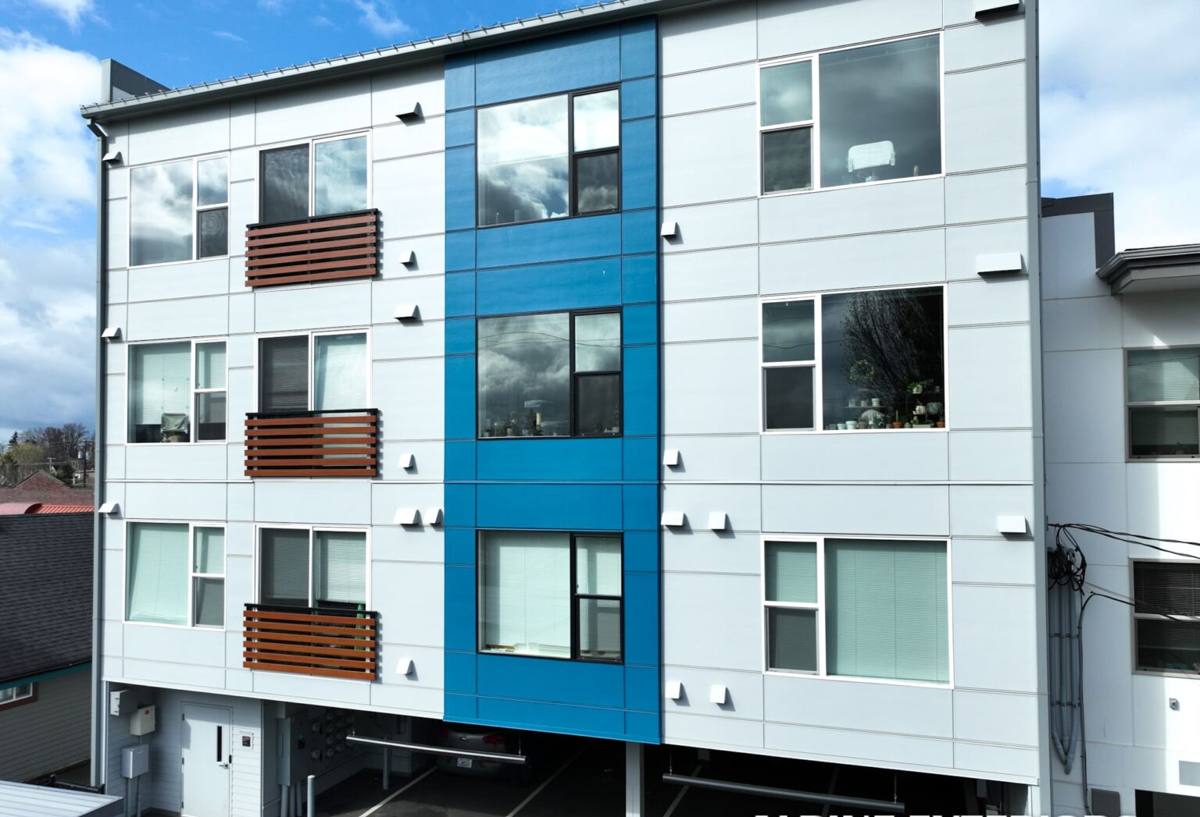
Signs It's Time to Replace Your Windows
Homeowners in Blaine usually notice a handful of specific problems before they call. If more than one of these sounds familiar, it's worth having someone take a look:
- Fogging or a hazy film between the panes of a double-pane window — the seal has failed and the gas fill is gone
- Wood sills or frames that feel soft, spongy, or show dark staining at the corners
- Noticeable drafts or cold spots near the window even when it's fully latched
- Hardware — locks, cranks, hinges — that's corroded, stiff, or won't latch tight anymore
- Visible daylight or gaps around the frame when viewed from outside
- Paint or finish that's bubbling, peeling, or discolored around the window opening
- Rising heating bills with no other clear explanation
- Moss or dark streaking building up on the sill or exterior trim faster than on the rest of the siding
Any one of these on its own might just need a repair. Several together, especially on a home that's original to its construction era, usually means the windows and the flashing behind them are past the point where patching makes sense.
What a Correct Window Replacement Job Actually Involves
Swapping a window sounds simple — pull the old one, set the new one, caulk the edges. That shortcut approach is exactly how leaks start. A correct replacement is really a water-management job with a window in the middle of it.
Flashing and Water Management
Every opening needs a drainage path that gets water out from behind the window, not just a bead of caulk trying to keep it from getting in. That means sill pan flashing at the bottom of the opening, properly lapped house wrap or building paper around the sides and top, and flashing tape integrated so water sheds down and out rather than pooling against the framing. In a climate that gets driving rain off the water for months at a stretch, skipping or shortcutting this step is the single most common reason a window leaks within a few years of installation.
Air Sealing and Insulation
The gap between the window frame and the rough opening needs to be sealed and insulated correctly — not stuffed tight with fiberglass, which compresses over time and loses its insulating value, and not left with voids that let air and moisture through. A low-expansion foam or backer rod and sealant combination, sized to the actual gap, keeps the window performing the way it's rated to and keeps condensation from forming inside the wall cavity.
Interior and exterior trim work, proper caulking at the trim-to-siding joint, and a final check that the window operates smoothly and locks tight finish the job. Skipping any one of these steps is how a five-year-old window ends up with rot behind the trim that nobody sees until the drywall or siding comes off.
Choosing Window Materials for This Climate
Material choice matters more here than in a mild, dry climate, because whatever you install deals with salt air and sustained moisture exposure for its entire service life. Here's how the common frame materials compare for a Whatcom County coastal setting:
| Frame Material | Moisture/Salt Air Performance | Maintenance | Typical Lifespan |
|---|---|---|---|
| Vinyl | Does not rot or corrode; performs well near salt air | Low — occasional cleaning | 20-30+ years |
| Fiberglass | Excellent — dimensionally stable, resists moisture and corrosion | Low | 30-40+ years |
| Wood (unclad) | Poor without diligent upkeep — vulnerable to rot in sustained damp conditions | High — regular painting or sealing required | Varies widely with maintenance |
| Wood-clad (vinyl or aluminum exterior) | Good — exterior shell protects the wood core as long as the cladding stays intact | Moderate | 20-30 years |
| Aluminum | Prone to corrosion in salt air unless marine-grade and well-finished | Moderate | Varies |
For most Blaine homes, we steer people toward vinyl or fiberglass frames for a simple reason: they don't give moisture and salt air anything to work on. That's not a knock on wood-clad windows — they have a real place, especially where a homeowner wants a specific interior wood look — but they come with a maintenance commitment that a lot of people don't want to keep up with this close to the water. We'll walk through the honest trade-offs for your specific home rather than push one option across the board.
Full-Frame Replacement vs. Insert Replacement
There are two basic approaches to replacing a window, and which one is right depends on the condition of what's already there.
| Factor | Insert (Pocket) Replacement | Full-Frame Replacement |
|---|---|---|
| What it involves | New window installed into the existing frame | Old frame removed down to the rough opening; new flashing and frame installed |
| Best for | Sound existing frames with no rot or water damage | Frames with rot, water damage, or where the opening size is changing |
| Access to flashing behind the frame | Limited or none | Full access — flashing and sill pan can be corrected or upgraded |
| Disruption | Lower — faster, less exterior work | Higher — more labor, exterior trim and siding disturbed |
| Relative cost | Lower | Higher |
An insert replacement is a legitimate, cost-effective option when the existing frame is genuinely sound. But we won't recommend it just because it's cheaper if the frame shows signs of past water intrusion — in that case, an insert just seals a problem behind a new window instead of fixing it. On a home that's taken driving rain for years, we check the condition of the framing before recommending which approach makes sense.
How Window Replacement Ties Into Your Siding
Because we're a siding contractor first, we look at more than the window opening itself. The trim, flashing, and siding around a window are all part of the same water-management system — if the siding-to-trim transition isn't sealed correctly, water can still find its way in even with a brand-new window installed perfectly. On older Blaine homes, it's common to find that the original siding was never properly integrated with the window trim to begin with, which is often what caused the surrounding rot in the first place.
Handling both the window and the surrounding siding and trim as one job — rather than treating them as separate trades — means the flashing, house wrap, and siding overlap correctly the first time. It also means one crew is accountable for the whole assembly instead of two contractors pointing fingers at each other if a leak shows up later.
Our Process, Start to Finish
The process is straightforward, and we keep it that way on purpose:
- A free on-site estimate where we look at each window's condition, check for existing water damage, and talk through material and style options
- A written proposal with clear pricing — no surprise add-ons once work starts
- Scheduling that accounts for weather — we don't open up exterior walls or remove windows ahead of a stretch of driving rain
- Removal, correct flashing and sealing, window installation, and insulation of the rough opening
- Interior and exterior trim finish work
- A final walkthrough to check operation, locks, and seals before we consider the job done
We protect the interior and landscaping during the work and clean up debris and old materials each day, not just at the end of the job.
Why a Crew That Already Works Blaine Matters
Window replacement done right depends on understanding what the local weather actually does to the finished product, not just what's on a spec sheet. A crew that regularly works in Blaine and along the surrounding Whatcom County coastline already knows which walls and corners take the worst of the driving rain, how much margin to build into flashing details for wind-driven water, and which materials hold up against salt air instead of just looking good on installation day. That kind of judgment comes from doing the work in this specific climate repeatedly, not from a general install checklist.
It also means warranty and follow-up service isn't a phone call to somewhere out of the area. If a question comes up two years after installation, you're dealing with the same local crew that did the work.
Energy Efficiency and Long-Term Value
Old, leaky windows cost money twice — once in comfort and once in heating bills. Whatcom County's long cool, damp season means a home's heating system runs for a good chunk of the year, and single-pane or failed-seal double-pane windows let a meaningful amount of that heat straight back outside. Modern double- or triple-pane windows with a properly sealed and flashed installation cut drafts, reduce condensation on the interior glass, and take pressure off the heating system. The efficiency gain from new glass and gas fill matters, but it only pays off if the installation around it is airtight and watertight — an efficient window installed poorly will still leak air and, eventually, water.
If your windows in Blaine are drafty, fogged, or showing wear from the salt air and rain, we're happy to take a look and give you a straightforward, no-pressure estimate — just fill out the form below.