 Ferndale Siding
 Why Blaine's Coastal Exposure Changes the Siding Equation
Blaine sits at the northern edge of Whatcom County, right on the water, and homes there catch a weather pattern that's a step harsher than what you'll find a few miles inland around Ferndale. Salt-laden air moves in off the bay almost constantly, driving rain comes in sideways during winter storms, and long stretches of gray, damp weather keep shaded walls wet for days at a stretch. None of that is unusual for this part of the Pacific Northwest, but it does mean the siding on a Blaine home is working harder, and failing faster when it's the wrong product or a sloppy install, than siding on a home in a drier, more sheltered spot.
We're based out of Ferndale and cover this corner of Whatcom County regularly, which means we see the same failure patterns repeat on wall after wall: fastener corrosion near the water, caulk joints that gave up years early, and moss creeping across north-facing siding that never got a chance to dry out. Fiber cement done right handles all of it. Fiber cement done wrong just fails more slowly than the alternatives.
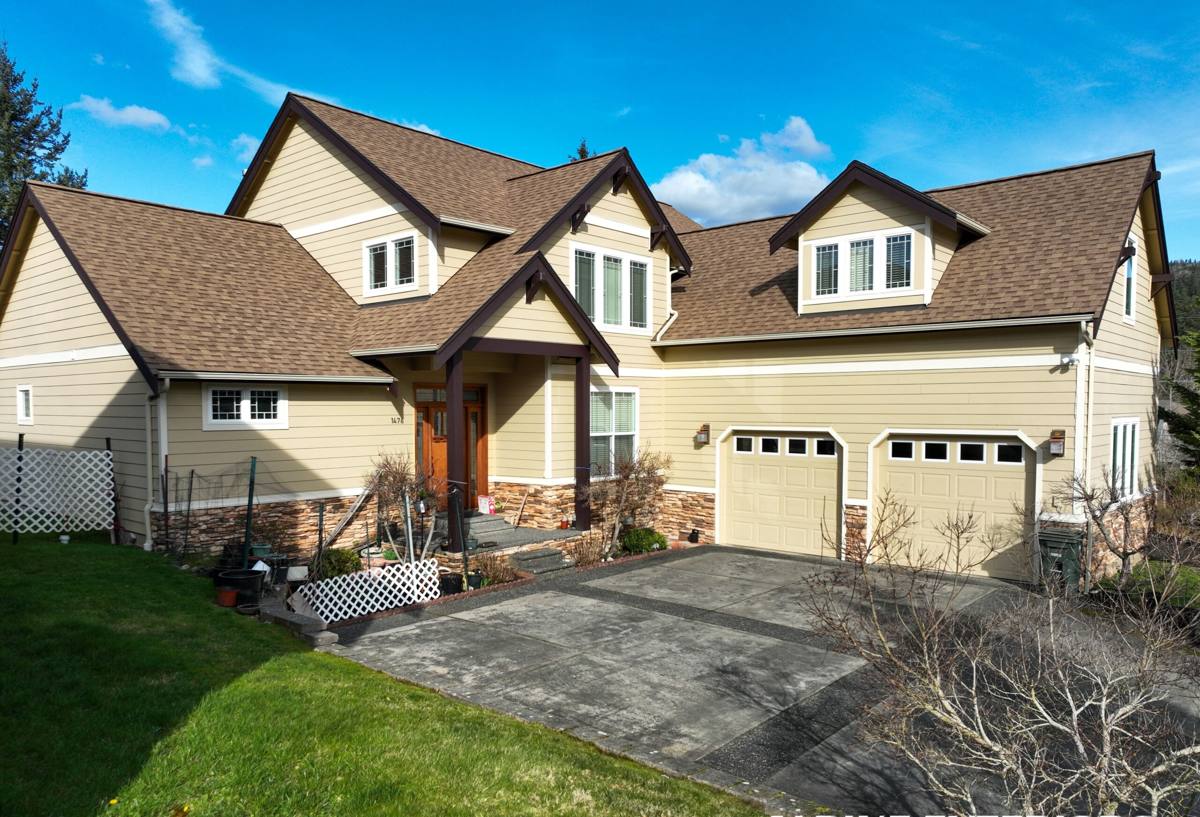
What Salt Air Actually Does to Exterior Siding
Salt in the air isn't just a corrosion issue for cars and boat hardware — it settles on exterior walls as a fine film, and every time it gets wet and dries again, it re-concentrates. Over years, that cycle attacks anything metal on the wall and anything with a field-applied finish.
Fasteners and Trim
Standard fasteners and unprotected trim pieces are the first thing to show it. You'll see rust streaks bleeding down from nail heads or trim edges, usually starting within a few years on homes closer to the water. Once a fastener starts corroding, it loses holding strength and can eventually let a siding board work loose.
Paint and Factory Finishes
Salt also breaks down finish coatings faster than inland UV exposure alone would. A field-painted surface — meaning siding painted on-site rather than finished at the factory — chalks, fades, and loses adhesion sooner near the coast, which shortens the repaint cycle and opens the door for moisture to reach the substrate underneath.
Driving Rain and Why Installation Details Matter More Than the Brand Name
Wind-driven rain in this part of the county doesn't just fall straight down — storms push it sideways and even upward under laps and around penetrations. That's a very different load than a calm, straight-down rain, and it's why installation detailing matters as much as the siding material itself.
Where Shortcuts Show Up
The failures we see most often trace back to a handful of installation shortcuts, not the siding itself:
- No rain screen gap behind the siding, so any water that does get past the face has nowhere to drain or dry
- Caulk used in place of proper flashing at windows, doors, and trim transitions
- Butt joints and corners that weren't properly flashed or back-primed
- Siding installed too close to grade, decks, or hardscape, with no clearance to shed water away from the bottom course
- Fasteners driven at the wrong depth or spacing, stressing the board and opening hairline gaps
Any one of these can turn a good product into a problem wall within a handful of winters, and wind-driven rain off the bay will find every one of them eventually.
Long Moss Season and Shaded, North-Facing Walls
Whatcom County's moss season runs long — mild, wet winters and short summers mean north-facing and tree-shaded walls can stay damp for much of the year. Moss and algae don't need much: a shaded surface, moisture, and time. Fiber cement itself doesn't feed mold or rot the way wood-based sidings can, but a poorly ventilated wall assembly still lets moss take hold on the surface and lets trapped moisture cause problems behind it.
The fix isn't a different material so much as a correctly built wall assembly — a drainage gap that lets air move and water drain, proper overlaps that shed water downward and outward, and attention to the specific elevations on a property that stay shaded longest. On a lot of Blaine properties that's the north or east wall, especially where mature trees or a neighboring structure block afternoon sun.
Why We Install Only James Hardie Fiber Cement
We don't install LP SmartSide, vinyl, Cemplank, Allura, or primed wood siding, and in a climate like Blaine's, that's a deliberate call, not brand loyalty. James Hardie fiber cement is non-combustible, doesn't expand and contract with moisture the way wood-based products can, and — critically for this coastline — comes with a factory-applied ColorPlus finish baked on under controlled conditions rather than painted on-site after installation. That factory finish holds up to salt exposure and UV significantly longer than field-applied paint, and it carries its own finish warranty separate from the substrate.
Hardie also builds its HZ5 product line specifically for wetter, harsher climate zones like ours, engineered to resist moisture intrusion and hold dimensional stability through the kind of soak-dry cycling that's routine here. Combined with a real transferable warranty on the product itself, it's the one system we're comfortable standing behind on a wall that's going to face salt air and driving rain for decades.
What a Correct Fiber Cement Installation Looks Like
The material is only half the equation. The other half is whether it was installed to the manufacturer's spec for this climate. Here's what separates a correct install from a shortcut one:
| Detail | Correct Practice | Common Shortcut |
|---|---|---|
| Drainage plane | Rain screen gap behind siding for drying and drainage | Siding fastened flat against house wrap with no gap |
| Fasteners | Corrosion-resistant fasteners at manufacturer-specified depth and spacing | Standard fasteners, over- or under-driven |
| Flashing | Metal or self-adhered flashing at every window, door, and penetration | Caulk alone used to "seal" transitions |
| Joints and corners | Factory-mitered or properly flashed field joints, back-primed cuts | Butt joints caulked without back-priming |
| Ground clearance | Minimum clearance maintained from grade, decks, and hardscape | Bottom course installed tight to grade or pavement |
None of these details are visible once the job is finished, which is exactly why they matter — a wall can look identical from the curb whether it was done right or not, and the difference only shows up years later.
Our Process for a Blaine Job
We start with an on-site assessment of the specific walls — which elevations take the most wind-driven rain, which stay shaded and damp longest, and what condition the existing sheathing and trim are in underneath the current siding. Any rot or moisture damage found during tear-off gets addressed before a single new board goes up; siding over a compromised wall just hides the problem.
From there, installation follows Hardie's spec for this climate: rain screen gap, corrosion-resistant fasteners, flashed penetrations, back-primed cuts, and proper clearance at grade. We finish with a walk-through so you know exactly what was done and what to watch for going forward.
Why a Crew That Already Works Blaine Matters
A crew that's worked this specific stretch of coastline knows which walls need extra flashing attention before they even look, understands the permitting and inspection process in Whatcom County, and isn't guessing at how hard the wind-driven rain hits a west- or south-facing wall near the water versus a sheltered inland lot. That local pattern recognition is the difference between a siding job that's built for Blaine's climate and one that was built for a milder place and happens to be sitting here instead.
Ongoing Maintenance for Blaine Homeowners
Correct installation does most of the work, but a little seasonal attention extends the life of any siding job in this climate:
- Rinse salt film off exterior walls periodically, especially on sides facing the water
- Check caulk joints at trim and penetrations annually and touch up before winter storms
- Keep gutters and downspouts clear so water doesn't sheet down the wall face
- Trim back vegetation to keep air moving across shaded, moss-prone walls
- Watch north-facing and tree-shaded elevations for early moss growth and address it before it spreads
- Have flashing and joints inspected every few years, particularly after severe winter weather
If you're weighing siding options for a home in Blaine, we're happy to come take a look and talk through what your specific walls are up against. The estimate is free, there's no pressure, and you'll get a straight answer about what the job actually needs.