 Ferndale Siding
 Custom Windows for Homes in the Bellingham Area
Bellingham sits just south of Ferndale along the Whatcom County coastline, and homes there deal with a specific combination of weather that most window installers never have to think hard about: salt-laden air off Bellingham Bay, long stretches of driving rain, and a moss season that can run most of the year. None of that is dramatic on its own, but stacked together over a decade or two, it's exactly the kind of slow, steady exposure that finds every weak point in a window installation — a poorly bedded flashing, a gap in the sealant, a frame material that wasn't suited to salt exposure in the first place.
We're a Ferndale-based crew and Bellingham is part of our regular service area, not a stretch job we take once a year. That matters more with windows than with almost any other exterior product, because a window is really a system: the unit itself, the flashing and moisture barrier around it, and how it ties into the siding. Get any one piece wrong and the other two don't save you.
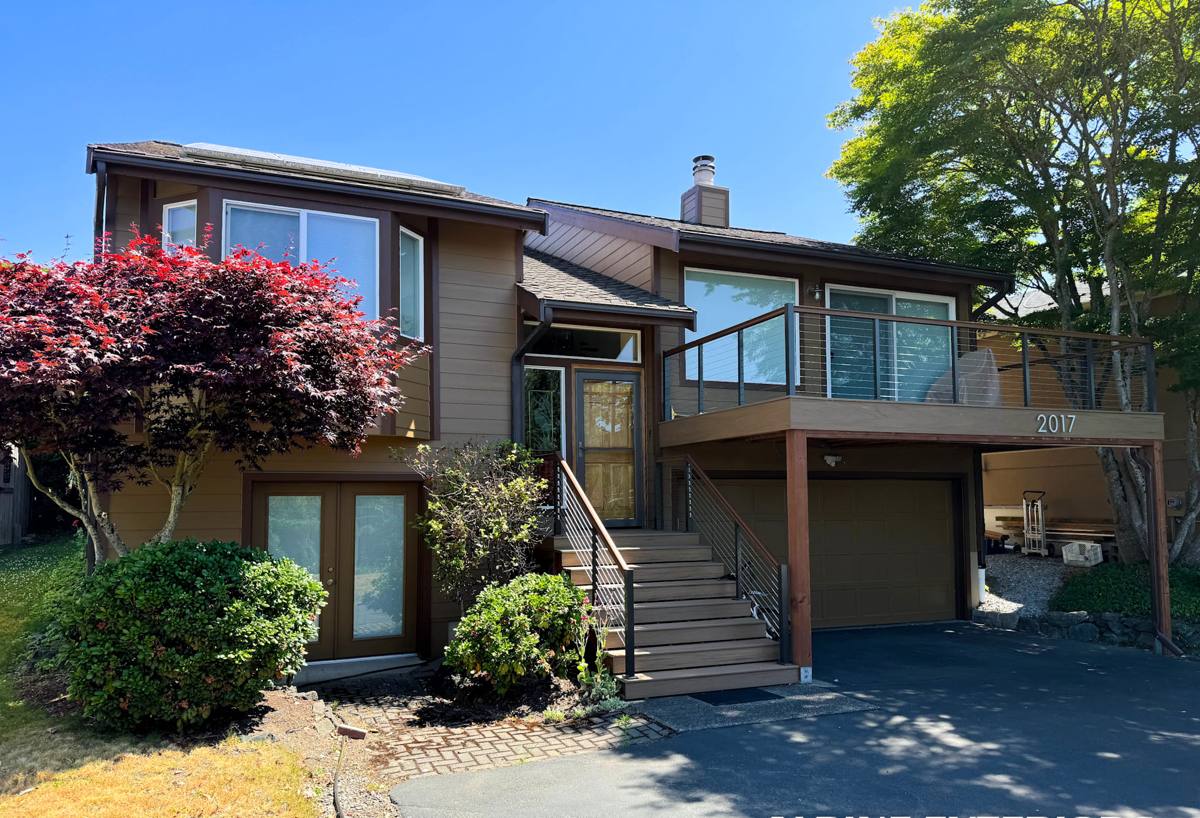
What "Custom" Means in Practice
Older homes rarely have standard openings
A lot of housing stock in and around Bellingham and Ferndale was built well before modern window sizing became standardized, and additions, remodels, and settling over the decades have a way of making "standard size" openings anything but. Custom windows aren't a luxury upsell here — they're often the only way to get a proper fit without tearing into framing you didn't plan to touch. That means accurate field measurements, not catalog assumptions, and a willingness to special-order rather than force a stock size into an opening it doesn't match.
Replacement windows vs. new-construction windows
There are two fundamentally different approaches, and the right one depends on the condition of your existing frame:
- Insert (replacement) windows fit inside the existing frame, leaving the exterior trim and siding largely undisturbed. Faster and less invasive, but only sound if the original frame is dry and structurally solid.
- Full-frame (new-construction) windows remove the old frame down to the rough opening, exposing the framing, sheathing, and flashing so we can address rot, add or correct a moisture barrier, and reset the water management from scratch.
We'll tell you honestly which situation you're in after opening things up a little — not guess from the street, and not default to the faster option because it's easier for us.
Frame Materials: What Actually Holds Up Near the Bay
Every frame material has trade-offs. In a coastal, high-moisture climate like Bellingham's, some of those trade-offs matter more than they would inland.
| Material | Salt air / moisture resistance | Maintenance | Typical cost tier |
|---|---|---|---|
| Vinyl | Good — won't corrode or rot; seams and welds are the weak point over time | Low; occasional cleaning | Lowest |
| Fiberglass | Very good — dimensionally stable, doesn't expand/contract as much with temperature swings | Low | Mid to high |
| Wood-clad | Depends entirely on the cladding and how well end grain and joints are sealed; exposed wood is vulnerable | Higher; needs inspection and occasional refinishing | High |
| Aluminum | Prone to condensation and thermal transfer unless thermally broken; can corrode in salt air over time | Moderate | Mid |
Our standard for this area is vinyl or fiberglass for most projects, and wood-clad only where the homeowner specifically wants the look and understands the upkeep. We won't talk anyone out of a product they've researched and want, but we will explain the maintenance commitment plainly before you commit to it — that's a matter of being upfront about long-term care, not a knock on the material itself.
What a Correct Installation Actually Involves
This is where most window problems start, and it's also where our background as a siding contractor matters — because the window opening isn't a separate system from the siding, it's a hole in it that has to be resealed against weather correctly.
- Sill pan flashing at the bottom of the opening, so any water that gets past the window has somewhere to drain instead of pooling against wood framing.
- Proper flashing sequencing — building paper or house wrap lapped correctly over the flashing, not under it, so water sheds down and out rather than behind the siding.
- Backer rod and quality sealant at the exterior trim joint, sized and applied correctly rather than just caulked over gaps.
- Shimming and squaring the unit in the opening so it operates smoothly and doesn't rack under its own weight over time.
- Low-expansion foam or mineral wool around the frame for insulation without bowing the frame out of square.
- Siding tie-in that restores the original weather barrier continuity, so the window installation doesn't create a new leak path where none existed before.
Any one of these steps skipped is usually invisible for a year or two, then shows up as staining, soft trim, or a musty smell near the window — often after the workmanship warranty has already expired.
Our Process for Bellingham-Area Projects
- On-site assessment — we look at the existing windows, the condition of the surrounding framing and siding, and talk through what you actually want out of the replacement (comfort, appearance, lower maintenance, or all three).
- Accurate measurement and material selection — field-measured openings, honest discussion of frame material trade-offs for your specific exposure (a window on the weather side of the house facing prevailing wind and rain gets treated differently than a sheltered one).
- Tear-out — done carefully enough to check what's behind the old window before we cover it back up.
- Install and flashing integration — window set, flashed, and tied into the siding's water management as one continuous system.
- Interior and exterior finish work — trim, insulation, and sealant finished to match the rest of the house.
- Walkthrough — we show you how the new windows operate and lock, and point out anything you should keep an eye on.
Signs Your Current Windows Are Losing to the Climate
These are the patterns we see most often on homes in this part of Whatcom County:
- Fogging or a hazy film between panes of a double-pane window — the seal has failed and the gas fill is gone.
- Soft or spongy wood at the sill or exterior trim, especially on north- or west-facing walls that catch the most driving rain.
- Dark streaking or moss growth just below the sill, which usually means water is running down the face of the window rather than shedding properly.
- Noticeable drafts or a cold spot near the frame even with the window fully latched.
- Windows that are hard to open, close, or lock — often a sign the frame has racked slightly out of square.
- Visible gaps or cracked caulking around the exterior trim.
Any one of these on its own isn't an emergency. Several at once, especially paired with visible rot, usually means the water management around that window has already failed and it's a matter of time before it affects the framing behind it.
What Affects the Cost
We don't quote sight-unseen, but these are the factors that move the price up or down on most Bellingham-area jobs:
| Factor | Why it matters |
|---|---|
| Insert vs. full-frame replacement | Full-frame costs more but is often necessary once there's underlying rot or an outdated flashing setup |
| Frame material | Vinyl is the most affordable; fiberglass and wood-clad cost more upfront but differ in longevity and upkeep |
| Custom vs. stock sizing | Non-standard openings require special-order units, which take longer to lead-time and cost more than off-the-shelf sizes |
| Number of openings | Per-unit cost typically drops somewhat as the total number of windows in a project goes up |
| Siding or trim repair needed | If rot is found once the old window comes out, repairing the surrounding siding adds to the scope |
| Access and height | Second-story or hard-to-reach openings take more time and equipment than ground-level windows |
We'll walk through which of these apply to your project before we give you a number, so the estimate reflects your house rather than a generic average.
Living with a Long Moss Season
Moss and algae don't damage window glass or vinyl frames directly, but they hold moisture against wood trim and sills, which shortens the life of anything not properly sealed. A short seasonal routine goes a long way here:
- Rinse sills and exterior trim during dry stretches to keep moss and organic buildup from taking hold.
- Check exterior caulking once a year, typically in early fall before the wet season sets in, and re-caulk any cracked or separated joints.
- Keep gutters and downspouts clear so water isn't sheeting down the wall face and pooling at window heads.
- Trim back vegetation that keeps foliage or branches in constant contact with window trim, since that keeps the wood wet longer than open air exposure would.
- Open weep holes on vinyl and fiberglass frames periodically — debris and pollen can clog them and trap water inside the frame track.
Why a Crew That Already Works Bellingham and Ferndale Matters
Window installation done wrong doesn't usually fail on day one — it fails two or three winters later, after driving rain has had enough seasons to find the gap. A crew that works this specific stretch of Whatcom County regularly has already seen which details matter most for this climate: how much clearance to leave for moisture, which sides of a house take the worst weather, and how to tie new window flashing into older siding systems without creating a new leak point. That's the kind of judgment that comes from doing the work here repeatedly, not from a general install checklist written for a drier climate.
If you're weighing custom windows for a home in Bellingham or anywhere else in the Ferndale area, we're happy to take a look and give you a straightforward, no-pressure estimate — what your situation actually calls for, what it will cost, and why. Use the form below to get started.