 Ferndale Siding
 Composite Decking Built for Sumas' Weather, Not Just Its Looks
Sumas sits close enough to Ferndale that homes here deal with the same weather pattern all winter and spring: long stretches of steady rain, humid air that never quite dries out, and a moss season that can run from October through May. A deck in this part of Whatcom County isn't just outdoor furniture — it's a structure that has to shed water, resist rot, and stay safe underfoot when it's wet more often than it's dry. Composite decking, installed correctly for this climate, handles that job better than most alternatives. This page covers what that actually looks like for a Sumas home, not a generic decking brochure.
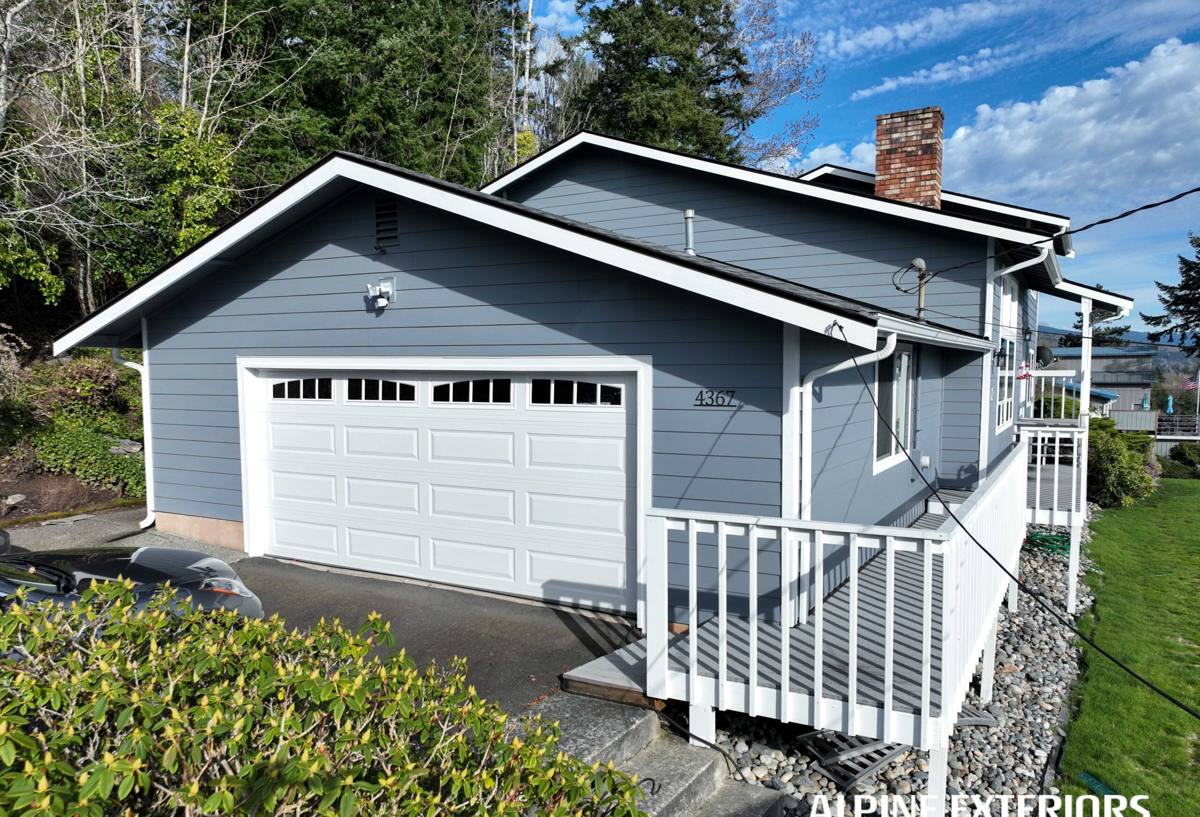
What This Climate Actually Does to a Deck
Before talking about materials, it helps to understand the specific stresses a Sumas deck is under. This isn't a dry-summer climate with a rain event now and then — it's sustained damp for months at a stretch, which changes what "durable" needs to mean.
Driving rain and standing moisture
Rain here rarely falls straight down. Wind-driven rain gets pushed under railings, into board gaps, and against ledger connections at the house. If a deck's substructure and flashing weren't detailed for that, water finds its way into places it shouldn't be — the ledger board, post bases, and joist ends — long before anyone notices a problem on the surface.
Moss and algae growth
Shaded decks, or decks under trees, stay damp long after the rain stops. That constant moisture is exactly what moss and algae need to take hold. Once established, they don't just look bad — a mossy deck surface gets slick and dangerous, and moss holds moisture against the board itself, which matters more for some materials than others.
Freeze-thaw cycling
Whatcom County winters aren't brutally cold, but they do dip below freezing regularly, often right after a wet stretch. Water that's soaked into a porous material and then freezes expands — that cycle, repeated over a season, is what splits and delaminates poorly sealed wood and cheaper composite over time.
Why Composite Makes Sense Here
We install composite decking on a lot of Sumas and Ferndale homes because it's genuinely a better match for this climate than traditional wood, not because it's trendier. The honest comparison looks like this:
| Factor | Composite Decking | Pressure-Treated Wood |
|---|---|---|
| Moisture absorption | Low — most boards use a capped shell that resists water uptake | Higher — wood absorbs and releases moisture with the weather |
| Moss/algae resistance | Better; smooth capped surface sheds spores more easily | Textured grain gives moss and algae more to grip |
| Splintering/cupping | Rare with quality capped boards | Common as wood ages and cycles wet-dry |
| Annual maintenance | Periodic wash-down | Sealing or staining every 1-3 years |
| Upfront cost | Higher material cost | Lower material cost |
| Long-term cost | Lower over 15-20 years with less upkeep | Adds up with repeated sealing, repairs, board replacement |
Wood isn't a bad material — it's a different maintenance commitment. Some homeowners are happy to sand, seal, and stain every couple of years. For a deck that sits under trees or gets shaded most of the day, though, we're honest that composite is the lower-hassle, longer-lived choice in this climate.
What a Correct Installation Actually Involves
Composite boards are only as good as what's underneath them. Most deck failures we get called out to repair aren't the decking material's fault — they're substructure or flashing mistakes that would have caused problems no matter what surface was on top.
Ledger and flashing details
Where the deck attaches to the house is the single most important connection on the whole structure. It needs proper flashing that directs water out and away from the house wall, not just a ledger board bolted flush against siding. Get this wrong and you're feeding water into the wall assembly every time it rains — which, here, is often.
Joist spacing and framing
Composite boards have manufacturer-specified joist spacing requirements, and they're usually tighter than what you'd use for solid wood decking, especially at angles or on stairs. Framing at the wrong spacing leads to bounce, sagging between joists, and voided warranties.
Ventilation underneath
A deck built low to the ground or over a patio with poor airflow underneath stays wet longer after every rain. Proper joist height, gapping, and drainage planning underneath the deck keep moisture from just sitting there, which matters as much for the framing lumber as for anything else.
Hidden fastening and board gapping
Correct gap spacing between boards lets water drain through instead of pooling on the surface, and hidden fastener systems avoid the exposed screw heads that can trap water and cause staining. Gaps that are too tight for our humidity levels can also cause boards to buckle when they expand.
Choosing Boards and Colors for a Sumas Property
Not every composite board is built the same, and the right choice depends on how much shade, tree cover, and moisture exposure a specific deck deals with.
Capped vs. uncapped composite
Fully capped boards have a protective shell wrapped around the core, which is what actually gives composite its moisture and stain resistance. Uncapped or partially capped boards cost less but absorb more moisture at the core over time — in a climate this wet, that difference shows up faster than it would somewhere drier.
Color and moss visibility
Lighter boards show dirt, pollen, and early moss growth sooner — sometimes that's useful, since you catch buildup before it gets established. Darker, streaked, or multi-tonal boards hide seasonal grime better between cleanings but can run warmer in direct summer sun. For decks with heavy tree cover, we usually steer homeowners toward mid-tone, textured boards that camouflage the inevitable organic buildup between cleanings without needing constant attention.
Railing and fastener material
Metal railing hardware and fasteners need to be corrosion-resistant hardware, not standard-grade — the humidity here accelerates rust on anything not rated for exterior, wet-climate use. It's a small line item that gets skipped on cut-rate jobs and causes staining and hardware failure a few years down the road.
How We Approach a Sumas Composite Deck Project
The process is straightforward, but each step is there for a reason specific to this area's building conditions:
- Site visit and assessment — we look at drainage, tree cover, sun exposure, and how the deck ties into the house before recommending anything.
- Substructure plan — framing layout, joist spacing, and ledger flashing detail get worked out before board selection, not after.
- Board and color selection — matched to the shade/sun conditions of that specific deck, not a one-size answer.
- Permitting — decks over a certain height or attached to the home typically need a permit; we handle that coordination.
- Build and inspection — framing, flashing, and fastening done to spec, with a final walkthrough before we consider the job finished.
Keeping a Composite Deck Looking Right Through the Wet Season
Composite cuts down maintenance dramatically compared to wood, but "low-maintenance" isn't "no-maintenance" — especially with a moss season this long. A simple seasonal routine keeps a deck looking new for years:
- Sweep off leaves, needles, and debris regularly — trapped organic matter is what feeds moss and algae growth
- Wash the surface with a mild soap and soft-bristle brush a couple of times a year, more often in shaded areas
- Avoid pressure washing directly into board seams or fastener points at high PSI, which can damage the capped surface
- Check that gaps between boards and around the perimeter stay clear so water keeps draining instead of pooling
- Rinse off any standing pollen or leaf tannin promptly — early cleaning prevents surface staining before it sets in
- Inspect railing hardware and fasteners annually for early rust or looseness
Why It Matters to Hire a Crew That Already Works This Area
Decking looks simple from the outside, but the details that actually determine whether a deck lasts 10 years or 25 are specific to the ground it's built on. A crew that regularly works Sumas and Ferndale properties already knows how local drainage patterns behave after a wet week, how much shade a typical lot gets from mature tree cover, and what flashing and substructure details hold up against this specific rain pattern year after year. That's different from a crew's general decking experience — it's familiarity with how Whatcom County weather actually behaves against a structure over time, not just on installation day.
We also know the practical side: permitting expectations, realistic weather windows for pouring footings or framing between rain systems, and what local moisture conditions mean for material choices before a board ever gets ordered. That local context is part of why the same install detail can hold up here and fail somewhere with a different climate.
If you're planning a new deck or replacing an aging one in Sumas or Ferndale, we're happy to walk the site, talk through board options for your specific sun and shade conditions, and put together a straightforward, no-pressure estimate. There's a form below to get that conversation started.