 Ferndale Siding
 Building New in Point Roberts Means Building for the Weather First
Point Roberts sits on its own peninsula at the southern tip of Whatcom County, surrounded on three sides by water and cut off from the rest of Washington by the Canadian border. That geography is part of what makes it a desirable place to build — and part of what makes window selection there different from a typical inland job. Homes here take a steady diet of salt-laden air off Boundary Bay and the Strait of Georgia, wind-driven rain that doesn't just fall but gets pushed sideways into wall assemblies, and a moss season that runs longer than most of Whatcom County because the site stays damp and shaded for so much of the year.
None of that is a reason to avoid building here. It is a reason to treat window selection and installation as more than a checklist item during framing. A window that's rated fine for a dry inland lot can still be the wrong choice for a house facing open water, and an installation detail that would pass unnoticed in a sheltered subdivision can turn into a moisture problem within a few winters on an exposed Point Roberts lot.
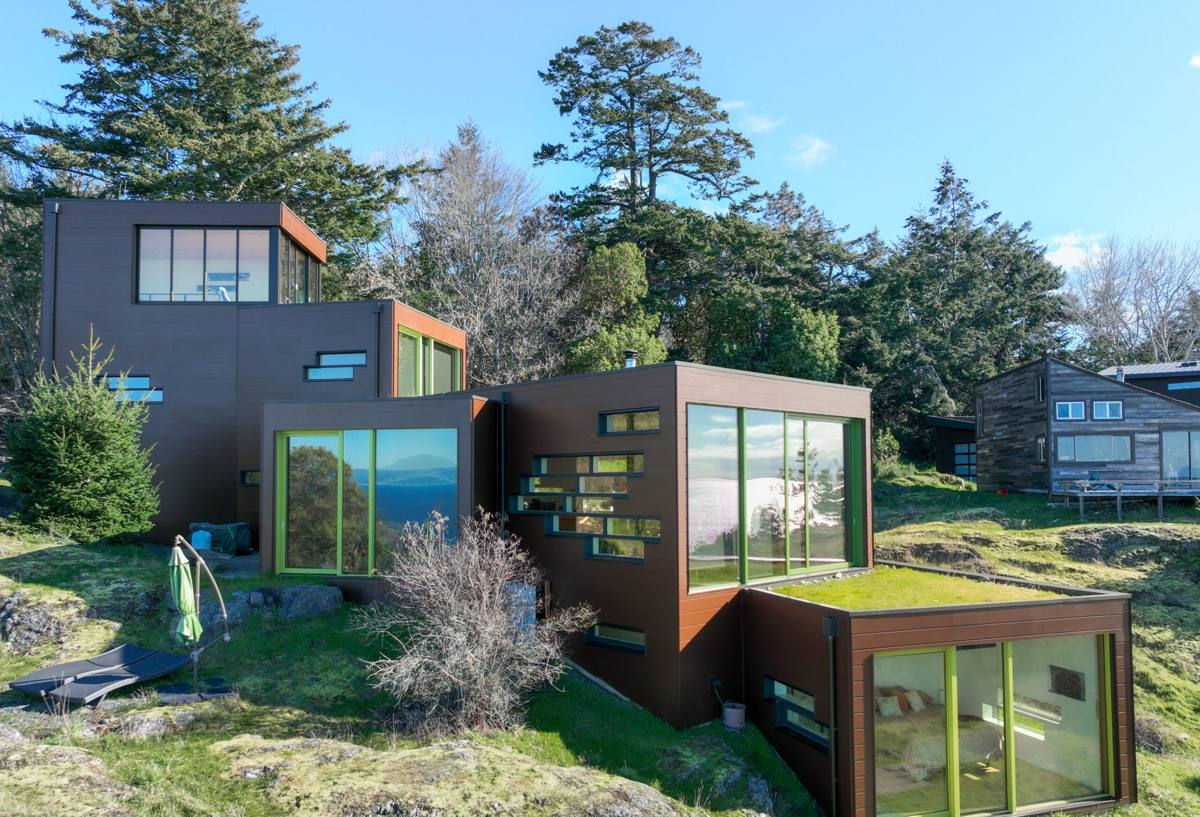
What Local Homes Actually Need From New-Construction Windows
On a new build, you're not retrofitting around an existing opening — you get to set the window up correctly from the studs out, which is the best chance you'll ever have to get it right. For Point Roberts specifically, that means paying real attention to a few things:
- Corrosion-resistant hardware and fasteners. Salt air accelerates corrosion on cheap cladding fasteners, hinges, and cranks. Stainless or coated hardware costs a little more up front and saves a callback in five years.
- Water management at the rough opening, not just the window itself. Driving rain finds gaps. The flashing, sill pan, and weather-resistive barrier detailing around the unit matter as much as the window's own rating.
- Frame and finish materials that tolerate sustained dampness. With moss season stretching longer here than in drier parts of the county, anything that holds moisture against a sill or a jamb for weeks at a time is a liability.
- Air and water infiltration ratings suited to an exposed site. A lot facing open water or prevailing weather deserves a higher-performing window than a sheltered interior lot, even on the same street.
Flanged vs. Block Frame: Which Fits Your Build
New construction gives you a choice that a replacement job usually doesn't: whether to run flanged (nail-fin) windows set into the wall during framing, or block-frame units set later against a finished opening. Both are legitimate approaches — the right one depends on your wall assembly, siding type, and how exposed the site is.
| Factor | Flanged (Nail-Fin) | Block Frame |
|---|---|---|
| Typical use | Most new-construction wood or steel framing with siding cladding | Masonry, stucco, or specific architectural details |
| Weather sealing | Integrated flange ties directly into the WRB and flashing sequence | Relies more heavily on perimeter sealant and separate flashing |
| Best fit for exposed sites | Strong, when flashing sequence is done correctly | Workable, but needs extra attention to sill and head flashing |
| Sequencing on the job | Set before or during siding install | Often set after rough opening is finished and waterproofed |
For most Point Roberts new builds with standard siding, a flanged window with a properly lapped, sill-pan-first installation is the more forgiving and more common choice. Block frame has its place, but it puts more of the waterproofing burden on sealant joints — which is a bigger concern on a site that takes driving rain regularly.
Why This Decision Belongs Early, Not at Trim-Out
Window type affects rough opening dimensions, flashing sequence, and even siding installation order. Deciding late means either a change order or a compromise on the water detailing. We talk through this with the builder or homeowner before framing locks in the openings, not after.
What a Correct New-Construction Installation Involves
"Install the windows" undersells the job. On a new build, the sequence matters more than the window itself:
- Verify rough openings against actual window schedule dimensions before anything is set — framing tolerances add up fast.
- Install a sloped sill pan so any water that gets past the window has somewhere to go besides the framing.
- Lap the weather-resistive barrier and flashing tape in the correct shingle-style order: sill, then jambs, then head — every layer overlapping the one below it.
- Set the window plumb, level, and square, and shim it so the frame isn't carrying load it wasn't designed for.
- Fasten through the flange or frame per the manufacturer's schedule — not "close enough," since under-fastening shows up as air leaks and over-fastening can distort the frame.
- Seal and insulate the interior perimeter with a proper air-sealing material, not just spray foam alone, which can trap moisture if it's the only barrier used.
- Confirm exterior sealant beads are continuous, tooled, and left at the manufacturer's specified joints — not sealed on all four sides, which can trap water inside the frame.
Skip or rush any one of these steps and the window itself — even an expensive one — won't perform the way its rating suggests. This is where a lot of callbacks on new builds actually originate: not a bad window, but a shortcut in the install sequence that only shows up after a season or two of driving rain.
Glass and Frame Choices Worth Weighing for This Site
There's no single "best" window for every Point Roberts lot — the right spec depends on exposure, budget, and how the house is oriented to wind and water. Here's how the common choices stack up for this climate:
| Consideration | What to Weigh |
|---|---|
| Frame material | Vinyl and fiberglass both handle salt air and moisture well; fiberglass holds up better under large sizes and dark colors without warping. Wood frames need real maintenance discipline in this climate and are a harder sell on an exposed lot. |
| Glass package | Dual-pane with a low-E coating is the baseline; on water-facing exposures, a upgraded gas fill and warm-edge spacer pay for themselves in comfort and condensation resistance. |
| Hardware finish | Look for hardware rated for coastal or marine-grade exposure — plain steel components corrode faster this close to open water. |
| Air/water infiltration rating | Higher-rated units cost more but matter more on a site that takes wind-driven rain directly, versus a sheltered interior lot. |
| Sizing and structural glass | Larger new-construction openings may need laminated or structural glass units — worth confirming against wind exposure for your specific lot. |
We'll walk through these trade-offs against your actual plans and site exposure rather than pushing one package for every job — a sheltered lot a few streets back doesn't need the same spec as a home facing open water.
Mistakes We See on New Builds in This Area
A few patterns show up often enough on Point Roberts and nearby Whatcom County new construction that they're worth naming directly:
- Sealing all four sides of the exterior frame. This traps any water that does get in in behind the window instead of letting it drain, and it's one of the most common well-intentioned mistakes on a jobsite.
- Skipping or shortcutting the sill pan. It's an easy step to skip when the crew is behind schedule, and it's exactly the detail that prevents long-term rot.
- Ordering windows before finalizing siding thickness. Frame depth and flange position need to match the actual wall assembly, not an assumption made early in planning.
- Treating moss and algae growth on trim as cosmetic only. On a long moss season site, sustained dampness against wood trim or unsealed joints is a moisture entry point, not just an appearance issue.
Why Hiring a Crew That Already Works Point Roberts Matters
Point Roberts is logistically its own animal. Because it's separated from the rest of Whatcom County by the international border, material deliveries, crew scheduling, and even simple things like a mid-job supply run take real planning — a crew unfamiliar with the area can lose a day to logistics that a crew already working there has already solved. That's separate from the technical side, but it directly affects your build schedule.
On the technical side, a crew that has installed windows on several Point Roberts builds has already seen how a given lot's exposure to wind and water behaves through a winter, which flashing details actually hold up on this specific stretch of coastline, and which product lines perform honestly here versus on paper. That's not a substitute for doing the installation correctly — it's what lets us make good judgment calls on your site without guessing.
Our Process, Start to Finish
For a new-construction window package in Point Roberts, our process generally runs like this:
- Review your plans and window schedule before framing is finalized, and flag anything that should change based on the lot's exposure.
- Confirm flanged vs. block-frame approach and coordinate rough opening sizing with the builder or your framing crew.
- Order windows with lead time built in — coastal exposure sites sometimes call for upgraded glass or hardware packages that aren't always stock items.
- Install with a sloped sill pan, correctly lapped flashing, and manufacturer-spec fastening on every unit.
- Walk the finished openings with you before siding closes them in, so any concerns get addressed while they're still easy to fix.
- Provide documentation on what was installed and how, so warranty claims down the road are straightforward.
A Few Things Worth Confirming Before You Sign a Contract
- Ask whether the quote includes sill pans and proper flashing sequencing, or just the window units and labor to "set" them.
- Confirm the hardware and fastener specification for coastal/salt-air exposure, not a generic inland spec.
- Get the air infiltration and water resistance ratings in writing for the specific windows quoted, not just a brand name.
- Ask how the crew handles scheduling and material delivery for Point Roberts specifically, given the border crossing.
- Confirm what the manufacturer's warranty actually covers versus what's covered by installation workmanship — they're not the same thing.
A new-construction window package is one of the few chances you get to build the water management right into the wall from day one. If you're planning a build in Point Roberts, we're happy to walk your plans, talk through window and installation options for your specific lot, and give you a straightforward, no-pressure estimate — just fill out the form below.