 Ferndale Siding
 Sudden Valley's Climate Is Harder on Siding Than It Looks
Sudden Valley sits close enough to the water and the surrounding tree cover that homes here take a different kind of beating than siding in a typical inland subdivision. It's not one big storm that does the damage — it's the steady combination of salt-laden air moving off the water, driving rain that comes in sideways during winter systems, and a moss season that can stretch for months under the shade of mature trees. Whatcom County homes get all three at once, and siding that isn't built for that combination shows it early: chalking, soft spots, streaking, and trim that rots from the back before anyone notices from the front.
None of this means Sudden Valley is a bad place to own a home. It means the siding decision matters more here than it does in a dry, open subdivision three counties inland. We install James Hardie fiber cement exclusively, and this page is about what that looks like specifically for a Sudden Valley property — not a generic pitch, but the actual considerations that come up when we're on a job in this neighborhood.
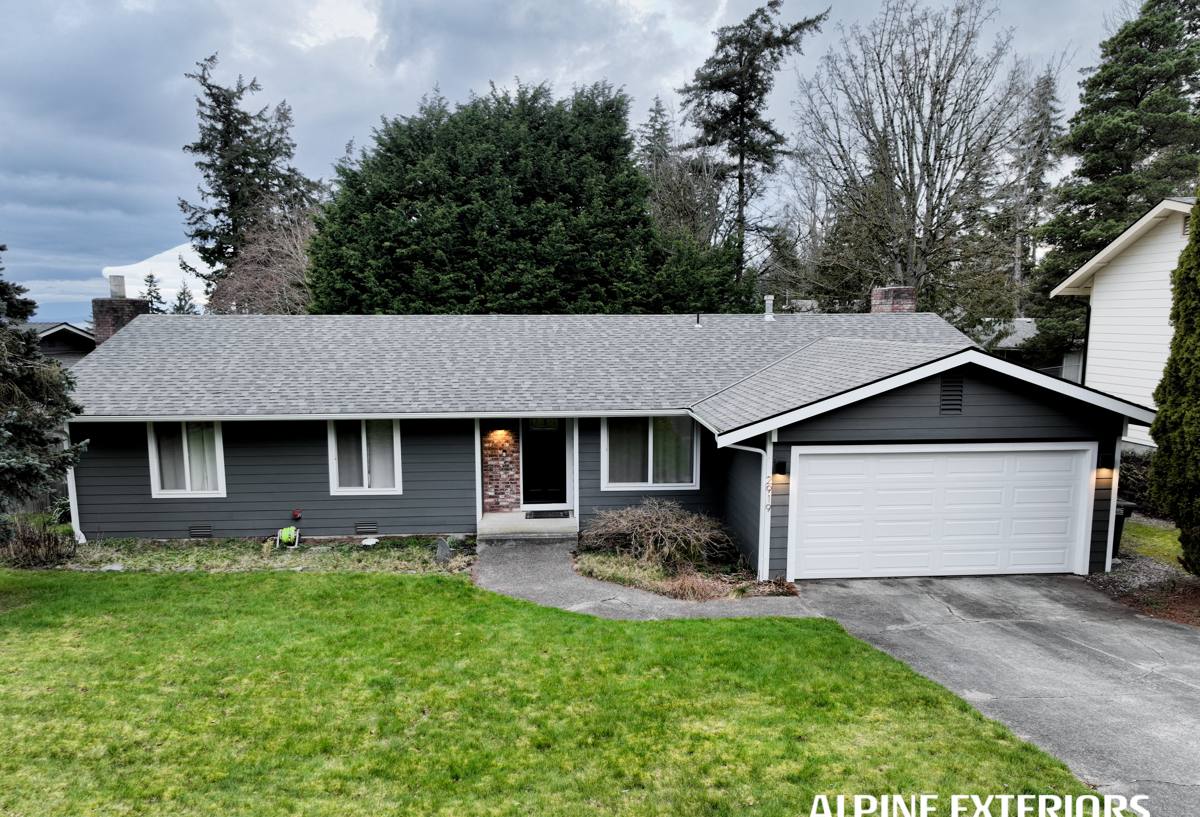
What Salt Air, Rain, and Moss Actually Do to a Wall
Salt Air and Wind-Driven Moisture
Homes with any exposure toward the water deal with airborne salt that settles on siding, trim, and fasteners. Over years, that salt film attracts moisture and accelerates corrosion on anything metal — nail heads, flashing, hose bibs — and it breaks down cheap paint finishes faster than the manufacturer's warranty period assumes. Siding with a weak factory finish will chalk and fade noticeably faster on the water-facing side of a house than on the sheltered side.
Driving Rain
Winter storms in this part of Whatcom County don't just drop rain — they push it. Wind-driven rain finds every gap in a wall assembly: unsealed butt joints, undersized flashing, siding installed too close to grade or to a roofline. Water that gets behind siding and can't dry out is the single biggest cause of premature siding failure, and it's rarely the siding material's fault — it's usually the install.
Moss and Prolonged Dampness
Sudden Valley's tree cover keeps a lot of homes in shade for large parts of the day, which is great for the yard and rough on siding. Moss and algae need sustained moisture to establish, and shaded north and east-facing walls here often stay damp for days after a storm clears everywhere else. Wood-based and wood-adjacent siding products absorb that moisture; fiber cement doesn't, which is a meaningful advantage in a neighborhood with this much shade.
Why We Only Install James Hardie in This Neighborhood
We don't install LP SmartSide, vinyl, Cemplank, Allura, primed spruce, or cedar, and Sudden Valley is exactly the kind of environment that explains why. Each of those products has real strengths, but none of them holds up as consistently as James Hardie against the specific stack of salt, rain, and shade-driven moss this neighborhood deals with.
- Vinyl expands and contracts with temperature swings and can warp or crack in wind-driven storms; it also doesn't take paint well if a homeowner wants to change the look later.
- Wood-based products (LP SmartSide, primed spruce, cedar) are engineered or treated to resist moisture, but they're still wood at the core — sustained dampness from a shaded, moss-prone wall is the exact condition that eventually finds their weak points, especially at cut edges and fastener penetrations.
- Other fiber cement brands (Cemplank, Allura) are closer competitors, but they don't carry the same factory-cured ColorPlus finish system or the same long, transferable warranty backing that James Hardie offers, and finish consistency is exactly what matters when a wall is fighting salt air for twenty years.
James Hardie's fiber cement core is non-combustible and doesn't absorb water the way wood does, and its HZ5 product line is engineered specifically for climates with prolonged moisture exposure — which describes Whatcom County generally and Sudden Valley's shaded, water-adjacent lots specifically.
What a Correct Installation Involves Here
Hardie siding performs to spec only when it's installed to spec. In Sudden Valley, a few details matter more than they would in a drier, more open location:
Weather-Resistive Barrier and Flashing
A properly lapped weather-resistive barrier behind the siding, with correctly integrated flashing at every window, door, and roofline intersection, is what actually keeps driving rain out of the wall assembly. The siding is the visible layer; the flashing and barrier underneath are what do the real work during a sideways winter storm.
Clearances
James Hardie specifies minimum clearances from grade, roofing, decks, and other horizontal surfaces. On shaded, damp lots, skipping these clearances is one of the fastest ways to trap moisture against the bottom of the siding and set up conditions for rot in the framing behind it — even though the Hardie board itself won't rot.
Fastening and Joint Treatment
Corrosion-resistant fasteners matter more near salt air. Butt joints need to be properly caulked or flashed, not just butted together and painted over, or they become a direct water entry point during driving rain.
Caulking and Sealant Selection
Not every exterior caulk holds up long-term against salt air and constant damp-dry cycling. Using the manufacturer-approved sealants at joints and penetrations is a small line item that has an outsized effect on how the wall performs ten years out.
Choosing the Right Hardie Product Line and Finish
James Hardie's HZ5 line is formulated for climates like ours — it's the version engineered for regions with significant moisture exposure, as opposed to the HZ10 line built for hot, dry, freeze-prone climates. For a shaded, moss-prone Sudden Valley lot, HZ5 in either lap siding or panel format is generally the right call, though the correct choice depends on the home's architecture and current siding style.
ColorPlus factory finish is worth prioritizing here specifically because of the salt-air fading issue. A factory-baked finish holds color and resists chalking far longer than field-applied paint, which matters most on the walls that face the water or get the most weather exposure.
Moss and Algae Considerations by Wall Exposure
| Wall Exposure | Typical Condition | What to Prioritize |
|---|---|---|
| South/West-facing, more sun | Faster UV fading, less moss | ColorPlus finish for fade resistance |
| North/East-facing, shaded | Prolonged dampness, moss/algae growth | Proper clearances, drainage plane, ventilation |
| Water-facing or exposed | Salt film buildup, driving rain impact | Flashing detail, corrosion-resistant fasteners |
| Tree-covered lots | Debris buildup, sustained shade moisture | Gutter/drainage maintenance, periodic gentle cleaning |
Our Process for a Sudden Valley Project
- On-site assessment. We look at the existing siding and wall assembly, note the home's specific exposure (shaded, water-facing, tree cover), and check for any moisture damage already present behind the current siding.
- Product and color selection. We help narrow down the right Hardie profile and ColorPlus color based on the home's style and exposure, not just what looks good in a sample chip.
- Detailed, written estimate. Scope, product line, timeline, and cost broken out clearly — no vague allowances.
- Tear-off and inspection. Once old siding comes off, we inspect the sheathing and framing underneath before anything new goes up. This is where hidden moisture damage, if any, gets caught and addressed.
- Weather barrier and flashing installation. Done to manufacturer spec at every penetration and transition.
- Hardie siding installation. Correct fastening, clearances, and joint treatment throughout.
- Final walkthrough. We go over the finished work with the homeowner and confirm everything matches the estimate.
What It Costs and What Drives the Price
Every Sudden Valley home is different, and the honest range depends on square footage, the home's architectural detail, how much trim work is involved, and whether we're finding moisture damage during tear-off that needs to be addressed before new siding goes up. Rather than quote a number that won't mean much without seeing the house, we give every homeowner a detailed written estimate after an on-site look.
Cost Factors Worth Knowing
| Factor | Why It Matters |
|---|---|
| Home size and story count | More wall area and access complexity increase labor |
| Existing siding condition | Rot or moisture damage found at tear-off adds repair scope |
| Trim and architectural detail | More corners, dormers, and trim lines mean more cutting and flashing work |
| Product line (HZ5 lap vs. panel vs. shingle style) | Different profiles and finishes carry different material costs |
| Site access | Tree cover, slope, and driveway access affect setup and staging time |
A Homeowner's Pre-Project Checklist
- Note any walls that stay visibly damp, mossy, or shaded most of the day — flag these for the estimator.
- Point out any areas where you've noticed paint peeling, soft trim, or staining, especially near the roofline or foundation.
- Ask specifically which HZ product line is being proposed and why, given your home's exposure.
- Confirm whether ColorPlus factory finish or field-applied paint is included in the quote.
- Ask how flashing and clearances will be handled at deck ledgers, roof-to-wall intersections, and grade level.
- Get the warranty terms in writing, including whether it's transferable if you sell the home.
Why Local Experience in This Neighborhood Matters
A crew that's worked in Sudden Valley before already knows which wall orientations tend to hold moisture, how the tree cover affects drying time after a storm, and what the driving rain off the water does to poorly flashed joints. That's not something you can fully substitute with a generic checklist — it comes from having done the tear-offs and seen what's actually happening behind other homes' siding in this same neighborhood. It also means a more accurate estimate up front, because we're not guessing at conditions we've never encountered.
If you're weighing a siding replacement in Sudden Valley, we're happy to come take a look and walk you through what we're seeing and what we'd recommend — no pressure, no obligation. Fill out the form below to schedule a free estimate.