 Ferndale Siding
 Decking Built for a Semiahmoo Lot, Not a Catalog Photo
Semiahmoo sits right where Whatcom County meets Semiahmoo Bay and the Strait of Georgia, and that location shapes what a deck has to survive here. Salt-laden air off the water, wind-driven rain that gets under fascia and railings other builders never flash correctly, and a long fall-through-spring stretch where anything shaded stays damp enough to grow moss — all of it works on a deck year-round, not just in a storm. A composite deck built to a generic spec sheet will look fine the first summer and start showing problems by the third winter. A composite deck built for this specific site holds up because the substructure, fasteners, and drainage were chosen for what Semiahmoo actually throws at it.
This page is about one job in one place: composite decking for homes in and around Semiahmoo. Not a general decking overview, and not a pitch for every deck material we touch — just what a correct composite install looks like on a coastal Whatcom County lot, and why the details matter more here than they do twenty miles inland.
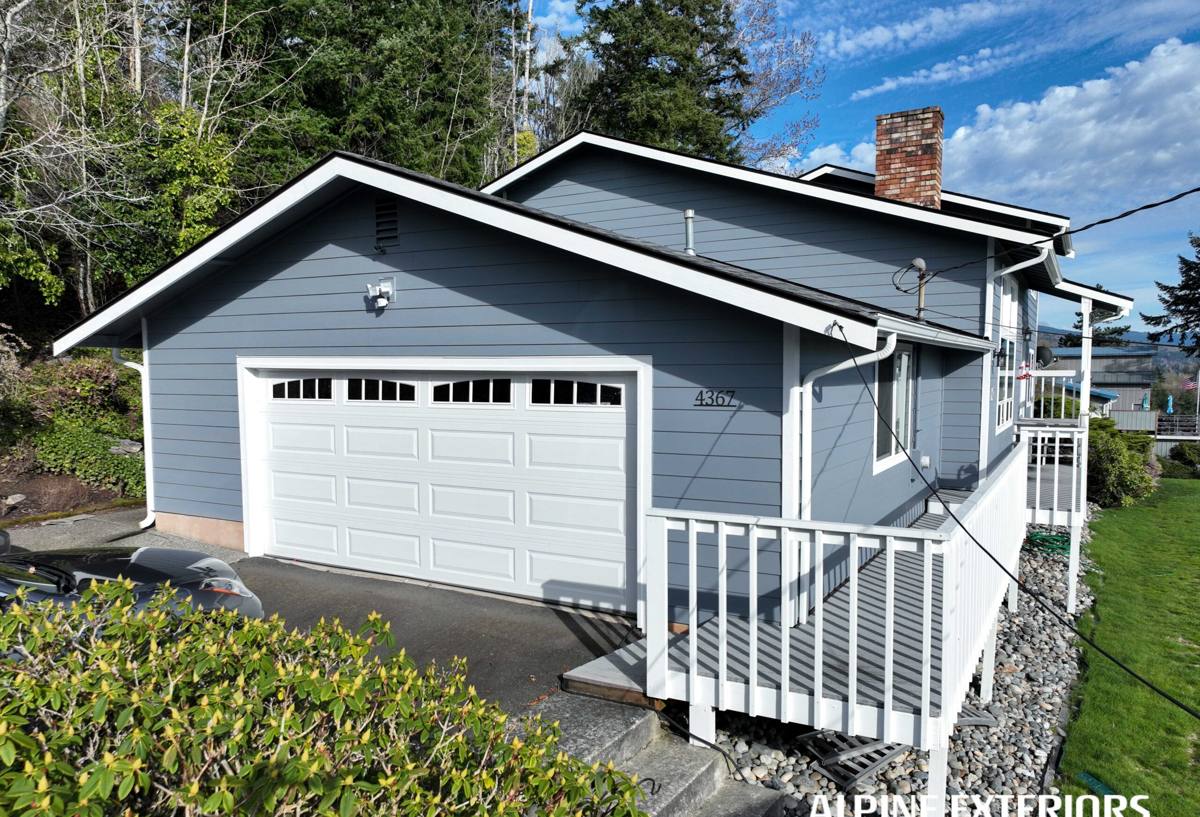
What Salt Air, Driving Rain, and Moss Season Actually Do
Salt Air
Airborne salt doesn't just sit on a deck's surface — it works into fastener heads, hardware, and any exposed metal in the substructure. Standard zinc-coated screws and joist hangers corrode faster on a waterfront or near-waterfront lot than they would a few miles inland. Once a fastener starts rusting, it stains the decking around it and eventually loses holding strength.
Driving Rain
Wind off the water pushes rain sideways, not straight down. That means water gets forced under rail bases, into ledger connections, and behind fascia boards in spots a calmer climate would never test. If the ledger flashing, joist tape, or rail post connections aren't done right, water finds its way into the framing even though the surface decking itself is doing fine.
Moss Season
Shaded, north-facing, or tree-covered sections of a Semiahmoo deck stay damp for long stretches between fall and spring. Moss and algae need moisture and organic debris to get started, and they'll colonize any surface — wood or composite — that traps both. Composite doesn't feed mold the way untreated wood does, but it isn't moss-proof either, and the boards, gaps, and drainage plan all affect how fast growth shows up.
Why Composite Makes Sense for This Climate
We install composite decking on Semiahmoo homes because it removes the failure points that hurt wood decks fastest in this environment — it won't rot, splinter, or need annual staining, and modern capped composite boards resist moisture absorption far better than early composite products did. That said, composite isn't automatically low-maintenance or automatically correct for coastal use. The board itself is only part of the job; how it's fastened, ventilated, and drained is what actually determines whether it performs here.
| Material | How it handles salt air & damp shade | Realistic upkeep |
|---|---|---|
| Cedar / untreated wood | Absorbs moisture, greys and checks quickly, moss and mildew take hold in shaded areas within a season or two | Annual cleaning, periodic staining/sealing, board replacement over time |
| Pressure-treated lumber | More rot-resistant than cedar but still absorbs water; fasteners and hardware corrode faster in salt air | Regular sealing, watch for cupping and fastener staining |
| Uncapped composite | Better than wood but the exposed core can still absorb some moisture at cut ends and fastener holes | Occasional washing; more prone to surface staining over years |
| Capped composite (what we install) | Fully wrapped shell resists moisture absorption and salt exposure; color and texture hold up in coastal UV and salt conditions | Periodic washing to keep moss/algae from taking hold; no staining or sealing |
What a Correct Installation Involves
Substructure First
The framing underneath is where most coastal deck failures start, and it's invisible once the job is done — which is exactly why it's the part worth asking about before hiring anyone. On a Semiahmoo install we spec stainless steel or coated fasteners rated for coastal/marine exposure, not standard interior-grade hardware, and we use joist tape on framing members to keep water from wicking into the wood from the top down.
Ledger and Flashing
Where the deck attaches to the house, proper flashing keeps driving rain from working its way behind the ledger board and into the wall assembly. This connection point takes the brunt of wind-driven rain off the water, and it's the single most common spot we find water damage on decks we're asked to repair or rebuild.
Fastening the Decking Itself
Hidden fastener systems keep the board surface clean and reduce the number of exposed metal points that salt air can attack, while still allowing for the normal expansion and contraction composite boards go through with temperature swings.
Drainage and Airflow
Standing water and trapped moisture under a deck are what accelerate substructure corrosion and give moss a foothold. Proper joist spacing, ventilation gaps, and grading beneath the deck let air move and water drain instead of pooling against framing.
Our Process on a Semiahmoo Job
- Site walk: we look at sun exposure, wind direction relative to the water, existing drainage, and how close the lot is to salt spray before we spec materials.
- Design and material selection: board profile, color, and hardware grade chosen for the specific exposure of that deck — a shaded, tree-lined lot gets a different plan than an open waterfront one.
- Permitting: we handle the permit process for the build, including any setback or height requirements that apply to the property.
- Demo and substructure build: old decking and, where needed, compromised framing removed; new substructure built with coastal-grade fasteners and flashing.
- Decking install: boards fastened with a hidden fastener system, expansion gaps set correctly for the temperature at install time.
- Final walkthrough: we go over drainage, any maintenance we recommend, and answer questions before we call it done.
Living With a Composite Deck Through Moss Season
Composite decking cuts maintenance dramatically compared to wood, but "low-maintenance" isn't "no-maintenance" in a climate that stays damp half the year. A little seasonal attention keeps a Semiahmoo composite deck looking like it did the day it was installed instead of developing the dull, green-tinged look moss and algae leave behind.
- Sweep leaves, needles, and debris off the deck regularly through fall — trapped organic matter is what feeds moss growth on any surface
- Rinse or wash the deck surface a couple times a year, more often on shaded sections, using a soft-bristle brush and a composite-safe cleaner
- Keep gutters and downspouts clear so runoff isn't dumping extra water onto or under the deck
- Check that furniture, planters, and rugs aren't left in one spot long enough to trap moisture underneath
- Have the substructure checked every few years, especially fastener and flashing points, since that's where problems develop out of sight
- Avoid pressure washing at close range or high PSI — it can etch the cap layer on composite boards over time
Cost Factors for a Semiahmoo Composite Deck
| Factor | Why it moves the price |
|---|---|
| Deck size and shape | Square footage and the number of angles, stairs, or level changes affect labor and material |
| Board tier | Composite lines vary in cap technology, color-fastness, and warranty coverage |
| Substructure condition | Rebuilding a corroded or rotted frame costs more than decking over a sound one, but it's not optional if the frame is compromised |
| Railing and fastener grade | Coastal-rated stainless hardware and railing systems cost more than standard-grade options but hold up far longer here |
| Site access | Waterfront and sloped Semiahmoo lots sometimes need extra work to get materials and equipment to the build site |
Why It Matters to Hire a Crew That Already Works Semiahmoo
A lot of deck problems we get called to fix weren't caused by bad composite board — they were caused by a substructure and fastener spec that would've been fine forty miles from the water and simply wasn't built for salt air and driving rain. A crew that works Semiahmoo regularly already knows which lots sit exposed to wind off the bay, which spots stay shaded and damp longest into spring, and which hardware grade actually holds up here instead of failing early. That's knowledge you don't get from a spec sheet, and it's the difference between a deck that needs attention in five years and one that doesn't.
As a Ferndale-based crew working throughout Whatcom County, we build composite decks around this coastline's conditions as a matter of course, not as an upsell. If you're planning a new deck or replacing one that's showing its age, we're glad to walk the site, look at your specific exposure, and put together a plan — reach out below for a free, no-pressure estimate.