 Ferndale Siding
 Siding Repair in Sandy Point: A Different Kind of Wear
Sandy Point sits out on the water northwest of Ferndale, and that location changes what "siding repair" actually means for a home there. A repair call in town might be one cracked board from a stray branch or a lawnmower ding. Out on Sandy Point, the same kind of damage often shows up in multiples, spread across the walls that face the open water, because the siding is absorbing steady exposure that inland Whatcom County homes simply don't see in the same volume. Salt air, wind-driven rain coming straight off the water, and a moss season that barely takes a break all work on a home's exterior at the same time, and siding is the first layer that has to answer for it.
This page is about siding repair specifically — not a full re-side, not a general exteriors overview. If you've got a section of siding that's cracked, delaminating, gapping at a seam, or just looks tired sooner than it should, this is about what's actually causing that in a place like Sandy Point, what a repair done right involves, and how we handle it.
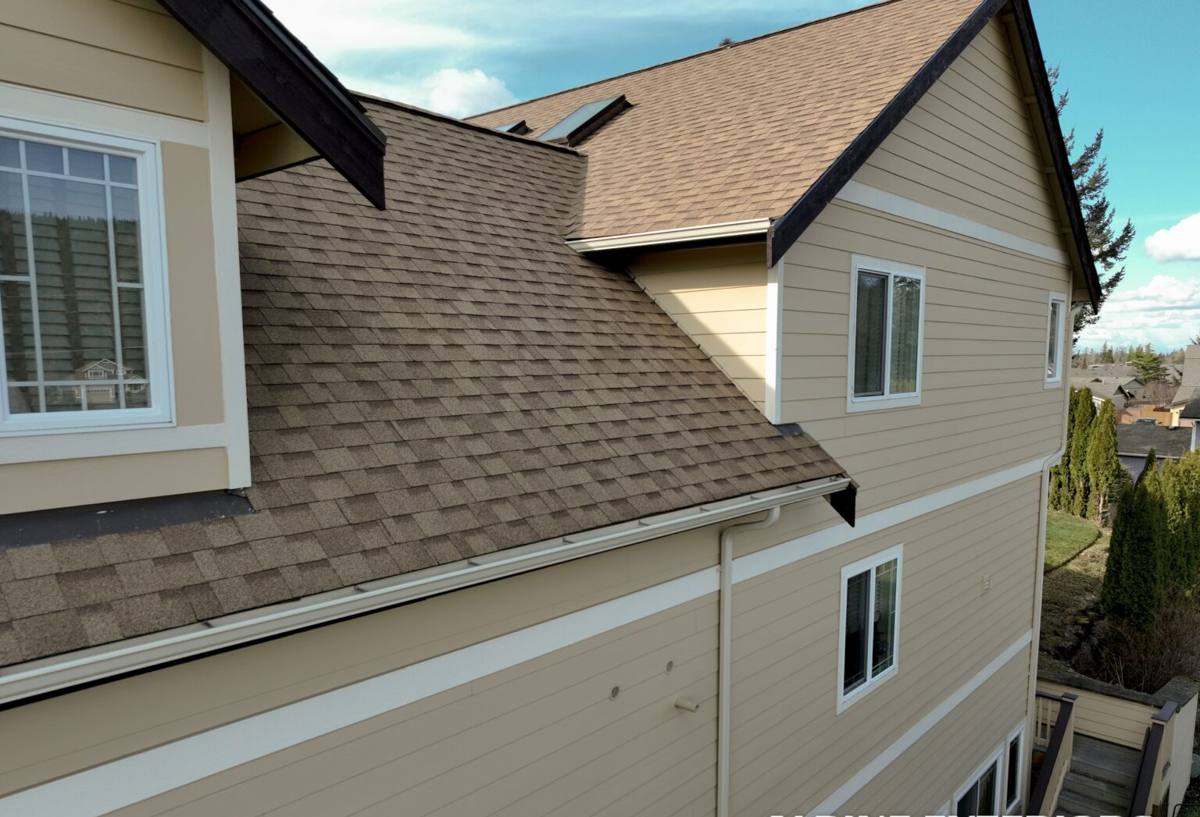
What's Actually Failing on Sandy Point Siding
Corroded Fasteners and Trim
Salt-laden air moving off the water accelerates corrosion on anything metal — nail heads, trim flashing, screws holding on shutters or light fixtures. Once a fastener starts to rust, it loses grip on the material it's holding, and the small gap that forms around it becomes a direct path for water to get behind the siding. On a repair call, we check fastener condition on and around the damaged area even when the visible problem looks like something else, because a failing fastener nearby is often part of what let the water in to begin with.
Open Seams, Failed Caulk, and Butt Joints
Every siding installation has seams — at butt joints, around trim, at corners — and every one of those seams depends on caulk and correct lapping to stay sealed. Wind-driven rain hits those seams at an angle instead of falling straight down, which is exactly the kind of load that finds a gap a straight-down rain would never reach. Caulk that's shrunk, cracked, or pulled away is one of the most common repair triggers we see on exposed, water-facing walls.
Moisture Damage Low on the Wall and Around Penetrations
Water that gets past a seam or a bad flashing detail tends to travel downward before it shows itself, so damage near the bottom of a wall, around a hose bib, vent, or light fixture, or under a window is often a symptom of a problem that started somewhere else. A repair that only addresses the visible spot without tracing where the water actually got in tends to fail again within a season or two.
Moss, Mildew, and Trapped Moisture
Shaded and north-facing walls in this climate hold moisture for most of the year, and moss or mildew that keeps coming back isn't just cosmetic — it holds water against the siding surface longer than it would otherwise sit there. On a repair, we're not just patching the damaged board; we're looking at whether organic growth nearby is going to undo the repair by keeping that section wet.
Repair or Replace? Making the Right Call
When a Repair Is the Right Move
If the damage is limited to a small number of boards or a specific section, the rest of the siding is sound, and the underlying wall assembly — sheathing, water-resistive barrier, framing — tested dry behind the damaged area, a targeted repair is usually the right call. This is common on a home where one wall took a hard storm season or where a single install detail was missed years ago and finally caught up with that one spot.
When Repair Just Delays a Bigger Job
If we find soft sheathing, multiple failure points across different walls, or siding material that's absorbed moisture into its core rather than just at the surface, patching that one visible spot doesn't fix the underlying problem — it just buys a little time before the next spot shows up. We'll tell you directly when that's what we're looking at, along with what a broader repair or a partial re-side would actually involve, rather than selling a patch we don't expect to hold.
What a Correct Siding Repair Actually Involves
A repair that holds up on a water-facing Sandy Point wall takes more than swapping out the damaged board. Done correctly, it includes:
- Diagnosing what let water in — not just replacing what's visibly damaged, but tracing the seam, flashing, or fastener issue that caused it
- Checking the water-resistive barrier and sheathing behind the damaged section for hidden moisture before closing the wall back up
- Sourcing a matching replacement material and, where possible, a matching factory finish so the repair doesn't stand out as a different-colored patch
- Replacing corroded fasteners in and around the repair area, not just at the exact failure point
- Resealing and correctly lapping the water-resistive barrier and any flashing disturbed during the repair
- Confirming clearance from grade, decks, or roof lines if the damage was low on the wall, since tight clearance is a common repeat cause
Skipping any of these steps is how a repair ends up needing to be redone in a year or two — the visible symptom gets fixed, but the mechanism that caused it doesn't.
Why Material Matters Even in a Repair
We install and repair James Hardie fiber cement, and we don't work with LP SmartSide, vinyl, Cemplank, Allura, primed spruce, or cedar. On a repair job specifically, that standard matters in a couple of practical ways. Hardie's factory-applied ColorPlus finish is baked on under controlled conditions, and Hardie maintains color-matched trim and lap products, so a repaired section can blend into the surrounding wall rather than sitting there as an obvious patch in slightly different paint. Because fiber cement is dimensionally stable, a correctly matched repair board also behaves the same way the surrounding siding does through wet-dry cycles, instead of expanding or contracting at a different rate and reopening the seam.
If your home has a different siding material and needs repair work, we'll still take an honest look and tell you what we find. For wood-based or engineered wood products with damage that's spread past the surface — swollen edges, soft spots at joints, spreading delamination — a patch on a moisture-absorbing material is often a short-term fix at best, because the material itself is what's struggling with the climate, not just that one section. In those cases, we'll walk you through what a repair can realistically buy you and what replacing the affected sections with Hardie would change going forward, rather than quietly patching over a bigger problem.
Repair Cost Factors in Sandy Point
| Factor | Why It Matters Here |
|---|---|
| Extent of hidden moisture damage | Damage found behind the wall once it's opened up often changes the scope beyond the visible board |
| Which elevation is affected | Walls facing the open water and prevailing wind take more wear and may need more thorough flashing work |
| Material and color matching | Matching an existing ColorPlus finish or discontinued color can affect sourcing and timeline |
| Access on a waterfront lot | Canal-front and private-road properties can affect equipment access and scheduling |
| Fastener and flashing condition | Corroded fasteners or failed flashing found nearby add scope beyond the original damaged board |
Our Repair Process
- On-site assessment of the damaged area and a check of nearby seams, fasteners, and flashing for related issues
- Diagnosis of what's happening behind the surface, including a check of the sheathing and water-resistive barrier where damage suggests water intrusion
- A clear, written scope explaining exactly what will be repaired, what material will be used, and what it will cost before any work starts
- Sourcing matching Hardie material and finish, or discussing color-matching limitations honestly if the original color has been discontinued
- Completing the repair with correct fastening, sealing, and flashing detail — not just a board swap
- A final walk-through so you can see exactly what was done and why
Why a Crew That Already Works Sandy Point Matters
Sandy Point is a tight-knit waterfront community, and homes there face different exposure depending on which side of a lot sits toward the water and which is more sheltered. A crew that's worked the area knows which elevations tend to take the worst of the wind-driven rain, which wall orientations hold onto moss longest, and how to schedule around a canal-front or private-road property. That kind of familiarity shortens the diagnosis part of a repair call, because a lot of the climate-driven failure patterns out there repeat from one home to the next, even if the exact spot varies.
Signs Your Sandy Point Home Needs Siding Repair Now
- Visible cracking, gapping, or separation at a seam, corner, or butt joint
- A soft or discolored area low on a wall or around a vent, hose bib, or window
- Rust streaks running down from a fastener, trim piece, or flashing
- Moss or mildew that returns within weeks of being cleaned off
- Caulk that's cracked, shrunk, or pulling away from the surrounding material
- A musty smell or soft drywall on an interior wall that backs up to the affected exterior wall
If any of these sound familiar, it's worth having someone look before the next storm system off the water pushes more water into that same spot. We're happy to take a look at your Sandy Point home, explain honestly what we find, and give you a free, no-pressure estimate for the repair — reach out below to get started.