 Ferndale Siding
 Everson sits at the north end of Whatcom County, close enough to the water and the foothills that its roofs take a beating most inland homes never see. Salt-laden air off the Sound, long stretches of driving rain, and a moss season that can run eight or nine months out of the year all work against a roof at the same time. A new roof installation here isn't just about swapping old shingles for new ones — it's about building an assembly that can shed wind-driven water, resist corrosion, and keep moss from getting a foothold in the first place. This page walks through what that actually takes.
What Everson's Climate Does to a Roof
Whatcom County's marine climate is mild in temperature but hard on materials in other ways. Understanding the specific stresses helps explain why certain installation details matter more here than they would in a drier, inland region.
Salt Air and Corrosion
Proximity to Puget Sound and Bellingham Bay means salt-bearing air moves inland on a regular basis. Over years, that air accelerates corrosion on unprotected fasteners, flashing, and metal roofing panels. Standard galvanized nails and cheap flashing stock can start rusting years before they should, which leads to staining, loosened shingles, and eventually leaks at the exact points a roof is supposed to be sealed.
Driving Rain
Rain in this part of Washington rarely falls straight down. Wind off the water pushes it sideways, driving it up under shingle tabs, into open valleys, and behind poorly lapped flashing. A roof that would perform fine in a calm-weather climate can fail here simply because it wasn't detailed for wind-driven water.
Moss Season
Cool, damp, shaded conditions for most of the year make Whatcom County prime moss territory. Moss doesn't just look bad — it holds moisture against the roof surface, lifts shingle edges as it grows, and works its way under laps and around fasteners. Left unchecked over several seasons, it shortens the life of even a well-installed roof.
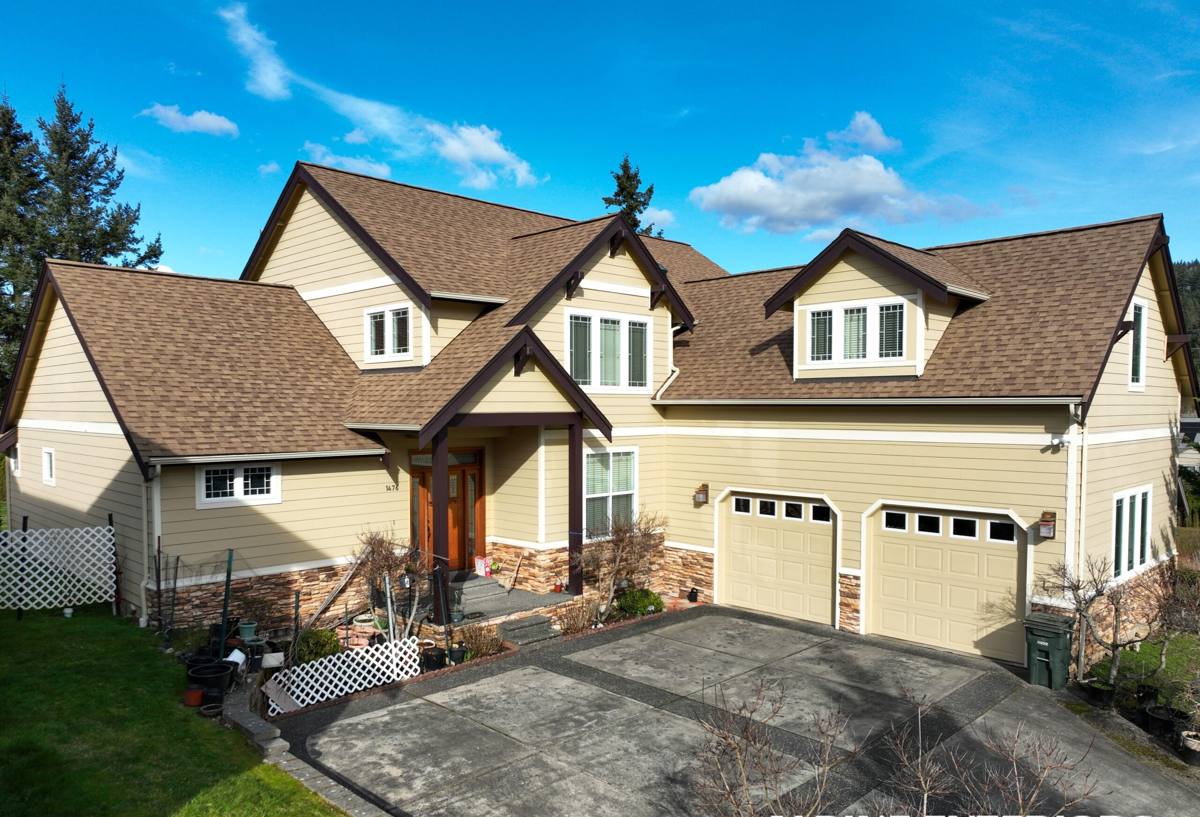
What a Correct New Roof Installation Involves
A new roof is a system, not a single product. Each layer has a job, and skipping or shortcutting any one of them undermines everything installed above it.
- Full tear-off: Removing old roofing down to the deck so the crew can actually see the wood underneath, rather than layering new material over hidden problems.
- Deck inspection and repair: Replacing any soft, delaminated, or water-stained sheathing before anything new goes down.
- Ice and water shield at vulnerable points: Self-adhering membrane at eaves, valleys, and around penetrations, which matters more here than in drier climates because of how often wind pushes rain into those exact spots.
- Synthetic underlayment across the field: A water-resistant layer over the rest of the deck as backup protection under the roofing material.
- Correct flashing at every transition: Chimneys, skylights, walls, and roof-to-roof intersections, using corrosion-resistant metal and proper lap direction.
- Balanced ventilation: Intake at the eaves and exhaust at the ridge, sized to work together rather than fighting each other.
- Manufacturer-spec fastening: Correct nail placement, count, and penetration depth, since under- or over-driven fasteners are a leading cause of early shingle failure.
- Ridge and hip finishing: Capping installed to shed water at the roof's highest, most exposed lines.
Choosing a Material for Everson's Climate
There's no single "best" roofing material — the right choice depends on the home's roof pitch, the owner's budget, and how much long-term maintenance they're willing to take on. We'll walk through the honest trade-offs rather than push one product for every house.
| Material | Moss/Algae Resistance | Wind Performance | Maintenance Needs |
|---|---|---|---|
| Architectural asphalt shingle | Good with algae-resistant granules; still benefits from periodic cleaning | Strong when properly nailed and sealed | Low to moderate — occasional moss treatment |
| Standing seam metal | Excellent — smooth surface sheds moss and debris | Very strong | Low, but requires corrosion-resistant fasteners near salt air |
| Cedar shake | Prone to moss and moisture retention without diligent upkeep | Moderate | High — regular treatment and inspection needed |
| Synthetic/composite shingle | Good, engineered to resist moisture absorption | Strong | Low to moderate |
Our standard is to steer homeowners away from untreated cedar shake in this climate unless they're committed to a real maintenance schedule. It's not that the material is inferior — it's that its moisture behavior and moss susceptibility demand more ongoing attention than most owners want to sign up for. Architectural shingles and metal roofing both hold up well here with far less babysitting.
Moss-Resistant Details Worth Adding
Regardless of material, a few details specifically pay off in a moss-prone area like Everson:
- Zinc or copper strips installed near the ridge, which release trace metal ions that discourage moss growth as rain washes over them.
- Algae-resistant shingle granules, standard on most quality architectural shingles today.
- Keeping overhanging tree limbs trimmed back to reduce shade and debris buildup — a maintenance item, not an installation item, but one we'll flag during the estimate.
Ventilation and Moisture Management
A new roof can be installed perfectly and still underperform if the attic underneath it can't breathe. Balanced ventilation pulls cooler, drier air in at the eaves and pushes warm, moist air out at the ridge. Without it, moisture gets trapped in the attic, which can rot sheathing from underneath, compress insulation performance, and, ironically, create the same damp conditions that invite moss and mildew on the roof surface above. We check existing intake and exhaust venting on every new roof installation and correct the balance where it's off, rather than just replacing the roofing and leaving a known problem in place.
Our Installation Process
Homeowners generally want to know two things: what's going to happen, and how long it's going to take. Here's the sequence we follow on a new roof installation.
- On-site inspection and estimate: We walk the roof, check the attic for ventilation and moisture issues, and give a written scope and price before any work starts.
- Material selection: We go over the trade-offs above so the homeowner picks a product that fits their budget and their tolerance for maintenance.
- Tear-off and deck prep: Old roofing comes off, the deck gets inspected, and any damaged sheathing is replaced.
- Underlayment and flashing installation: Ice and water shield, synthetic underlayment, and all flashing go in before the finish material.
- Roofing installation: Shingles, panels, or shakes go on to manufacturer spec, with attention to fastening and exposure.
- Ventilation check and correction: Intake and exhaust venting confirmed and adjusted as needed.
- Cleanup and magnetic sweep: Job site cleared of debris and swept for stray fasteners.
- Final walkthrough: We review the finished roof with the homeowner and go over warranty coverage before we consider the job done.
What Drives the Cost of a New Roof
Every roof is priced on its own specifics, but the same handful of factors move the number up or down on nearly every job we bid in this area.
| Factor | How It Affects Cost |
|---|---|
| Roof pitch and complexity | Steeper pitches and roofs with multiple valleys, dormers, or intersections take more labor and material to detail correctly |
| Number of tear-off layers | Removing multiple existing layers of roofing costs more than a single-layer tear-off |
| Deck condition | Rotted or delaminated sheathing found during tear-off adds repair cost that can't always be quoted until the old roofing is off |
| Material choice | Metal and premium composite products typically cost more upfront than architectural asphalt shingle |
| Access and site conditions | Steep sites, limited driveway access, or tall roofs affect staging and safety setup |
| Ventilation corrections | Adding or rebalancing intake and exhaust venting is a smaller add-on cost that pays for itself in roof longevity |
Signs an Everson Home Needs a New Roof
Not every roof problem calls for full replacement — some are fixable with repair or maintenance. These are the signs that usually point toward replacement rather than a patch:
- Heavy granule loss showing bald patches on asphalt shingles
- Shingles curling, cupping, or cracking across large sections of the roof
- Moss or algae buildup that keeps returning shortly after cleaning
- Soft spots or visible sagging when walking the roof or viewing it from the ground
- Daylight visible through the roof deck from inside the attic
- Water stains on ceilings or in the attic after heavy rain
- A roof approaching or past the upper end of its expected service life for its material
- Rising heating bills tied to poor attic ventilation or insulation performance
Why a Crew That Already Works in Everson Matters
Roofing code requirements, wind exposure categories, and typical framing details aren't identical from one Washington county to the next. A crew that regularly works in Whatcom County already understands the wind and moisture standards that apply locally, has working relationships with area material suppliers, and knows how to schedule tear-offs around the wettest stretches of the year rather than getting caught mid-project by a system rolling in off the water. That local familiarity shows up in fewer surprises — permits move faster when a contractor already knows the local building department's expectations, and material orders don't get held up by unfamiliarity with what's actually stocked nearby.
It also matters for warranty follow-through. A local crew is the one that comes back if a flashing detail needs a second look after the first hard storm of the season, rather than a company that installed a roof and moved on to another region entirely.
Caring for a New Roof After Installation
A correctly installed roof still benefits from basic upkeep, especially in a climate that grows moss year-round.
- Keep gutters clear so water isn't backing up under the eaves during heavy rain
- Have moss and debris cleared from the roof surface before it builds up thick enough to hold moisture
- Trim back overhanging branches that keep sections of the roof shaded and damp
- Schedule a walk-through inspection every couple of years, or after any major windstorm
- Address small flashing or sealant issues promptly, before driving rain finds its way underneath
If your Everson home's roof is showing its age or you're planning ahead for a replacement, we're happy to take a look and walk you through what it specifically needs — no pressure, no obligation. Fill out the form below for a free estimate.