 Ferndale Siding
 Decks at Sandy Point Take a Different Kind of Beating
Sandy Point sits right up against the water, and that changes what a deck has to survive. A deck built the same way you'd build one a few miles inland, away from the shoreline, will age faster here. Salt-laden air corrodes hardware, driving rain off the Strait finds every unsealed seam, and the long, damp moss season keeps wood surfaces wet longer than they'd stay in a drier part of Whatcom County. None of that means a deck at Sandy Point can't last for decades — it means the materials, fasteners, and details have to be chosen with that exposure in mind from the start.
We work on decks throughout Ferndale and the surrounding waterfront communities, and Sandy Point projects come with their own checklist. This page walks through what actually causes decks to fail out here, what a correct replacement looks like, and how we run the job from first look to final walkthrough.
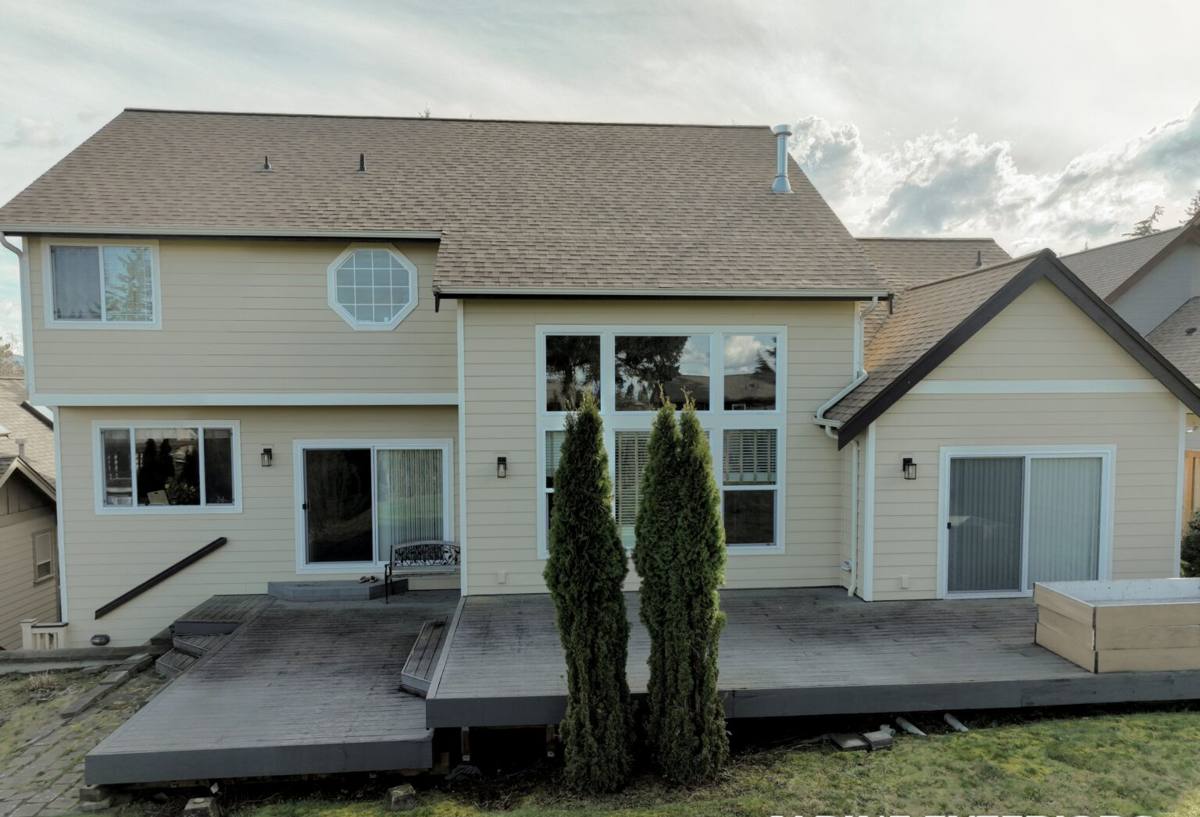
Why Decks Fail Faster Near the Water
Salt Air and Metal Corrosion
Salt in the air accelerates corrosion on anything metal — nails, screws, joist hangers, post bases, and railing hardware. Once a fastener starts rusting, it loses holding strength long before it looks obviously bad from the surface. On older Sandy Point decks, we regularly find hardware that's structurally compromised even though the decking boards on top still look serviceable. That mismatch — good-looking boards over failing connections — is one of the more common surprises homeowners run into.
Driving Rain and Trapped Moisture
Wind off the water pushes rain sideways, which means it gets up under railings, into ledger board connections, and behind fascia in ways a calmer inland site rarely sees. If flashing and gaps weren't detailed correctly the first time, that water gets trapped instead of shedding, and trapped moisture is what actually rots wood — not rain that runs off cleanly.
Moss, Algae, and a Long Wet Season
Whatcom County's wet season runs long, and shaded or low-airflow deck areas near Sandy Point can stay damp for weeks at a stretch. That's exactly the environment moss and algae need. Beyond looking bad, a slick, moss-covered deck surface is a slip hazard, and moss holds moisture against the board surface, which shortens the life of the wood underneath it.
Signs Your Deck Needs Replacing, Not Just Patching
- Soft, spongy, or springy spots when you walk across the deck, especially near the ledger board or stair stringers
- Visible rust bleeding from screws, nails, or joist hangers onto the decking or framing
- Gaps opening up between boards, or boards that have cupped, twisted, or split
- Persistent moss or algae that comes back within weeks of cleaning
- Railing posts that wobble or flex under hand pressure
- Visible daylight or staining where the deck attaches to the house — a sign water is getting behind the ledger
- A deck older than 15-20 years that was built with standard (non-marine-grade) hardware
A few of these issues can sometimes be repaired individually. When several show up together, or when the structural framing itself is compromised, replacement is the more honest recommendation — patching a deck with failing bones just delays the real cost and adds risk in the meantime.
What a Correct Deck Replacement Actually Involves
Structural Assessment First
Before any demolition, we check the ledger board connection, post footings, and framing for rot, movement, or undersized components. This is also where we confirm the deck was ever properly flashed at the house — a lot of the callbacks we see on older builds trace back to a ledger board that was never flashed correctly in the first place.
Framing and Flashing
Correct framing near the water means pressure-treated lumber rated for ground contact where it matters, proper joist spacing for the decking material chosen, and flashing at every point water can get behind — the ledger, stair stringers, and any post that penetrates a walking surface. This is the part of the job nobody sees once it's finished, and it's the part that determines whether the deck is still solid in fifteen years.
Fasteners and Hardware
Given the salt air exposure at Sandy Point, we use stainless steel or heavy hot-dip galvanized fasteners and connectors rather than standard-coated hardware. It costs more up front. It also means you're not replacing corroded hardware — or dealing with the staining and structural weakening it causes — years before the decking itself is due.
Decking Surface and Drainage
Board spacing, ventilation underneath the deck, and drainage away from the house all affect how quickly the structure dries out after rain. A deck that can't dry between storms will grow moss and hold rot no matter what decking material sits on top.
Choosing a Decking Material for a Waterfront Property
There's no single "right" material for every homeowner — it depends on your budget, how much upkeep you want to do, and how the deck gets used. Here's how the common options compare specifically under Sandy Point's salt air and moisture conditions:
| Material | Upfront Cost | Salt Air / Moisture Behavior | Maintenance | Typical Lifespan Here |
|---|---|---|---|---|
| Pressure-treated wood | Lowest | Prone to splitting and fastener corrosion staining if not sealed regularly | Annual cleaning and re-sealing recommended | 10-15 years with upkeep |
| Cedar | Moderate | Naturally rot-resistant but softer; still needs sealing near salt air | Sealing every 1-2 years | 15-20 years with upkeep |
| Composite decking | Higher | Handles moisture and salt air well; doesn't rot or splinter | Occasional washing, no sealing/staining | 25-30+ years |
| PVC decking | Highest | Best moisture resistance of the group; fully synthetic | Lowest — washing only | 25-30+ years |
Composite and PVC cost more per square foot, but for a deck exposed to this much salt air and rain, the lower long-term maintenance often makes the total cost of ownership closer than the sticker price suggests. Wood is a legitimate choice too, especially for homeowners who like the look and don't mind the upkeep — we'll walk through the honest trade-offs for your specific deck and budget rather than push one material as the only option.
Our Deck Replacement Process
- On-site assessment — we inspect framing, ledger, footings, and hardware, and give you a straight read on what's actually wrong before recommending replacement over repair
- Design and material selection — decking material, railing style, and layout decisions, with real cost and maintenance trade-offs explained up front
- Permitting — most deck replacements in Whatcom County require a permit, especially for structural work or decks above a certain height; we handle that process
- Demolition and disposal — full removal of the old deck, checked against the framing plan rather than assumed to be reusable
- Framing, flashing, and structural work — ledger flashing, joist layout, and footings built to hold up under waterfront exposure
- Decking, railing, and finish work — installed to the manufacturer's spacing and fastening specs for the material chosen
- Final walkthrough — we go over the finished deck with you before calling the job done
Why Hiring a Crew That Already Works Sandy Point Matters
Sandy Point isn't a typical inland neighborhood, and a crew that mostly builds decks away from the water can underestimate what it takes to make one last there. A local crew that's already done this work in the area knows to spec marine-grade hardware without being asked, knows how Whatcom County's permitting process runs for waterfront and near-waterfront properties, and has a realistic sense of how the site's exposure — wind direction, drainage, access — affects the build.
There's also a practical side: access to some Sandy Point properties is tighter than a standard residential lot, and material delivery and staging need to be planned around that. A crew unfamiliar with the area finds this out on day one of the job. A crew that already works here plans for it before the first truck shows up.
Keeping a New Deck in Good Shape Through the Wet Season
Whatever material you choose, a few habits make a real difference in how long a Sandy Point deck stays solid:
- Clear leaves and debris from between boards and off the surface before the wet season sets in — trapped debris holds moisture against the wood
- Rinse off salt spray and grime periodically, especially after storms with onshore wind
- Check railing posts and stair connections once a year for movement or looseness
- Re-seal wood decking on the manufacturer's recommended schedule — don't wait until it looks obviously weathered
- Keep gutters and downspouts near the deck clear so runoff isn't draining directly onto or under it
- Address any soft spots, rust staining, or gaps early rather than waiting for them to spread
What Deck Replacement Typically Costs
Cost depends on deck size, framing condition, material choice, and railing style, so any number without seeing the deck is a guess. In broad terms, a straightforward wood deck replacement tends to run less per square foot than composite or PVC, but material cost is only part of the picture — framing repairs, permit fees, and site access can all shift the total. We give a firm, itemized quote after the on-site assessment, not a phone estimate, because guessing at a waterfront deck's condition from a description alone does homeowners a disservice.
If your deck at Sandy Point is showing its age — or you just want an honest read on whether it needs repair or full replacement — we're happy to take a look. Reach out for a free, no-pressure estimate using the form below.