 Ferndale Siding
 Why Nooksack-Area Siding Takes More Punishment Than People Expect
Homes around Nooksack sit inland from Bellingham Bay and the Strait of Georgia, but the marine air that rolls off the water doesn't stop at the coastline. It pushes across Whatcom County and settles into the river-valley communities, carrying salt-laden moisture that works on painted wood, fasteners, and trim long before most homeowners notice anything wrong. Add in the driving, wind-pushed rain that comes through in fall and winter storms, and siding here is under near-constant moisture pressure for months at a time.
Then there's moss. Whatcom County's long, mild, wet stretches give moss and algae a real head start, especially on north-facing walls, siding shaded by trees, and any area near a downspout or gutter that doesn't drain cleanly. Moss holds water against the surface long after a storm has passed, which is exactly the kind of prolonged dampness that causes rot in wood-based siding and breaks down caulk and paint faster than the label promises.
None of this means Nooksack homes are doomed to constant repairs. It means the repair work has to account for how this specific climate behaves, not just patch what's visible and move on.
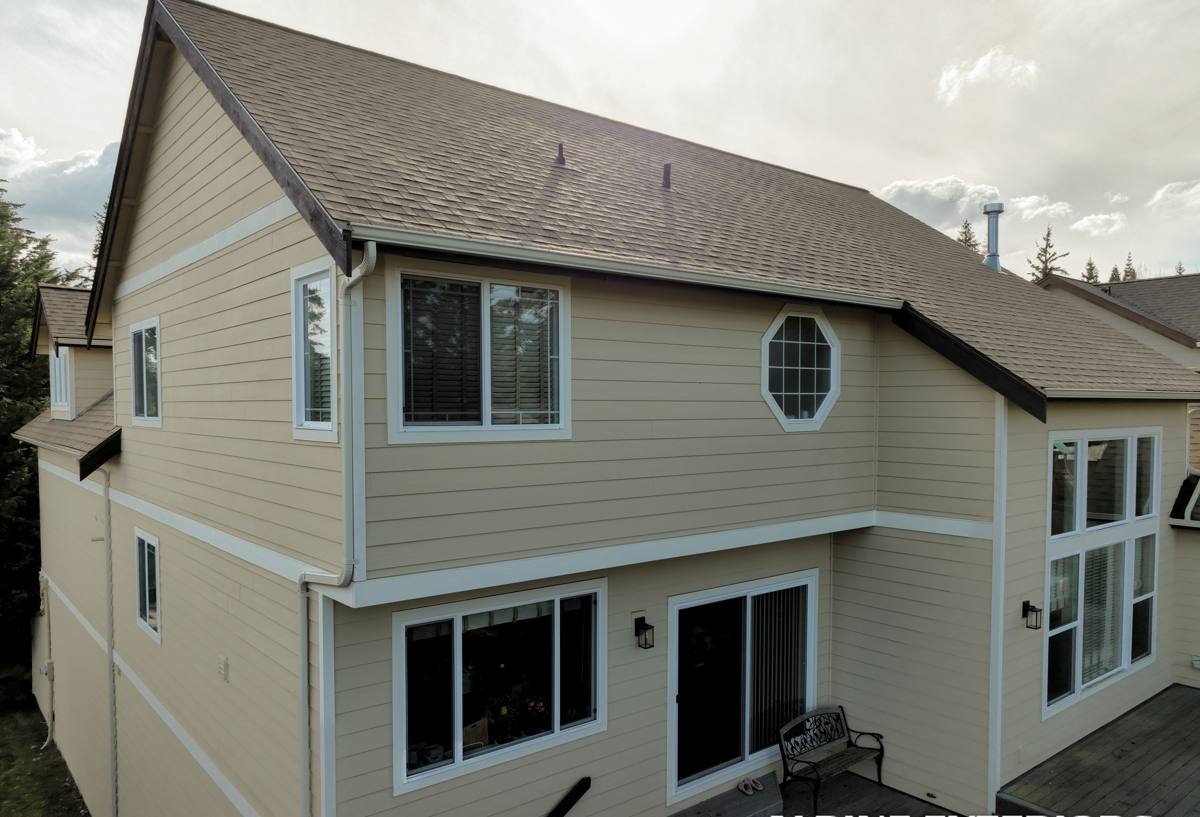
Early Signs Your Siding Needs Repair, Not Just Cleaning
A lot of siding problems in this area get mistaken for a cleaning issue when they're actually a moisture or material failure underneath. Knowing the difference early saves money, because a small repair now is almost always cheaper than the water damage it prevents down the road.
- Soft, spongy, or crumbling spots when you press on the siding, especially near the bottom courses or below windows
- Paint that's bubbling, peeling, or flaking in patches rather than evenly across a wall
- Visible gaps, cracks, or separation at seams, corners, and trim joints
- Persistent moss or dark staining that comes back within weeks of cleaning
- Warping, buckling, or boards that no longer sit flat against the wall
- Musty smell or visible staining on interior walls that back up to exterior siding
- Caulking that's cracked, shrunk, or pulled away from joints
If you're seeing more than one of these at once, especially in the same section of wall, there's a good chance moisture has already gotten past the surface and into the sheathing behind it.
Why "Just Patch It" Often Doesn't Hold Up Here
Mismatched Repairs Trap Moisture
A common shortcut is cutting out a damaged section and screwing in a replacement piece without checking what's happening behind it. In a climate this wet, that's a problem, because damaged siding is usually a symptom, not the whole story. If water got in once, there's a good chance the house wrap, flashing, or sheathing underneath is also compromised. Covering that up with a new piece of siding without addressing the cause just hides the problem until it resurfaces, usually worse.
Cosmetic Fixes Don't Stop the Cycle
Caulk-and-paint repairs can make a wall look fine for a season or two, but caulk is a maintenance item, not a structural fix. In a region with a moss season this long and rain this persistent, caulk alone rarely lasts the way homeowners hope, especially at horizontal joints where water sits longer.
Wrong Material Matches Age Unevenly
Patching original siding with a different product, or even a different batch of the same product, often means the repair weathers, fades, or absorbs moisture differently than the surrounding wall. Within a year or two the patch stands out, and in worse cases it creates a seam where water can work its way in.
Repair or Replace? How We Actually Decide
Not every damaged section needs a full re-side, and not every home with old siding needs to be gutted and started over. The right call depends on how far the damage has spread and what's driving it.
| Situation | Usually a Repair | Usually a Replacement |
|---|---|---|
| Damage location | Isolated to one or two sections | Spread across multiple walls or elevations |
| Sheathing underneath | Dry and intact | Soft, stained, or rotted |
| Age of existing siding | Under 15-20 years, generally sound | Near or past its expected service life |
| Cause of damage | One-time event (impact, isolated leak) | Ongoing moisture intrusion or systemic failure |
| Material match available | Yes, close color and profile match | No, discontinued or mismatched product |
We'll always tell you honestly which category your home falls into. A repair that's going to fail again in two years isn't a deal, it's a delay.
What a Correct Siding Repair Actually Involves
Diagnosis Before Demolition
Before anything gets removed, we look at the full picture: how the damage got there, whether it's isolated or part of a pattern, and what condition the layers behind the siding are in. Pulling one board and finding dry sheathing behind it is a very different job than pulling one board and finding water has been tracking sideways behind three others.
Checking the Water Management Layer
Correct siding repair isn't just about the visible board. Flashing at windows, doors, and horizontal joints, along with the house wrap or weather barrier underneath, has to be intact for the wall to actually shed water the way it's designed to. If that layer failed, replacing the siding on top of it without fixing the underlying issue just resets the clock on the same problem.
Matching Material and Finish
Where a true match isn't available, we say so upfront rather than installing something that will visibly age differently within a season. In many cases the more honest and durable answer is replacing a full wall section or elevation so the finish is consistent, rather than chasing a patch that will always look and perform like a patch.
Sealing and Finishing to Spec
The last step is where a lot of repairs quietly fail: proper fastener placement, correct caulking at the joints that actually need it (and not over-caulking joints that are designed to move), and a finish that matches the surrounding wall in sheen and color, not just in the paint can label.
Why We Repair and Replace Using James Hardie Fiber Cement
We install and repair with James Hardie fiber cement siding exclusively. We don't install vinyl, LP SmartSide, primed wood, cedar, or other fiber cement brands, and that's a deliberate standard, not a lack of options.
In a climate like Whatcom County's, wood-based products are the most exposed to the exact conditions that cause the most damage: sustained moisture, moss growth, and freeze-damp cycles. Vinyl handles moisture better than wood but expands, contracts, and can distort or crack under impact in ways that complicate clean repairs. James Hardie's HardiePlank and related products are engineered specifically for high-moisture climates like ours, they're non-combustible, and the factory-applied ColorPlus finish holds its color far longer than field-applied paint, which matters a lot when you're trying to match a repair to an existing wall years later. Hardie also backs its products with a strong, transferable warranty, which gives homeowners real protection rather than a marketing line.
Practically, this also means when we repair Hardie siding, we're working with a product designed to take on new sections cleanly, hold paint and caulk the way it's supposed to, and resist the moss and moisture cycle that causes so much trouble for other materials in this region.
Our Nooksack Siding Repair Process
- On-site inspection of the damaged area and a check of sheathing, flashing, and house wrap where accessible
- Honest assessment of repair versus replacement, explained in plain terms with the reasoning behind it
- A written scope and cost range before any work begins, no surprise add-ons mid-job
- Removal of damaged material and correction of the underlying moisture issue, not just the visible symptom
- Installation of matched James Hardie material, properly fastened, flashed, and sealed
- Final finish work so the repaired section blends with the surrounding wall
- A walkthrough so you can see exactly what was done and why
What Affects the Cost of a Siding Repair
| Factor | Why It Matters |
|---|---|
| Extent of hidden damage | Rotted sheathing or failed flashing adds labor beyond the visible siding |
| Access to the area | Second-story walls, tight side yards, or landscaping can add setup time |
| Material availability | Matching an existing profile and color affects sourcing and lead time |
| Size of the affected section | Small patches cost less than full wall or elevation sections |
| Underlying cause | A one-time impact is simpler to resolve than an ongoing moisture source |
We won't quote a number without seeing the damage in person, but we'll always explain what's driving the cost so there are no surprises.
Why It Matters That We Already Work in Nooksack
A crew that already works Nooksack and the surrounding Ferndale area knows what this specific stretch of Whatcom County does to siding over time, from which wall orientations get hit hardest by driving rain to how quickly moss returns on shaded exteriors near the river valley. That's not something you get from a company that mainly works somewhere drier or that treats every siding call the same regardless of region.
It also means faster response when a repair needs attention, straightforward accountability if something needs a follow-up visit, and a crew that's used to matching materials and finishes to homes built and sided under the same regional conditions yours were. Local experience shows up in the details: what to check first, what tends to be the real cause of damage in this area, and what actually holds up here long-term.
If you're seeing signs of damage on your Nooksack-area home, or you just want an honest opinion on whether it's a repair or something bigger, we're happy to take a look. Reach out for a free, no-pressure estimate using the form below.