 Ferndale Siding
 Why Nooksack Roofs Wear Out Differently Than Roofs Inland
Nooksack sits in a river valley with heavy tree cover, high humidity, and long stretches of gray, wet weather that don't let up for months at a time. Add in the driving rain that comes through Whatcom County off the Pacific and the salt-tinged air that moves inland from the Sound on windy days, and you've got a climate that's tough on roofing in ways that don't show up on a spec sheet. It's not one big storm that wrecks a roof out here — it's the slow, steady grind of moisture sitting on shaded slopes, moss taking hold in the valleys where debris collects, and freeze-thaw cycles working at nail heads and flashing seams over years.
A roof that's correctly installed for this environment holds up. One that was installed fast, or installed for a drier climate, starts showing problems in five to ten years instead of twenty or thirty — soft spots, staining, moss mats that hold water against the shingles, and leaks that show up nowhere near where the actual failure is. If you're planning a new roof in Nooksack, the goal isn't just "a new roof." It's a roofing system built to handle this specific valley's weather for decades.
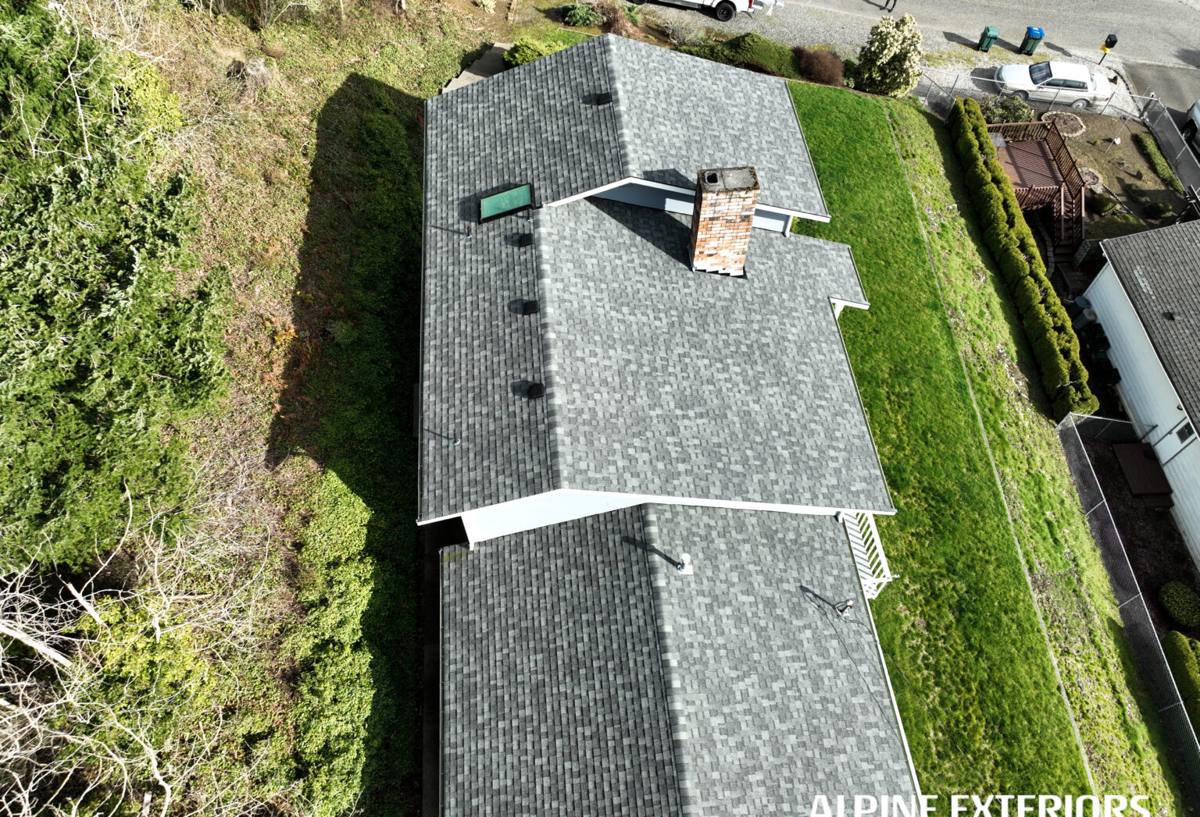
Signs Your Nooksack Home Needs a New Roof, Not Another Repair
Roof repairs make sense when the damage is isolated and the rest of the roof still has useful life left. A full replacement makes sense when the roof as a whole has aged out or the underlying problems are spread across the whole surface. Here's what tells us which situation you're in:
- Shingles are cupping, curling, or losing their granules in patches across multiple slopes, not just one spot
- Moss has worked its way under shingle edges rather than just sitting on the surface
- You've had two or more separate leaks in different areas within the past couple of years
- The roof is original to the house and is 20+ years old (asphalt) or otherwise past its expected service life
- There's visible sagging along the ridge or between rafters when viewed from the ground or attic
- Daylight is visible through the roof deck from inside the attic
- Flashing around chimneys, skylights, or vents is rusted, lifted, or was never sealed correctly to begin with
If you're only seeing one or two of these and the roof is under 15 years old, a repair is often the honest recommendation. We'll tell you that. This page is for the homes where a repair would just be delaying an expense that's already overdue.
What a Correct New Roof Installation Actually Involves
Full Tear-Off and Deck Inspection
We remove the old roofing down to bare decking rather than layering over it. Layering over old shingles hides rot, hides prior leak damage, and voids most manufacturer warranties outright. Once the deck is exposed, we check every sheet of plywood or OSB for soft spots, delamination, and water staining — a common find on Nooksack homes where a slow leak has been sitting unnoticed under old shingles for years. Any damaged decking gets replaced before anything new goes down; it's not something we skip to save a day.
Underlayment and Ice-and-Water Barrier
In a climate that sees this much sustained rain, the underlayment matters as much as the shingle on top of it. We use synthetic underlayment across the field and self-adhering ice-and-water barrier at the eaves, valleys, and around every roof penetration — the exact spots where wind-driven rain and standing meltwater find their way in. This is the layer that saves a roof when a shingle eventually fails on its own; skipping it or skimping on coverage is one of the most common shortcuts in cheap roofing jobs.
Flashing Done Right, Not Reused
Flashing around chimneys, skylights, dormers, and sidewalls is where the majority of roof leaks actually start — not in the open field of shingles. We install new flashing rather than reusing old pieces, and we integrate it correctly with the underlayment and siding so water sheds outward at every layer instead of finding a gap to sit in.
Ventilation That Matches the Attic
Attic ventilation is easy to overlook and expensive to ignore. Poor intake and exhaust balance traps moisture in the attic, which shortens the life of the decking from underneath and encourages the same moss and mildew growth on the underside of the roof that Whatcom County's damp air causes on top of it. We size and balance ventilation to the specific attic, not a generic formula.
Roofing Material Options for This Climate
There's no single "best" roofing material — there's the material that fits your budget, your roof's exposure, and how long you want to go before thinking about it again. Here's how the common options compare for a wet, moss-prone valley climate like Nooksack's:
| Material | Typical Lifespan Here | Moss/Moisture Behavior | Maintenance |
|---|---|---|---|
| Architectural (dimensional) asphalt shingles | 25–30 years | Good with proper ventilation and periodic cleaning; algae-resistant granules help | Low — occasional moss/debris removal |
| 3-tab asphalt shingles | 15–20 years | More prone to curling and moss lodging at edges | Moderate — shorter service life in constant shade |
| Standing seam metal | 40–50+ years | Sheds moss and debris well due to smooth surface and slope | Very low |
| Cedar shake | 20–30 years with upkeep | Absorbs moisture; needs regular treatment in this climate | High — routine treatment and moss control required |
For most Nooksack homes we recommend architectural asphalt as the value option and standing seam metal for owners who want to stop thinking about their roof for the next few decades. We install cedar shake when a homeowner wants that specific look, but we're upfront that it asks for more upkeep than the other options in a climate this wet — that's a maintenance trade-off, not a defect in the material itself.
Our Installation Process, Start to Finish
1. Inspection and Written Estimate
We walk the roof (or the attic, if the pitch or condition makes a walk-on inspection unsafe), check the decking where accessible, and put together a written scope and price — no verbal-only quotes, no vague allowances.
2. Material Selection
We go over the options in the table above against your budget and how long you plan to stay in the home, and help you land on a material and color that fits.
3. Scheduling Around the Weather
Roofing in Whatcom County means working around rain windows, not just calendar dates. We plan installation days around forecast stretches with the goal of never leaving a deck exposed overnight.
4. Tear-Off and Installation
Most residential reroofs here run one to three days depending on size, pitch, and how much decking needs replacement. We protect landscaping and siding during tear-off and haul debris off site as we go, not at the end.
5. Final Walkthrough
We walk the finished roof and the property with you, confirm gutters and downspouts are clear of installation debris, and go over care going forward.
What a New Roof Costs in Nooksack — and What Drives the Price
Broad ranges only, since every roof is different — a straightforward asphalt reroof on an average-size home typically runs somewhere in the $9,000–$18,000 range, with metal roofing running higher and complex rooflines, steep pitches, or extensive decking repair pushing either option up. Here's what actually moves that number:
| Cost Factor | Why It Matters |
|---|---|
| Roof size and number of layers to remove | More material to tear off and haul away, more labor hours |
| Roof pitch and access | Steep or hard-to-access roofs require more safety setup and time |
| Decking condition | Rot or delamination found during tear-off adds material and labor |
| Material choice | Asphalt, metal, and cedar carry different material and labor costs |
| Flashing and penetrations | Chimneys, skylights, and multiple vents add detail work |
| Ventilation upgrades | Adding or correcting intake/exhaust vents adds cost but protects the investment |
Any contractor who quotes a firm number without inspecting the decking is guessing. We inspect what's accessible up front and flag what we can't confirm until tear-off, so decking surprises don't turn into a surprise invoice.
Why It Matters That We Already Work in Nooksack
A roofing crew that mainly works dry climates or unfamiliar territory tends to under-detail flashing and skimp on underlayment coverage because it hasn't had to answer for the callback yet. Working this valley regularly means we've seen how moss actually establishes on local roofs, which slopes stay shaded and wet longest, and where flashing details tend to fail first on homes with this area's typical rooflines and tree cover. That's not a marketing point — it changes where we spend extra time on a job and where we don't need to.
It also means straightforward logistics: we're not driving in from out of the area to fit your job between others, and we're not unfamiliar with local permitting requirements for reroofing. If your project needs a permit, we handle pulling it as part of the job rather than leaving that step to you.
Keeping a New Roof Performing After Installation
A correctly installed roof still needs basic upkeep in this climate — that's true of every material, not a sign something was done wrong. A short annual routine goes a long way:
- Clear gutters and downspouts at least twice a year, more often under heavy tree cover
- Remove moss and organic debris from valleys and shaded slopes before it mats down
- Check flashing around chimneys and vents visually once a year for lifting or gaps
- Trim back overhanging branches that keep sections of roof shaded and damp
- Have the roof looked at after any major windstorm, even if nothing looks obviously wrong
We're happy to point out any of these during a visit even outside of a formal service call — a five-minute conversation now is cheaper than a leak repair later.
If your roof is showing its age or you're planning ahead, we'll come take a look and give you a straight answer — no pressure, no inflated estimate to scare you into a decision. Use the form below to request a free estimate for new roof installation in Nooksack.