 Ferndale Siding
 Roofing in Cordata: What This Climate Actually Does to a Roof
Cordata sits close enough to the Strait of Georgia and Bellingham Bay that salt-laden air is a real, daily factor for anything on your roof — fasteners, flashing, vents, and metal edging all take more abuse here than they would further inland. Add Whatcom County's long wet season, where driving rain comes sideways off the water for days at a time, and you've got a roof system that's tested constantly, not just during the occasional storm.
Then there's moss. Cordata's tree cover, mild temperatures, and extended damp months from fall through spring create ideal moss conditions on north-facing slopes and shaded valleys. A roof that isn't installed with moss and moisture management in mind will show streaking and granule loss within a few years, and left unchecked, moss holds water against the roofing material and shortens its life significantly.
None of this means a roof in Cordata has to fail early. It means the installation has to account for these specific conditions from the start — not get bolted on with a generic approach that works fine in a drier climate but falls short here.
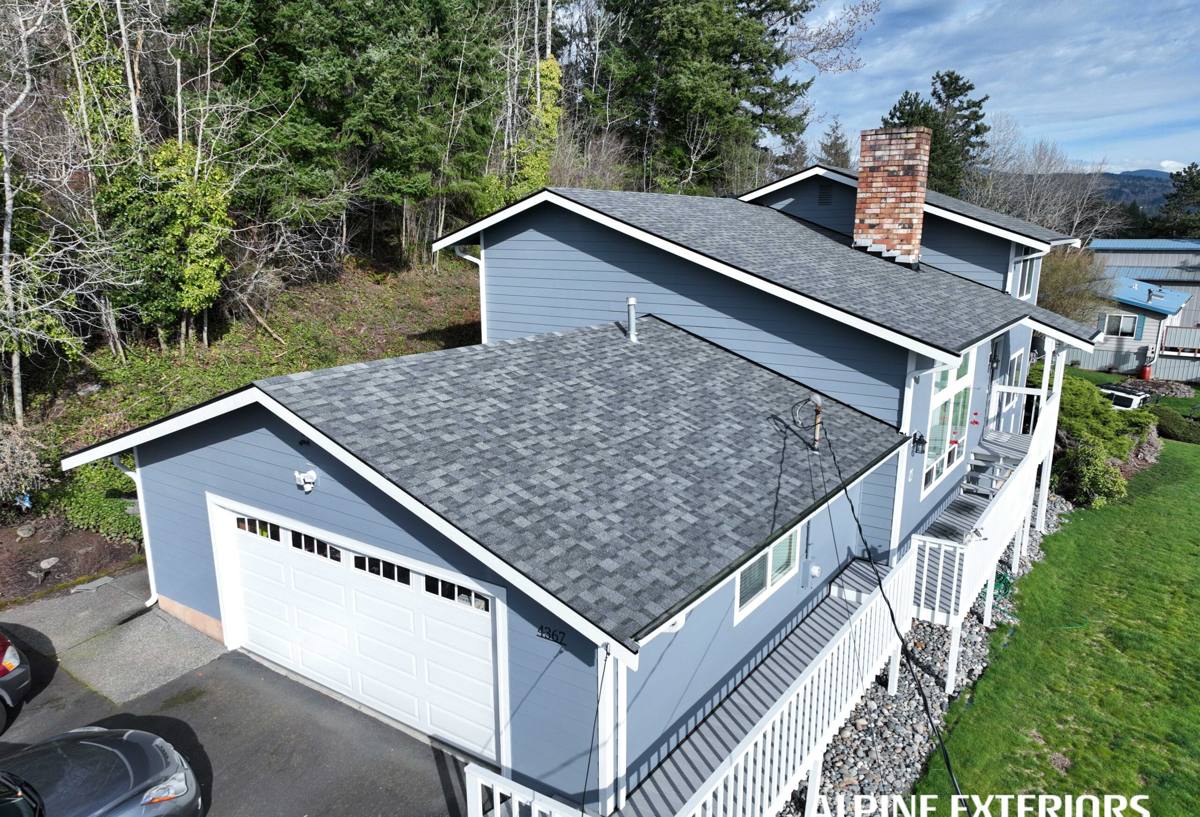
Signs a Cordata Home Needs a New Roof, Not Another Repair
Roof repairs make sense for isolated damage — a cracked pipe boot, a few blown-off shingles after a windstorm, a small flashing leak. A full replacement makes sense when the roof as a system is past the point where patching solves anything. In this climate, that usually shows up as:
- Granule loss heavy enough that you can see bare, shiny patches on asphalt shingles
- Persistent moss or algae staining that comes back within a season of cleaning
- Curling, cupping, or cracked shingles across multiple slopes, not just one spot
- Soft or spongy decking felt underfoot in the attic, especially near valleys or eaves
- Daylight visible through the roof deck from inside the attic
- A roof approaching or past 20-25 years old, regardless of how it looks from the ground
If you're only seeing one or two of these and the roof is otherwise mid-life, a repair or a partial re-roof of one slope may still be the right call. We'll tell you that honestly during an inspection — a new roof isn't the answer to every problem, and we'd rather earn the bigger job later than talk you into it now.
What a Correct New Roof Installation Includes
A roof replacement is more than stripping old shingles and nailing down new ones. In a climate that sees this much wind-driven rain and moss pressure, the layers underneath the visible roofing material matter as much as the material itself.
Tear-Off and Deck Inspection
We remove the existing roofing down to the deck rather than layering over it. That's the only way to actually see the plywood or OSB underneath — and after years of moisture exposure, it's common to find soft or delaminated sections, especially near valleys, chimneys, and eaves where water tends to sit longest. Any damaged decking gets replaced before anything new goes down; installing new roofing over a compromised deck just guarantees an early failure.
Underlayment and Ice-and-Water Protection
Given how much wind-driven rain this area gets, we don't treat underlayment as an afterthought. A synthetic underlayment provides the primary water barrier beneath the roofing material, and self-adhering ice-and-water membrane goes in the vulnerable spots — eaves, valleys, and around every penetration — where wind can drive rain up under the shingles rather than straight down.
Flashing and Metal Work
Flashing around chimneys, skylights, sidewalls, and roof-to-wall transitions is where most leaks actually originate, not the field of the roof itself. We use corrosion-resistant metal appropriate for a coastal-influenced climate and install it in proper step-and-counter-flashing configurations rather than relying on caulk or sealant to do the flashing's job.
Ventilation
Balanced intake and exhaust ventilation keeps the attic dry and temperature-regulated, which does two things at once: it protects the underside of the new roof deck from trapped moisture, and it reduces the temperature swings that contribute to moss-friendly conditions on the shaded parts of the roof.
Choosing a Roofing Material for the Cordata Climate
There's no single "best" roofing material — the right choice depends on your home's style, your budget, and how much long-term maintenance you want to take on. Here's how the common options actually perform under Cordata's conditions:
| Material | Performance in Salt Air & Rain | Moss Resistance | Typical Lifespan |
|---|---|---|---|
| Architectural asphalt shingle | Good with proper flashing and fasteners; widely proven locally | Moderate — benefits from zinc/copper strips on shaded slopes | 25-30 years |
| Standing seam metal | Excellent when properly coated and fastened; sheds water fast | High — moss struggles to hold on smooth metal | 40-50+ years |
| Cedar shake | Attractive but needs consistent maintenance in wet climates | Low without regular treatment and cleaning | 20-30 years with upkeep |
| Synthetic/composite shingle | Good; engineered to resist moisture absorption | Moderate to high depending on product | 30-50 years |
Asphalt shingle remains the most common choice for Cordata homes because it balances upfront cost with solid performance when it's installed correctly — the installation quality matters more than the shingle brand in most cases. Metal roofing costs more up front but shrugs off moss and driving rain about as well as anything available, which is why we see more homeowners asking about it for north-facing or heavily shaded roofs. We'll walk through the honest trade-offs for your specific roof rather than pushing whatever's easiest to sell.
Our New Roof Installation Process
- On-site inspection: We climb the roof, check the attic, and assess the deck, flashing, and ventilation — not just the shingles.
- Written estimate: A clear scope of work and price, including what happens if we find deck damage once tear-off starts.
- Material selection: We go over options based on your roof's exposure, your home's style, and your budget.
- Scheduling around weather: We plan installation windows with Whatcom County's rain patterns in mind, and protect the open roof if weather shifts mid-job.
- Tear-off and deck repair: Old roofing comes off, the deck is inspected, and any soft or damaged sections are replaced.
- Underlayment, flashing, and ventilation installation: The layers that actually keep water out go in correctly, not just quickly.
- New roofing installation: Shingles, panels, or shakes installed to manufacturer spec, which is also what keeps the material warranty valid.
- Cleanup and final walkthrough: Magnetic sweep for nails, debris removal, and a walkthrough so you know exactly what was done.
Moss, Moisture, and Long-Term Roof Care in Cordata
A well-installed roof still needs some ongoing attention in this climate. Moss doesn't mean the roof was installed wrong — it means the roof is doing what roofs in Whatcom County do when they sit under tree cover through a wet fall and winter. What matters is managing it before it causes damage.
Zinc or copper control strips near the ridge use rainwater runoff to inhibit moss growth on the slopes below them, and they're a low-cost addition worth including during installation on shaded roofs. Keeping gutters and valleys clear of needles and leaves also matters more here than in drier climates, since trapped organic debris holds moisture against the roofing material and gives moss somewhere to establish. We're happy to talk through a simple maintenance routine specific to your roof's exposure when we're out for the estimate.
Permits, Timeline, and What to Expect
Most residential re-roofing in the Ferndale area requires a building permit, and we handle that process as part of the job rather than leaving it on the homeowner. A typical single-family roof replacement in Cordata takes one to three days of active work depending on roof size, complexity, and how much deck repair turns up once tear-off starts — steeper or more cut-up roofs with multiple valleys and dormers take longer than a simple gable roof.
We'll give you a realistic window up front, including how weather might shift it, so you're not left guessing when the crew will show up or wrap up.
Why Hire a Crew That Already Works in Cordata
Roofing crews who work regularly in this specific area already know which details matter here: how much wind-driven rain a given roof orientation actually takes, where moss tends to establish first on local roof lines, and how salt air affects fastener and flashing choices over time. That's different knowledge than general roofing experience from a drier or more inland climate.
Being a local, established contractor also means we're still here next year and the year after — for warranty questions, for a ventilation tweak, or just to look at something that's bugging you about the new roof. That accountability is worth factoring into who you hire, not just the bid price.
What to Check Before You Hire a Roofing Contractor
- Washington state contractor license, in good standing, with liability insurance
- A written estimate that spells out materials, underlayment, flashing approach, and ventilation — not just "new roof, $X"
- Manufacturer certification if you're choosing a material with a system warranty
- A clear explanation of how deck damage, if found, would be handled and priced
- Local references or completed work you can actually see, not just online reviews
- A realistic timeline that accounts for our rainy season rather than promising an unrealistic turnaround
If a contractor can't answer these plainly, that's worth noticing before you sign anything.
If your roof in Cordata is showing its age or you just want an honest read on whether repair or replacement makes sense, we're glad to take a look. Use the form below to request a free, no-pressure estimate.