 Ferndale Siding
 Marietta Decks Face a Different Set of Problems
Marietta sits close enough to the water that salt air is a daily fact of life, not an occasional nuisance. Add Whatcom County's long wet season, months of low sun angle that keeps north- and shade-facing decks damp for days after a storm, and you get a combination that ages an outdoor structure faster than most manufacturers' warranties assume. A deck built the same way you'd build one in a dry inland climate will not hold up the same way out here, and repairs done without accounting for that will fail again in a year or two.
We work on decks throughout Ferndale and the surrounding Whatcom County communities, and Marietta's older homes and waterside lots come up often enough that we've built our repair approach around what actually fails first in this exact setting: fasteners, ledger connections, and any wood that stays wet longer than it should.
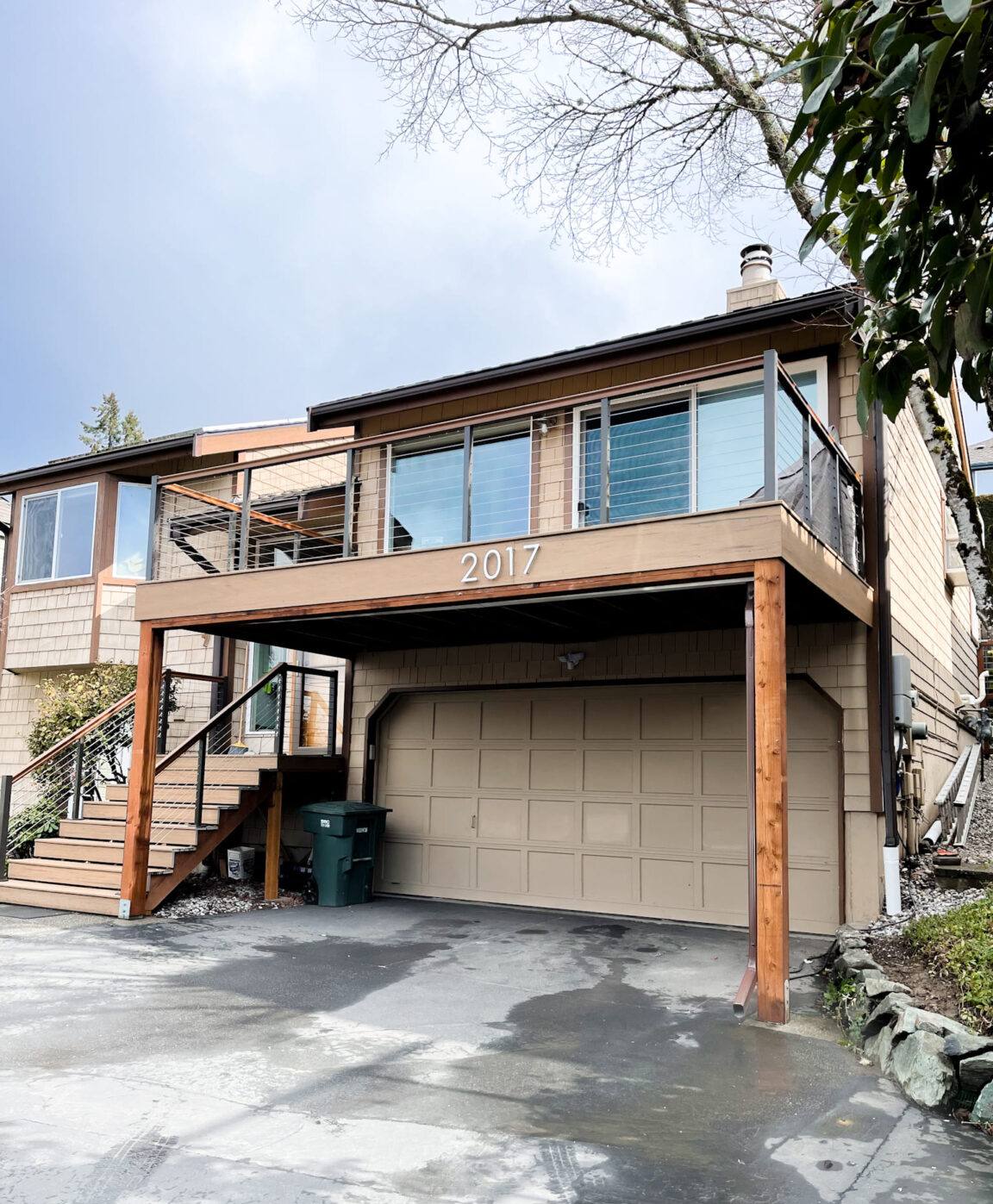
What the Climate Actually Does to a Deck
It helps to be specific about the mechanisms, because they point directly to where a repair needs to focus.
Salt Air and Metal Fatigue
Airborne salt accelerates corrosion on fasteners, joist hangers, post bases, and railing hardware. Galvanized coatings that would last decades further inland can start showing rust bloom noticeably sooner this close to the water. Corroded fasteners lose holding strength quietly — a deck board can look fine on top while the nail or screw beneath it has already lost most of its grip.
Driving Rain and Wind-Driven Moisture
Storms here don't just fall straight down; wind pushes rain sideways into gaps, under flashing, and behind ledger boards. Water that gets behind a ledger connection — where the deck attaches to the house — is one of the most serious things we check for, because that joint carries structural load and hidden rot there is a safety issue, not just a cosmetic one.
The Long Moss Season
Moss and algae thrive in the shaded, moisture-retentive conditions common on covered decks and north-facing yards. Beyond looking bad, moss holds water against the wood surface far longer than bare boards would dry on their own, and it makes deck surfaces slick and genuinely unsafe underfoot, especially on stairs.
Signs Your Deck Needs Repair — Not Just Cleaning
A pressure wash and a coat of sealer can make a tired deck look better without fixing what's actually wrong underneath. Here's what tells us a repair is needed rather than routine upkeep:
- Soft or spongy spots when you walk across the boards, especially near the house or stair landings
- Visible gaps, rust streaks, or popped fastener heads along joists and ledger boards
- Railings or posts that flex or wobble when you lean on them
- Persistent green or black staining that returns within weeks of cleaning
- Boards that have cupped, split, or pulled away from each other at the ends
- A ledger board that shows staining or gapping where it meets the siding
- Stair stringers that feel less rigid than the rest of the deck
Any one of these on its own might be minor. Two or three together usually mean moisture has been getting into the structure for a while, and it's worth having someone look underneath before deciding whether it's a repair or something bigger.
What a Correct Deck Repair Involves
Start With the Framing, Not the Surface
The boards you walk on are the least important thing to get right if the framing underneath is compromised. Joists, beams, posts, and the ledger connection carry the load — a repair that replaces a few worn deck boards but ignores a rusting joist hanger or a soft ledger is a cosmetic fix, not a structural one. We check the framing first, every time, because that's where the actual failures start in this climate.
Fastener and Hardware Replacement
Given how salt air treats metal here, we don't reuse corroded fasteners or hangers just because they're not fully failed yet — they're usually most of the way there. Matching hardware to the exposure (stainless or heavier-coated fasteners in more exposed spots) costs more up front but saves a repeat repair.
Board Replacement and Spacing
When decking boards need to come out, we pay attention to gap spacing between boards. Too tight, and boards can't shed water or dry out between rains; too wide, and you get a tripping and drainage headache. Correct spacing matters more here than in a drier climate because the boards spend more of the year wet.
Railings and Guards
Railings take constant hand contact and lateral stress, and they're often the first thing to show rust or wobble because the connection points are smaller and more exposed. Any railing repair we do gets checked for code-relevant height and baluster spacing, not just re-secured as-is.
Flashing at the Ledger
This is the detail most often missed in a quick patch job. Proper flashing directs water away from the ledger-to-house connection instead of letting it pool and soak in. If your deck doesn't have it, or has flashing that's failed, we address that as part of the repair — not as an upsell afterthought.
Repair vs. Replace: What Actually Drives the Decision
Homeowners often assume any deck problem means a full rebuild. Often it doesn't. The table below covers the factors that actually determine which way a given deck should go.
| Factor | Leans Toward Repair | Leans Toward Replacement |
|---|---|---|
| Framing condition | Solid, dry joists and posts; isolated problem areas | Widespread rot or corrosion in structural members |
| Ledger connection | Sound, properly flashed | Soft, stained, or missing flashing entirely |
| Age of deck | Under 15-20 years, built to a reasonable standard | Original construction was undersized or poorly detailed |
| Extent of damage | Localized to a few boards, one railing section, or stairs | Damage spread across most of the surface and substructure |
| Material | Sound framing under a worn wood or composite surface | Original lumber was never rated for ground or wet exposure |
Cost is a real factor too, but it follows from the condition of the structure more than the other way around — a deck with good bones is almost always cheaper to repair than to justify tearing out.
Decking Material Options for This Climate
If boards need full replacement, this is the point where it's worth talking through material, since it changes the maintenance picture for years to come.
| Material | How It Handles Local Conditions | Maintenance |
|---|---|---|
| Pressure-treated wood | Affordable, needs regular sealing to resist moisture and moss | Annual cleaning and re-sealing recommended |
| Cedar | Naturally moisture-resistant, still benefits from a protective finish here | Periodic cleaning and refinishing |
| Composite decking | Resists rot and doesn't need sealing, but surface can still grow algae/moss in shaded, damp spots | Occasional cleaning, no sealing |
We don't push one material as universally "best" — it's a genuine trade-off between upfront cost, maintenance commitment, and how much shade and moisture a given deck actually sits in. What we do insist on, regardless of surface material, is that the framing and fasteners underneath are rated for the exposure, since that's what actually fails first out here.
How We Handle a Marietta Deck Repair
- On-site assessment. We look above and below the deck — surface boards, framing, ledger, posts, and footings — and check for the moisture and corrosion patterns typical of this area.
- Honest scope. We tell you plainly whether you're looking at a targeted repair or something more extensive, and why, before any work starts.
- Structural work first. Framing, hardware, and the ledger connection get addressed before any cosmetic surface work begins.
- Matching materials and fasteners to exposure. Hardware and fasteners are selected for the specific spot's salt and moisture exposure, not a one-size-fits-all spec.
- Surface repair or replacement. Damaged boards, railings, or stair components are replaced with correct spacing and secure attachment.
- Final check. We walk the deck with you, point out anything worth watching, and give you realistic maintenance guidance for your specific setup.
Keeping a Repaired Deck in Good Shape Afterward
A repair is only as good as the upkeep that follows it. In a climate with this much moisture and moss pressure, a little seasonal attention goes a long way toward avoiding a repeat call in a few years.
- Sweep debris off the deck regularly, especially fallen leaves and needles that trap moisture against boards
- Clean moss and algae off the surface before it gets thick enough to hold standing water
- Check railings and stair connections for looseness once or twice a year
- Keep gutters and downspouts near the deck clear so runoff isn't draining onto or under it
- Re-seal wood decking on the schedule appropriate to the product — don't wait until it's visibly gray and dry
- Look underneath the deck occasionally, not just at the walking surface, for early signs of moisture or corrosion
Why It Matters to Hire a Crew That Already Works This Area
Deck repair isn't identical everywhere. A contractor who mostly works drier inland climates may not think twice about fastener grade, ledger flashing, or moss-prone shade patterns, because those aren't the problems they see day to day. We work decks and siding across Ferndale and Whatcom County regularly, which means we're not guessing at how salt air and driving rain will treat a repair over the next five winters — we've already seen what holds up and what comes back with the same complaint. That familiarity shows up in smaller decisions throughout a job: which fasteners we reach for, where we insist on flashing even if it wasn't asked for, and which shaded spots we flag for extra moss maintenance before it becomes a real problem.
Get a Straight Answer on Your Deck
If your Marietta-area deck has soft spots, rust streaks, wobbly railings, or moss that keeps coming back no matter how often you clean it, it's worth having someone take a real look above and below the surface. We offer a free, no-pressure estimate — you'll get an honest read on whether you're looking at a targeted repair or something bigger, with no obligation to move forward. Fill out the form below to get started.