 Ferndale Siding
 Board & Batten in Marietta: A Style That Has to Earn Its Keep
Board and batten has become one of the most requested exterior looks in Whatcom County, and Marietta is no exception. The vertical lines and crisp shadow gaps read as clean, a little modern, and a little farmhouse all at once, and it works well on both full re-sides and accent applications — gables, entry walls, dormers. But Marietta sits low and close to the water on the edge of Ferndale, and that location means the siding on a home here does more work than the same siding would somewhere set back from the shoreline. Board and batten, specifically, has more seams and more fastener penetrations per square foot than flat lap siding, which makes the material underneath the pattern matter more here than almost anywhere else in the county.
This page is about that one combination: board and batten, installed correctly, on a Marietta property, in a climate that includes salt air, driving rain, and a moss season that runs long. We install this style exclusively in James Hardie fiber cement, and the reasoning behind that is specific to what this look demands and what this location does to a home's exterior over time.
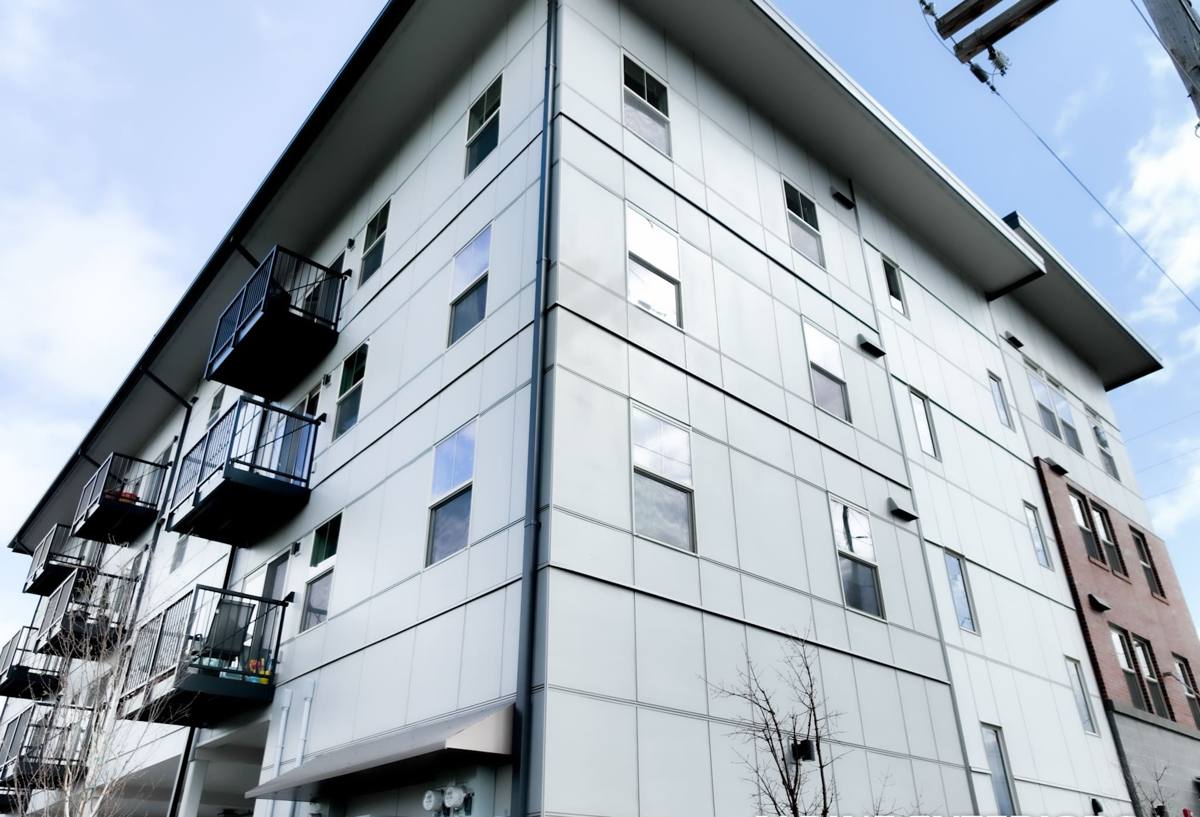
What Marietta's Location Actually Does to Vertical Siding
Marietta sits close to the water on the low-lying edge of Ferndale, near the Nooksack River delta and Lummi Bay, which puts homes here in more direct contact with marine air and wind than properties set further inland. Three things about that exposure matter specifically for a board and batten system:
Salt Air and Fastener Corrosion
Salt-laden air moving off the water accelerates corrosion in fasteners, flashing, and trim hardware. Board and batten relies on a face-nailed or blind-nailed batten over every seam, so there are simply more fastener points exposed to that corrosion than a lap siding job has. A corroding fastener doesn't just look bad — it loses holding strength and can open a small gap at exactly the point where two pieces of siding meet.
Driving Rain Into the Seams
Wind off the water pushes rain sideways instead of straight down, and sideways rain finds its way into laps, seams, and batten joints that a calmer climate would never test the same way. Every seam in a board and batten system is a place water can be forced into if the flashing and sealing behind it weren't done correctly, and Marietta's exposure means those seams get tested more often and harder than they would a few miles inland.
A Moss Season That Doesn't Really End
Consistent moisture and mild temperatures keep moss and mildew active across most of the year here, especially on shaded or north-facing walls. Organic growth holds water against the siding surface longer than it would otherwise sit there, and on a vertical system with more shadow lines and horizontal batten edges catching debris, that growth has more places to take hold than it does on a flat wall.
Why the Substrate Decision Matters More With This Style
Board and batten can be built two ways: true panel systems manufactured specifically for the pattern, with batten spacing engineered in, or site-assembled versions where flat boards go up first and individual battens are fastened over each seam by the installer. Both can look identical from the curb. What actually determines how the job performs over the next twenty years is whether the material underneath is dimensionally stable, moisture-resistant, and rated for the exposure a Marietta property actually sees.
| Material | Behavior at the Seams | Typical Weak Point Near the Water |
|---|---|---|
| James Hardie fiber cement | Dimensionally stable; doesn't swell or shrink with moisture | Caulk joints and fastener lines if not detailed correctly at install |
| Vinyl board and batten | Doesn't absorb water but distorts with temperature swings | Panel joints and channels where wind-driven rain can get pushed behind the material |
| LP SmartSide / engineered wood | Wood-fiber core absorbs moisture readily at cut edges | Batten seams and field cuts are exactly where this product is weakest |
| Cedar / primed spruce | Absorbs and releases moisture continuously with humidity | Cupping and checking at every seam, accelerated by repeated wet-dry cycling |
A material that swells, shrinks, or absorbs water into its fiber structure is a manageable liability on a flat wall with fewer joints. On board and batten, with a seam every eight to twelve inches depending on the pattern, that same weakness is repeated across the entire wall. That's the core reason we don't install this style in anything other than fiber cement — the pattern itself amplifies whatever the material's weak points already are.
What Correct Installation Involves
Board and batten is less forgiving of shortcuts than standard lap siding, simply because there's more of it — more fasteners, more seams, more places water can find a way in if a step gets skipped. A correct installation on a Marietta property includes:
- A continuous, properly lapped water-resistive barrier behind the boards, installed before the first panel goes up rather than patched around it afterward
- Flashing at every window, door, and wall penetration, sequenced to shed water outward and down into the barrier below it
- Correct fastener type, length, and spacing for fiber cement at this thickness — not whatever happens to be in the nail gun
- Sealed and primed cut edges everywhere a board or batten was field-cut, per manufacturer specification
- A drainage gap or rainscreen detail that lets incidental moisture drain and the wall breathe, rather than trapping it flat against the sheathing
- Correct clearance between the bottom of the siding and grade, decks, or roof lines, which matters more on lower-lying lots where water sits longer after a storm
Every one of these steps is invisible once the job is finished, which is exactly why they're the first things to get skipped on a rushed or underbid installation — and exactly why they're worth asking about directly before you sign a contract.
The James Hardie System We Install
For board and batten specifically, we use James Hardie's vertical panel siding paired with HardieTrim battens — engineered fiber cement made from Portland cement, sand, and cellulose fiber, cured into a dense board that doesn't move with moisture the way wood-based products do.
HZ5 Climate Engineering
Hardie manufactures its siding in climate-specific formulations, and product specified for this region falls under the HZ5 line, engineered for sustained high-moisture, high-humidity exposure. That's a real difference in formulation, not a label, and it's a better match for a low-lying, near-water property like a Marietta home than the versions of the product built for drier inland climates.
ColorPlus Factory Finish
Board and batten has more exposed edges and seams catching sun and rain from different angles across the day than a flat wall does, which puts extra strain on whatever finish is protecting it. ColorPlus is baked on in multiple coats under controlled factory conditions before the siding ever reaches the job site, and it holds color and resists chipping far longer than field-applied paint — especially at the seam-heavy joints this style is built around.
Warranty
James Hardie backs its siding with a long, transferable limited warranty, and ColorPlus finishes carry their own separate finish warranty. A transferable warranty also matters at resale, since it follows the house rather than the original owner.
Our Process for a Marietta Board & Batten Project
- On-site assessment — we look at the wall assembly, existing siding condition, drainage at grade, and how much direct wind and water exposure the specific elevations of the home actually see
- Design and layout — batten spacing and panel layout are planned around the home's proportions and window and door openings before any material is ordered
- Tear-off and prep — removal of failing siding, inspection of sheathing for hidden moisture damage, and repair of anything found before the new system goes up
- Water-resistive barrier and flashing — installed and sequenced correctly the first time, since this is the layer that determines how the whole system performs
- Installation — panels and battens fastened to Hardie specification, with correctly sealed cut edges and proper clearances
- Final walkthrough — a review of the finished work with the homeowner before we consider the job done
Cost Factors for a Marietta Board & Batten Job
| Factor | Why It Matters |
|---|---|
| Full re-side vs. accent application | A gable or entry accent costs far less than siding an entire elevation or home |
| Condition of existing sheathing | Hidden moisture damage found during tear-off adds repair scope before new siding goes up |
| Batten spacing and panel layout | Tighter spacing means more material, more fasteners, and more labor per square foot |
| Trim and window/door detail complexity | More openings and corners mean more flashing and cut work |
| Proximity to open water | Lower-lying, near-water lots often warrant extra drainage detailing at grade |
| Color | Standard ColorPlus colors versus premium or custom-matched finishes affect material cost |
Why a Crew That Already Works Marietta Matters
Marietta isn't a large enough area to have its own separate set of exterior contractors, and a lot of siding crews treat it as an afterthought stop on the way to somewhere bigger. That shows in the details — fastening patterns and drainage decisions that would be fine on a sheltered inland lot but fall short on a property this close to the water. We work in Marietta and the rest of Ferndale and Whatcom County regularly enough to know that a lower-lying, water-adjacent lot needs different attention at grade and along ground-level trim than a home set back and up the hill. That's not a guess made on the day of installation — it's built into how we spec and detail the job from the start.
Maintenance Checklist for Marietta Board & Batten Homes
- Rinse siding and battens down at least once a year to clear salt residue and organic buildup before it takes hold
- Check caulk joints at seams, corners, and trim annually and re-caulk anywhere it's cracked or pulled away
- Watch shaded and north-facing walls for early moss growth and address it before it spreads
- Keep gutters and downspouts clear so water isn't sheeting down the wall face during storms
- Confirm clearance between the bottom of the siding and grade or plantings hasn't closed up over time
If you're planning a board and batten project in Marietta — a full re-side or an accent wall — we're glad to walk the property with you and give you a straight read on what it actually needs. Reach out below for a free, no-pressure estimate.