 Ferndale Siding
 Composite Decking for Lummi Nation's Waterfront Exposure
Lummi Nation sits out on the peninsula west of Ferndale, right up against Bellingham Bay and the Strait, and that location puts real strain on anything built outdoors. A deck out here doesn't deal with the occasional wet weekend the rest of Whatcom County gets — it deals with salt-laden air moving off the water almost daily, rain that comes in sideways as often as it falls straight down, and a shaded, damp stretch of the year long enough to keep moss and algae active for months at a time. Composite decking has become the material we recommend most often for this specific stretch of coastline, not because it's trendy, but because it holds up to that combination of stressors in a way that wood decking, left to the elements here, generally doesn't.
This page is about composite decking specifically, and about what it takes to get a composite deck right on a Lummi Nation property. We install decks throughout Ferndale and the surrounding peninsula regularly, and the approach we take here is shaped by what we've seen this exposure do to boards, fasteners, and substructures over time.
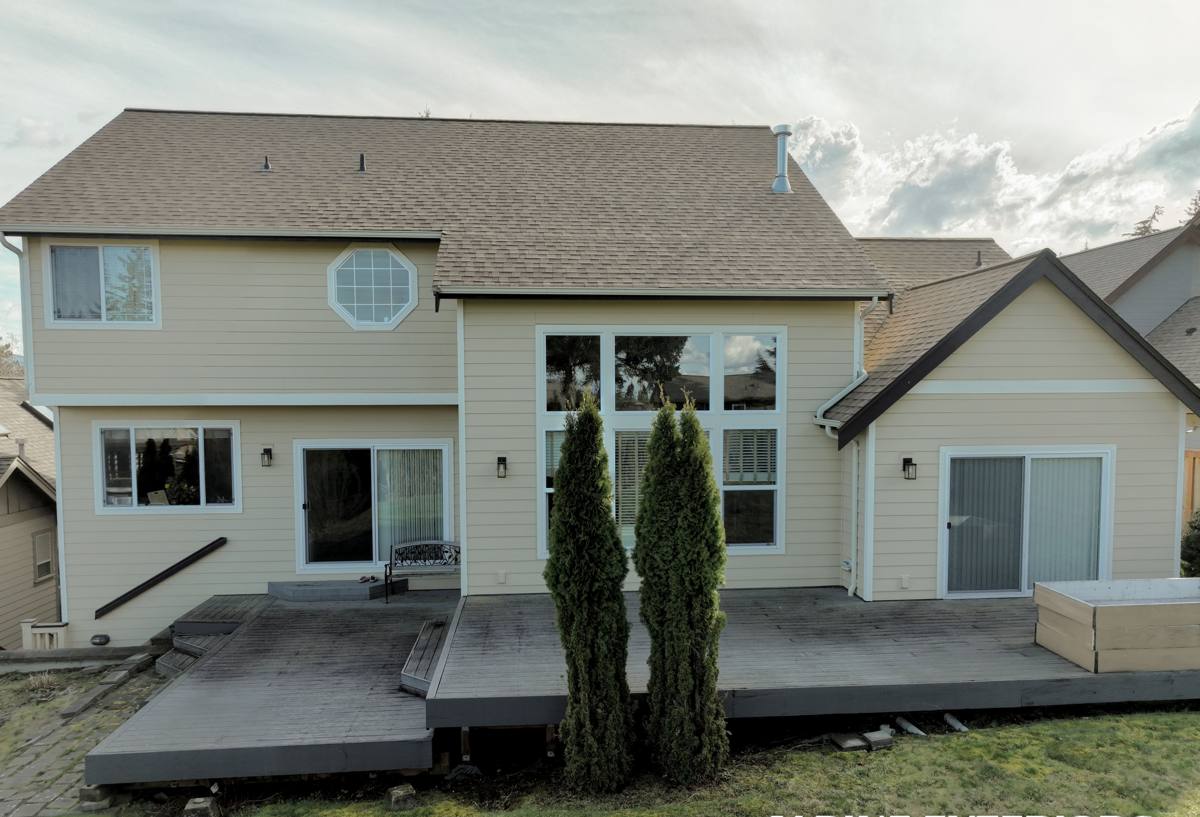
What Salt Air, Rain, and Moss Do to a Deck Here
Salt-Laden Air
The closer a deck sits to open water, the more salt it's exposed to in the air itself, not just in splash or spray. Salt accelerates corrosion in fasteners, joist hangers, and any exposed hardware, and it breaks down lower-grade finishes and coatings faster than a drier inland site would. On a wood deck, that often shows up as fastener staining and early finish failure. On a poorly built composite deck, it shows up as corroding hidden hardware underneath boards that otherwise still look fine on the surface — which is part of why substructure hardware choice matters as much as the decking material itself out here.
Wind-Driven, Sideways Rain
Open water means fewer windbreaks, and wind is what turns rain into a problem that attacks from the side and from underneath, not just from above. On a deck, that means water gets driven between boards, up under railings, and into any gap where flashing or spacing wasn't handled correctly. A deck surface can shed water fine on a calm day and still trap moisture underneath during a winter storm system, which is exactly the condition that leads to substructure rot years before the visible decking shows any sign of a problem.
A Long Moss and Algae Season
Peninsula terrain, partial tree cover in places, and near-constant dampness add up to a moss and algae season that runs longer here than it does further inland. Shaded decks and north-facing sections grow moss first, and it isn't just cosmetic — sustained organic growth holds moisture against the board surface and, if it works its way into deck board grooves or fastener channels, keeps that moisture in contact with the material longer than an open, sun-exposed deck would ever see.
Why Composite Decking Fits This Exposure
Wood decking can be built well and maintained well anywhere, including Lummi Nation. But it asks a lot of a homeowner on a property with this much sustained moisture and salt exposure: annual or biannual staining and sealing, close attention to end-grain cuts and fastener holes where water gets in fastest, and an ongoing fight against moss that regrows quickly in a shaded, damp environment. Miss a maintenance cycle or two and a wood deck on a waterfront lot can show real deterioration faster than the same deck would inland.
Capped composite decking changes that equation. The boards don't absorb water into a raw wood core the way traditional lumber does, they don't need staining or sealing, and a quality cap layer resists the surface staining that lets moss and algae get a foothold in the first place. That doesn't mean composite decking is maintenance-free — nothing on a Lummi Nation waterfront lot truly is — but it removes the annual finish-and-reseal cycle that wood decking demands, which matters more here than it would on a sheltered inland lot.
Composite Decking Compared to the Alternatives
| Material | Behavior in Salt Air and Rain | Moss and Algae Resistance | Ongoing Maintenance |
|---|---|---|---|
| Pressure-treated wood | Absorbs moisture into the core; fastener corrosion shows early near open water | Low — porous surface holds organic growth | Annual cleaning, staining, and sealing to keep ahead of rot |
| Cedar or other natural wood | Better natural resistance than treated pine, but still absorbs moisture over time | Low to moderate — depends heavily on maintenance | Regular finish maintenance; higher material cost than treated lumber |
| Uncapped or first-generation composite | Can absorb moisture at the surface and stain or mildew in shaded, damp spots | Low — porous surface without a cap layer | Occasional cleaning; more prone to staining than capped boards |
| Capped composite decking | Cap layer resists moisture absorption and salt-related surface damage | Higher — smooth cap sheds organic growth more easily than porous surfaces | Periodic washing; no staining or sealing required |
We install capped composite systems specifically because of that last row. On a lot with this much sustained exposure, the cap layer is doing real work, not just adding a warranty talking point.
What a Correct Composite Deck Build Involves
The decking boards only account for part of how well a deck performs here. The substructure and the details underneath the surface matter just as much, and on a Lummi Nation property, several of them matter more than they would on a calmer inland lot.
Ledger Attachment and Flashing
Where a deck attaches to the house is the single most common point of hidden water intrusion we see. A ledger board that isn't properly flashed lets water track behind it and into the wall assembly, and on a property taking this much wind-driven rain, an under-flashed or poorly sealed ledger tends to fail faster than it would somewhere more sheltered. We treat ledger flashing as a non-negotiable detail, not an afterthought.
Joist Spacing and Hardware
Composite decking generally calls for tighter joist spacing than solid wood decking, and the manufacturer's spec on that point isn't a suggestion — boards installed over-spanned can sag or flex in ways that show up within a few years, especially with the added moisture cycling this location sees. Fastener and joist hanger material matters too; corrosion-resistant, coated hardware rated for coastal or high-moisture exposure earns its cost here, where standard hardware can start showing rust well ahead of schedule.
Airflow and Drainage Underneath
A deck that traps moisture underneath, whether from poor grading, low clearance, or a lack of ventilation, stays damp longer after every rain event, and out here that's most days for a good stretch of the year. Correct clearance from grade, attention to drainage slope, and, where the design calls for it, an underdeck drainage system all help keep the substructure drying out between storms instead of staying saturated through the wet season.
Fastening Method
Hidden fastener clip systems give a cleaner surface and avoid the small water traps that face-screwed boards can create around each screw head. On a deck that sees this much rain, fewer surface penetrations means fewer places for water to sit and work its way into the board over time.
Our Process, Start to Finish
- An on-site walk-through of the deck location, house connection point, and grade, since every Lummi Nation lot handles water and wind a little differently
- A straightforward recommendation on decking material, board pattern, and railing that fits both the home and the budget, with no pressure toward the most expensive option
- A written estimate that spells out substructure work, decking, railing, and any flashing or drainage upgrades separately, so you know what you're paying for
- Correct ledger flashing, joist spacing, and corrosion-resistant hardware as standard practice, not an upsell
- A final walkthrough where we go over the finished deck and basic care before we consider the job done
Keeping a Composite Deck in Good Shape Out Here
Composite decking cuts down on maintenance compared to wood, but a deck this close to open water still benefits from a bit of regular attention. None of it is difficult, but skipping it for a few seasons lets moss and grime get a head start that's harder to reverse.
- Sweep off leaves, needles, and debris regularly, especially in shaded corners where moss takes hold first
- Wash the deck surface a couple of times a year with a soft-bristle brush and mild soap and water, more often on north-facing or heavily shaded sections
- Rinse salt residue off after storm systems that bring heavy wind off the water, since dried salt film can dull a board's finish over time
- Check railings, stairs, and any visible hardware periodically for corrosion or looseness
- Keep gutters and downspouts near the deck clear so runoff isn't dumping extra water onto the deck surface or substructure
- Trim back vegetation that's shading the deck and keeping it damp longer than it needs to be
Why a Crew That Already Works Lummi Nation Matters
A crew that builds decks on this specific stretch of the peninsula regularly gets a feel for how salt air, wind-driven rain, and a long moss season actually behave on real properties, not just how a product performs on a spec sheet. That shows up in small decisions on install day: which corner of the deck stays wet longest and needs extra drainage attention, where hidden hardware is worth upgrading beyond the minimum spec, and how tight the ledger flashing detail really needs to be given how much water this exposure pushes at a house. Lummi Nation's proximity to open water means a heavier version of the same conditions the rest of Ferndale deals with, and a crew with hands-on local experience treats that difference seriously rather than building the same deck they'd build on a dry inland lot forty minutes away.
Get an Honest Look at Your Project
If you're planning a new composite deck, replacing an aging wood deck, or just want an honest opinion on whether your current deck's substructure is holding up to this exposure, we're glad to take a look. Reach out using the form below to schedule a free, no-pressure estimate.