 Ferndale Siding
 Windows Built for How Lynden Actually Weathers
Lynden sits inland from Bellingham Bay, but "inland" in Whatcom County still means a marine climate. The same weather systems that bring driving rain and heavy humidity off the water reach Lynden too, just with a little less salt in the air than homes right along the coast. What that means for windows is simple: moisture is the enemy, all year, not just during a few storms. Frames that trap water, seals that were installed a little loose, or glass units that were never rated for this kind of sustained damp will show it early, usually as fogging, soft trim, or a window that won't latch cleanly anymore.
Add in the long moss season that Whatcom County gets between fall and spring, and you've got a climate that's hard on anything with a seam, a joint, or a sill. Custom windows done right in this area aren't just about looks or energy bills. They're about choosing materials and installation details that shed water instead of holding it, and that keep doing so for decades, not just the first few winters.
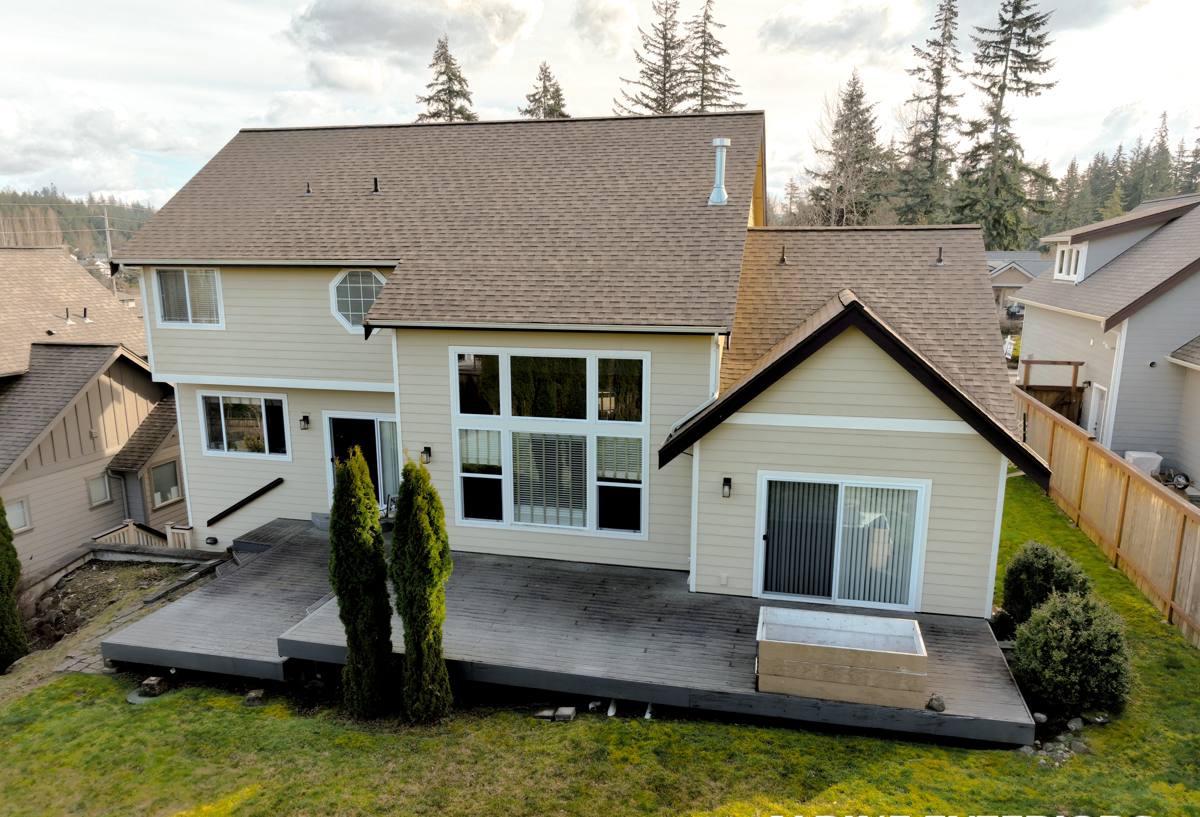
What "Custom" Actually Means for a Lynden Window Job
"Custom" gets used loosely in this trade. For us it means the window is sized, configured, and specified for your opening and your home, not pulled off a shelf in a stock size and forced to fit. On older Lynden homes, especially farmhouses and homes built before standardized openings became common, stock windows almost never fit cleanly. That gap between window and frame is exactly where water gets in.
What we're actually customizing
- Exact opening measurements, taken after the old window is removed, not guessed from the outside
- Frame material matched to the wall assembly (wood-framed vs. newer stick-built vs. additions)
- Glass package matched to sun exposure and the room's use
- Operating style matched to how you actually use the room, not what's fastest to install
- Trim and exterior detailing that matches the rest of the home instead of standing out
None of this is upselling. A window that's slightly the wrong size gets shimmed and caulked to make it fit, and caulk is not a long-term water management strategy in a climate that sees this much rain.
Signs Your Current Windows Are Losing the Fight
Most homeowners don't replace windows because they woke up wanting new windows. They replace them because something started going wrong and they finally called someone. Here's what we hear about most often on service calls in and around Lynden.
- Condensation or fogging between the panes of a double-pane window (the seal has failed)
- Wood trim or sills that feel soft, spongy, or are visibly darkened
- Windows that are noticeably harder to open, close, or lock than they used to be
- Visible moss or dark green-black growth on the sill, frame, or nearby siding
- A cold draft near the window even when it's fully latched
- Paint that's peeling specifically around the window frame, not the wall generally
- Noticeably higher heating bills without any other change in the house
Any one of these is worth a look. Several together usually mean the window and the flashing behind it have been letting water in for a while, and it's worth having someone check what's happening in the wall, not just the window itself.
Frame Materials That Actually Hold Up Here
There isn't one "best" window material for every home, but in a wet marine climate some trade-offs matter more than others. Here's how the common options actually perform once you account for Whatcom County humidity and rain, not just showroom appearance.
| Material | Moisture Behavior | Maintenance | Best Fit |
|---|---|---|---|
| Vinyl | Won't rot; can flex slightly with temperature swings | Low — occasional cleaning | Most Lynden homes, budget-conscious replacements |
| Fiberglass | Very stable, minimal expansion/contraction, holds seals well over time | Low | Homes wanting long service life and tight seals with minimal upkeep |
| Wood (clad exterior) | Interior warmth, but exterior wood face needs protection from driving rain | Higher — periodic exterior inspection and maintenance | Historic-style homes where wood interior look matters |
| Aluminum | Conducts cold and can promote interior condensation in our climate | Low | Rarely our recommendation for residential in this region; we'll explain why case by case |
We don't push one brand or material on every job. We look at your home's exposure, how much direct weather a given wall takes, and what you're trying to solve, then talk through the real trade-offs. If a material isn't a good fit for your situation, we'll say so before you spend money on it.
Glass Packages Worth Asking About
For most Lynden homes, a good double-pane unit with low-E coating and argon gas fill is the sensible baseline. Triple-pane adds cost and weight and is worth it mainly on north-facing walls or rooms where noise and heat loss are a real problem, not as a blanket upgrade for the whole house. What matters more than the glass spec sheet, honestly, is whether the seal around that glass unit was installed correctly, because a great glass package in a poorly sealed frame will still fail.
Installation Is Where the Job Is Actually Won or Lost
Window failures in this climate are rarely about the window product itself. They're almost always about flashing, sealing, and how the window ties into the wall assembly behind the siding. This is the part of the job that isn't visible once we're done, which is exactly why it deserves the most attention while we're there.
What correct installation includes
- Removing the old window fully and inspecting the framing and sheathing underneath for rot or hidden water damage before anything new goes in
- Installing (or correcting) flashing at the sill and head so water is directed out and down, away from the wall cavity
- Using appropriate sealants and house wrap integration, not just caulk applied around the trim
- Shimming and leveling so the window operates correctly and the seal isn't under stress
- Confirming proper drainage at the sill pan before trim goes back on
- Weatherproofing exterior trim details so water sheds away from joints, not into them
Skip any of those steps and a well-made window can still leak, rot the framing around it, and fail years earlier than it should. This is also why we won't install a customer-supplied window without inspecting the opening first. If the flashing behind the old window failed, replacing just the glass and frame without addressing that is putting a new window on top of an old problem.
How Our Process Works
- On-site assessment. We look at your current windows, the openings, and any visible signs of water intrusion before recommending anything.
- Honest scoping. We tell you what actually needs replacing versus what's still sound, and what we found behind the old window if we open one up during the estimate.
- Custom measurement and ordering. Every opening is measured individually. Nothing is ordered off a generic size chart.
- Removal and inspection. Old windows come out, and we check the framing and sheathing before anything new goes in.
- Correct installation. Flashing, sealing, and trim work done to hold up against sustained rain and humidity, not just pass a quick visual check.
- Walkthrough. We show you the finished work and how the windows operate before we consider the job done.
What Drives the Cost of a Custom Window Job
We're not going to quote a price without seeing the home, because the honest range depends on real variables. What we can do is tell you what actually moves the number, so an estimate makes sense when you get one.
| Factor | Why It Matters |
|---|---|
| Number of openings | Straightforward — more windows, more material and labor |
| Frame material chosen | Vinyl, fiberglass, and clad-wood carry different material costs |
| Condition behind the old window | Rot or water damage found during removal adds repair work before the new window can go in correctly |
| Window size and configuration | Larger openings, bay windows, or unusual shapes require more custom fabrication |
| Glass package | Standard low-E double-pane vs. triple-pane or specialty coatings |
| Trim and exterior detailing | Matching existing trim profiles or historic detailing takes more time than standard trim |
| Access and site conditions | Second-story openings or difficult access affect labor time |
The biggest wildcard is usually what we find once the old window is out. A home with well-maintained flashing might be a clean, predictable job. One with years of slow water intrusion behind the trim may need some framing repair first. We'll always tell you before doing extra work, not after.
Living With New Windows Through Whatcom County's Wet Season
A correctly installed custom window shouldn't need much from you, but a little seasonal attention goes a long way in this climate.
- Clear debris and moss from sills and nearby trim before the wet season sets in, so water has somewhere to go
- Check that weep holes on vinyl and fiberglass frames stay clear of dirt and moss buildup
- Wipe down interior condensation on especially cold, humid mornings so it doesn't sit on the sill
- Have caulking and exterior sealant checked every few years, since even good sealant has a service life
- Watch for the same early warning signs listed earlier, even on new windows, since exterior conditions (a failing gutter, a clogged downspout above a window) can undo good installation work
Why It Matters That We Already Work in Lynden
Window failures in this region tend to follow patterns tied to the local climate: which wall exposures take the worst driving rain, how moss builds up on north-facing sills, which older framing methods are more prone to hidden rot behind trim. A crew that already works Whatcom County homes has seen those patterns enough times to know what to check before problems get expensive. That's not a substitute for a careful, individual assessment of your home, but it does mean fewer surprises and a more accurate estimate from the start.
If your windows are fogging, sticking, drafting, or just past their service life, we're happy to take a look and give you a straight answer about what your home actually needs. Reach out for a free, no-pressure estimate using the form below.