 Ferndale Siding
 Why Decks Wear Out Faster in Lummi Nation
Homes around Lummi Nation sit close enough to the water that salt air is a daily fact of life, not an occasional nuisance. Combine that with Whatcom County's long, wet winters and the deep shade many properties get from surrounding fir and cedar, and you have three forces working against a wood deck at once: salt-laden air that speeds up corrosion on fasteners and connectors, near-constant moisture that soaks into end grain and framing, and low light and dampness that let moss and algae take hold on decking boards for months at a time.
None of that means a deck can't last here. It means the deck has to be built and replaced with those conditions in mind, not with a generic approach that would be fine in a drier inland climate. A deck that was built without attention to drainage, fastener grade, and airflow underneath will show its age years before it should.
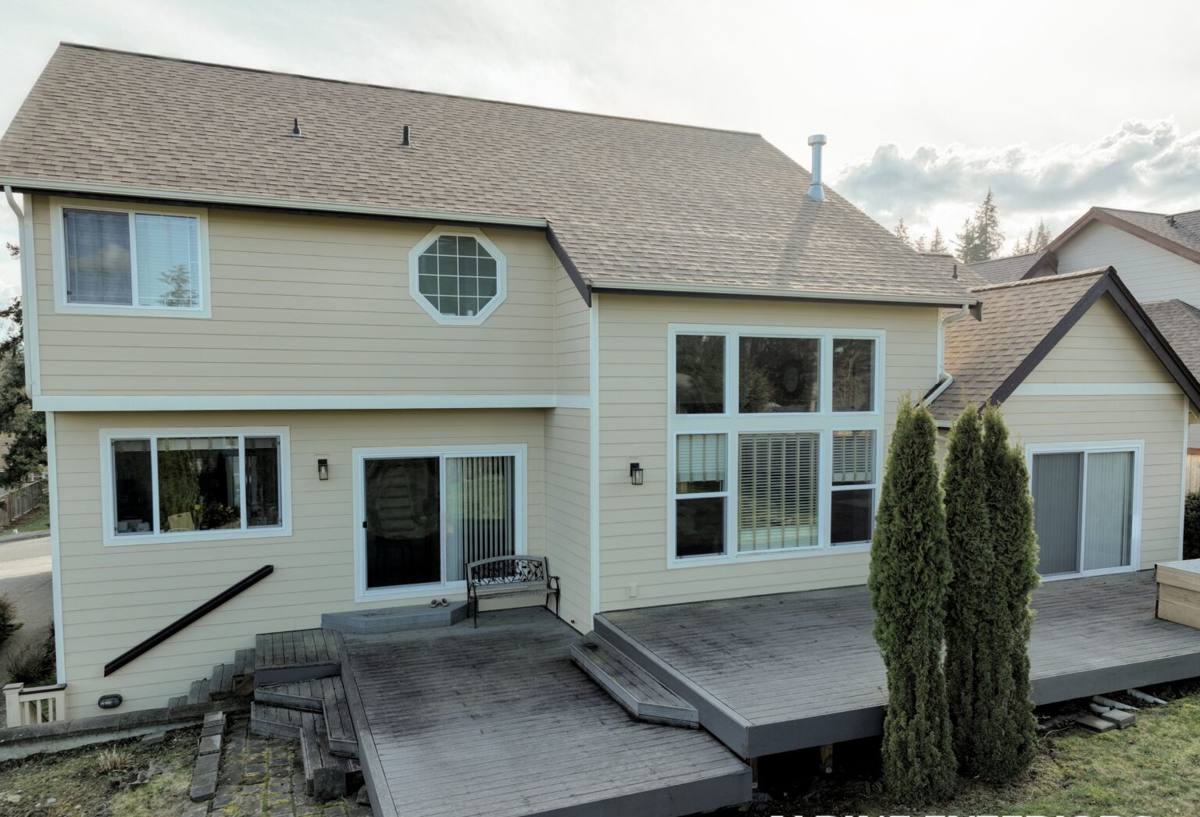
Signs a Deck Needs Replacing, Not Just Patching
Not every tired-looking deck needs a full teardown. But there's a point where patching boards and re-staining stops being worth it. We look for a few honest indicators before recommending full replacement over repair:
- Soft, spongy, or dark-stained decking boards, especially where they meet the house or run under planters and furniture
- Rust streaking or corroded fastener heads, which usually means the original hardware wasn't rated for this kind of exposure
- A ledger board (where the deck attaches to the house) that shows staining, gaps, or soft wood — this is the single most common failure point on older decks
- Wobble or give in the railing posts, which often points to rot below the surface at the post base
- Persistent moss or black algae that comes back within weeks of cleaning, a sign the boards are staying wet longer than they should
- Footings or posts that have shifted, settled, or show visible rot at ground contact
If the framing and footings are sound and it's really just the decking surface that's failed, a resurfacing job can make sense. If the ledger, joists, or posts are compromised, replacement is the honest recommendation — patching structural rot just delays a bigger problem.
What a Correct Deck Replacement Involves
Footings and Posts
Soil around Lummi Nation and the surrounding lowlands tends to hold moisture longer than well-drained inland sites. Footings need to be set to proper depth and, where soil conditions call for it, sized appropriately so posts aren't sitting in a wet pocket. Post bases should hold the wood off the concrete and off standing water, not bury it directly in the ground the way a lot of older decks were built.
Ledger Board Attachment
This is where most deck failures start. The ledger has to be properly flashed so water sheds away from the house rather than tracking behind the board and into the rim joist. We use flashing and fastening methods built for this — not just lag screws into siding with no flashing at all, which is unfortunately common on older builds in this area.
Joists, Framing, and Hardware
Joist hangers, structural screws, and other connectors need to be rated for outdoor and coastal-adjacent exposure. Standard electro-galvanized hardware corrodes faster near salt air; we spec connectors and fasteners built to hold up under that exposure so the frame doesn't become the weak point again in five years.
Airflow Underneath
A deck built low to the ground or against a hillside with poor airflow underneath will stay damp longer after every rain. Where the site allows it, we build in enough clearance and, if needed, ventilation gaps so the underside of the deck can actually dry out between storms instead of staying wet through the whole moss season.
Choosing Decking Material for This Climate
There's no single "right" material for every deck — it depends on budget, how much upkeep you're willing to do, and how close the deck sits to salt air and standing moisture. Here's how the common options actually compare for a Lummi Nation property:
| Material | Moisture & Salt Air Behavior | Maintenance | Typical Lifespan |
|---|---|---|---|
| Pressure-treated lumber | Resists rot well when properly sealed; end cuts and fastener holes need re-treating | Annual cleaning, re-sealing every 1-2 years | 15-20 years with upkeep |
| Cedar | Naturally rot- and insect-resistant; still needs sealing to fight graying and moss in constant damp | Cleaning and oil/sealer every 1-2 years | 15-20 years with upkeep |
| Composite decking | Doesn't absorb water like wood; some early composite products struggled with mold/moss in shaded, damp spots — modern capped composites handle this much better | Periodic washing, no sealing or staining | 25-30+ years, manufacturer-warrantied |
| PVC decking | Fully moisture-resistant, doesn't support rot; performs well in constant shade and salt air | Occasional washing | 25-30+ years, manufacturer-warrantied |
We don't push one product on every job. Cedar and pressure-treated lumber cost less up front and look great, but they ask for real upkeep in a climate that gives them a lot of moss and moisture to fight. Composite and PVC cost more initially but take that maintenance burden off your plate for decades. We'll walk through the honest trade-offs for your specific site — shade level, exposure to weather off the water, and how much maintenance you actually want to do — before you commit.
Railings, Fasteners, and Hardware
Railings take a lot of abuse in this climate — hands, weather, and salt air all hit them directly. Wood railings need the same sealing discipline as wood decking. Metal or cable railing systems need to be a grade that won't pit or corrode near the water. Every fastener that's visible or structural on the job should be rated for coastal-adjacent exposure — stainless or coated hardware, not standard-grade screws that'll bleed rust streaks into the decking within a couple of seasons.
Permits and Site Considerations in Lummi Nation
Building requirements can vary depending on exactly where a property sits — whether it's on tribal trust land, fee land, or falls under a particular jurisdiction's building rules. We don't assume; before work starts, we confirm what permitting and inspection process applies to your specific property and handle that paperwork as part of the job, rather than guessing or skipping it. Site access is also worth planning for — waterfront and wooded lots around Lummi Nation sometimes have limited equipment access, which we account for when scheduling demo and material delivery.
Our Deck Replacement Process
- On-site assessment. We inspect the existing deck's framing, ledger, footings, and posts to confirm what's actually failing versus what's cosmetic.
- Honest scope and estimate. You get a clear breakdown of what's being replaced, the material options for your site, and a straightforward price — no vague allowances.
- Permit confirmation. We verify what's required for your property before any demo starts.
- Demo and disposal. Old decking, framing, and hardware come out and are hauled off; we check the ledger and rim joist condition once the old boards are gone.
- Framing and flashing. New footings, posts, joists, and a properly flashed ledger connection go in first — this is the part that determines whether the deck lasts.
- Decking, railing, and finish work. Your chosen material goes down, railings are installed, and everything is checked for level, fastening, and finish quality.
- Final walkthrough. We go over the finished deck with you, including what maintenance (if any) your material choice needs going forward.
Maintenance Checklist for Your New Deck
Whatever material you choose, a few habits go a long way toward getting the full lifespan out of it in this climate:
- Sweep debris off the deck regularly, especially fir needles and leaves that trap moisture against the boards
- Clean moss and algae as soon as it appears rather than letting it establish — it's far easier to remove early
- Check and clear gaps between boards so water can drain through instead of pooling
- Inspect the ledger board area and post bases once a year for early signs of staining or softness
- Reseal wood decking and railings on the schedule your material needs — don't wait until it's visibly gray and dry
- Keep planters and furniture feet off direct board contact, or move them periodically, to avoid trapped moisture spots
Why Hire a Crew That Already Works in Lummi Nation
A deck built to a generic spec sheet doesn't account for what actually happens to wood and hardware a few hundred yards from saltwater under a Whatcom County winter. A crew that already works this area knows which fastener grades hold up, how much airflow a deck needs given local shade and rainfall patterns, and what site conditions to expect on wooded or waterfront lots. That local familiarity shows up in fewer surprises during the job and a deck that's still solid well past when a poorly-built one would need attention again.
If your deck is showing rot, rust, or persistent moss, or if it's simply time to replace it right, we'd be glad to take a look. Reach out for a free, no-pressure estimate using the form below — we'll walk the site, give you a straight assessment, and lay out your material options honestly.