 Ferndale Siding
 What Kendall's Weather Actually Does to Siding
Kendall sits back from the coast, up toward the foothills, but that doesn't mean the house is spared from Whatcom County's weather. The same weather system that soaks Ferndale and the coastline pushes rain up into the inland communities too, and in a lot of ways the foothills get it worse — more annual rainfall, cooler shaded lots under tree cover, and long stretches where siding simply doesn't get a chance to fully dry out between storms. That combination of moisture and shade is exactly what moss, algae, and mildew need to take hold on a wall.
Add in the temperature swings between a damp Pacific winter and a warm, dry summer, and you've got a climate that's genuinely hard on exterior materials. Wood-based siding products swell and contract, seams open up, and paint film fails faster than it would in a drier climate. Vinyl gets brittle in cold snaps and can warp in direct summer sun on south-facing walls. None of this is unique to any one street in Kendall — it's the reality of building in this part of Whatcom County, and it's the starting point for any honest conversation about what siding actually belongs on a house here.
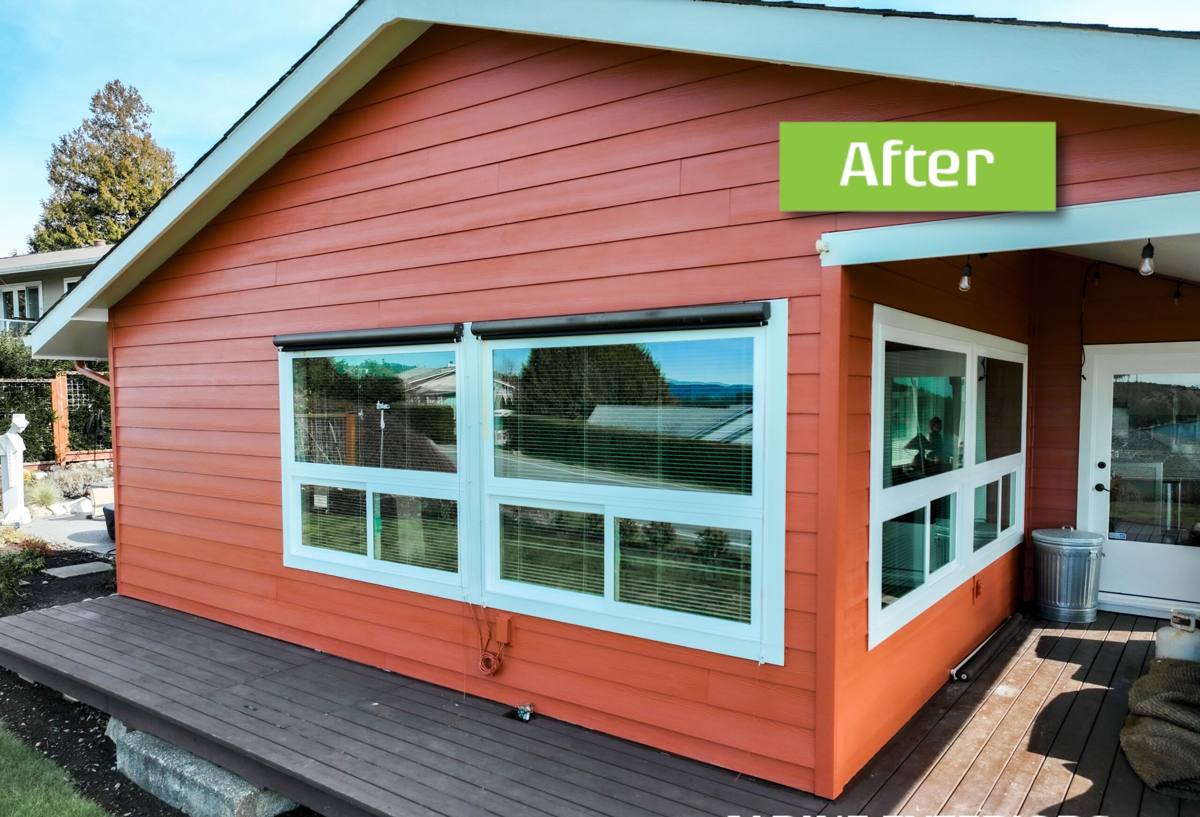
Why We Only Install James Hardie
We don't install vinyl, LP SmartSide, Cemplank, Allura, primed spruce, or cedar. Every one of those products has legitimate uses and each has honest fans — but none of them held up to the standard we wanted to put our name behind once we accounted for the moisture load, moss exposure, and freeze-thaw cycling this area sees. James Hardie fiber cement is non-combustible, doesn't swell or rot the way wood-based products can, and holds its factory-applied ColorPlus finish far longer than field-applied paint on wood or engineered wood siding. Hardie also engineers specific product lines for different climate zones (HZ5, HZ10), which matters in a region that gets both hard rain and real cold snaps.
That's the whole reason this company standardized on one manufacturer instead of offering a menu of siding options. We'd rather install one product system correctly, every time, than offer five products and hope each one gets a crew that knows its quirks.
What Hardie Gets Right for This Climate
- Fiber cement doesn't absorb and release moisture the way wood fiber products do, so it resists the swelling, cupping, and edge-checking that shows up on wood-based siding after a few wet seasons.
- ColorPlus factory finish is baked on under controlled conditions, which holds up better against UV and moisture than siding that gets painted on-site or repainted every several years.
- Non-combustible material, which matters for insurance considerations as much as fire safety.
- A transferable limited warranty that stays with the house if it sells — worth asking about when comparing bids.
The Right Hardie Product Line for a Kendall Home
Most homes in this part of Whatcom County fall into Hardie's HZ5 climate zone, engineered for regions with the freeze-thaw cycling and moisture exposure the Pacific Northwest sees. The product line matters less than getting the zone right — the wrong climate-engineered formulation for the area can shorten the product's real-world lifespan even though it looks identical to the correct one on the truck.
Common Profiles We Install
- HardiePlank lap siding — the most common choice, available in smooth or cedar-textured finishes, and the baseline for most siding replacements we do in this area.
- HardiePanel vertical siding — often used for board-and-batten looks or as an accent on gables and entry features.
- HardieShingle — for homes going for a shingle-style look without the maintenance burden of actual cedar shingles.
- HardieTrim — matched trim boards so the whole exterior system, not just the field siding, is fiber cement.
The right combination depends on the home's style and how exposed different walls are to weather. A north-facing wall under tree cover and a south-facing wall in full sun are functionally different exposure conditions on the same house, and we account for that in both product choice and detailing, not just color.
What a Correct Installation Actually Involves
Fiber cement siding is only as good as the install behind it. Most of the problems we get called out to look at on other contractors' work aren't product failures — they're installation shortcuts that let water get behind the siding, where fiber cement can't do its job.
The Details That Matter Most
- Weather-resistant barrier installed and lapped correctly before any siding goes up — this is the actual waterproofing layer, not the siding itself.
- Flashing at every window, door, and horizontal trim transition, directing water back out instead of behind the wall assembly.
- Proper fastener placement — Hardie specifies exact nailing patterns and fastener types, and getting this wrong voids the manufacturer warranty even if the siding looks fine on day one.
- Correct gapping and caulking at butt joints and trim, sized for the expansion and contraction fiber cement actually goes through.
- Starter strips and clearances at the foundation line, kept off grade and hardscape so splash-back moisture doesn't sit against the bottom course.
None of this shows up in a photo of the finished wall. It shows up five or ten years later, either as a house that still looks tight and dry or one with soft trim, staining, and moss creeping in around joints that were never sealed right in the first place.
Our Process, Start to Finish
1. On-Site Assessment
We look at the existing siding, sheathing, and any moisture damage before quoting anything. On older homes this sometimes means pulling a section of siding to check what's underneath — worth knowing before, not after, the job starts.
2. Written Estimate
A clear scope: product line, profile, color, trim details, and what's included — tear-off, disposal, house wrap, flashing, and the finished siding. No vague allowances.
3. Tear-Off and Prep
Old siding comes off, sheathing gets inspected and repaired where needed, and the weather-resistant barrier goes on correctly before anything else happens.
4. Installation
Siding, trim, and flashing installed to Hardie's published specifications — not a generic "good enough" standard.
5. Final Walkthrough
We walk the finished job with the homeowner, point out details, and go over what warranty coverage applies and how to register it.
What Drives the Cost of a Kendall Siding Project
Every home is different, but the same handful of factors move the price up or down on most jobs. Broad ranges only — an accurate number requires seeing the house.
| Factor | Why It Matters |
|---|---|
| Tear-off vs. overlay | Removing old siding and repairing sheathing costs more up front than an overlay, but overlaying compromised sheathing just hides a problem |
| Home size and stories | More square footage and taller walls mean more material, labor, and staging/scaffolding time |
| Siding profile | Lap siding is typically the most straightforward install; board-and-batten and shingle profiles take more labor per square foot |
| Trim complexity | Homes with lots of windows, dormers, and roof breaks need more cutting, flashing, and trim work |
| Sheathing condition | Rot or moisture damage found during tear-off adds repair cost before new siding can go on |
| Color | Factory ColorPlus finishes come in a standard palette at no premium; custom field-painted colors add cost |
What to Expect After the Siding Goes On
James Hardie siding, installed correctly, is genuinely low-maintenance compared to wood or engineered wood alternatives — but "low-maintenance" isn't "no-maintenance," especially in a climate that grows moss on anything that stays damp.
- Rinse siding down periodically to keep moss, pollen, and grime from building up, especially on shaded, north-facing walls.
- Keep gutters clean and downspouts directed away from the wall — most of the moisture problems we see start with water dumping onto siding it was never meant to handle.
- Keep sprinklers and landscaping from spraying the lower courses directly.
- Walk the exterior once a year and check caulking at trim joints and penetrations — caulk is a maintenance item on any siding system, including this one.
- Don't pressure-wash directly at the siding at close range — a garden hose or low-pressure rinse is enough.
Why It Matters That We Already Work in Kendall and Whatcom County
A crew that already works this part of the county isn't guessing at what the climate does to a wall over ten winters — they've already seen it, on other houses nearby. That shows up in small decisions: how tight to run a caulk joint on a shaded wall, which walls need extra flashing attention, how local permitting and inspection tends to go. It also means we're not learning the freeze-thaw and moss patterns of this specific climate on your house for the first time.
Kendall homeowners deserve the same level of installation care as anywhere else in Whatcom County — the climate doesn't get gentler because a house sits a little further from the water.
If your siding is showing its age, or you're planning ahead of a repaint you'd rather not do again in five years, we're happy to come take a look. Estimates are free, there's no pressure, and you'll get a straight answer about what your home actually needs — use the form below to get started.