 Ferndale Siding
 Deck Building in Kendall: Built for This Corner of Whatcom County
Kendall sits inland from the coastal salt air that hammers the rest of Whatcom County, but that doesn't mean local decks get an easy ride. Between the long wet season, heavy morning dew off the foothills, and moss that colonizes anything shaded and damp, a deck built without this climate in mind starts showing problems within a few years — soft boards, rusted fasteners, slick surfaces, and ledger connections that were never properly flashed. We build decks in Kendall the way this area actually requires, not the way a generic build-anywhere crew would do it.
This page covers deck building specifically for Kendall homes: what the local conditions demand, what a correctly built deck involves from the ground up, and how we run the job from first call to final walkthrough.
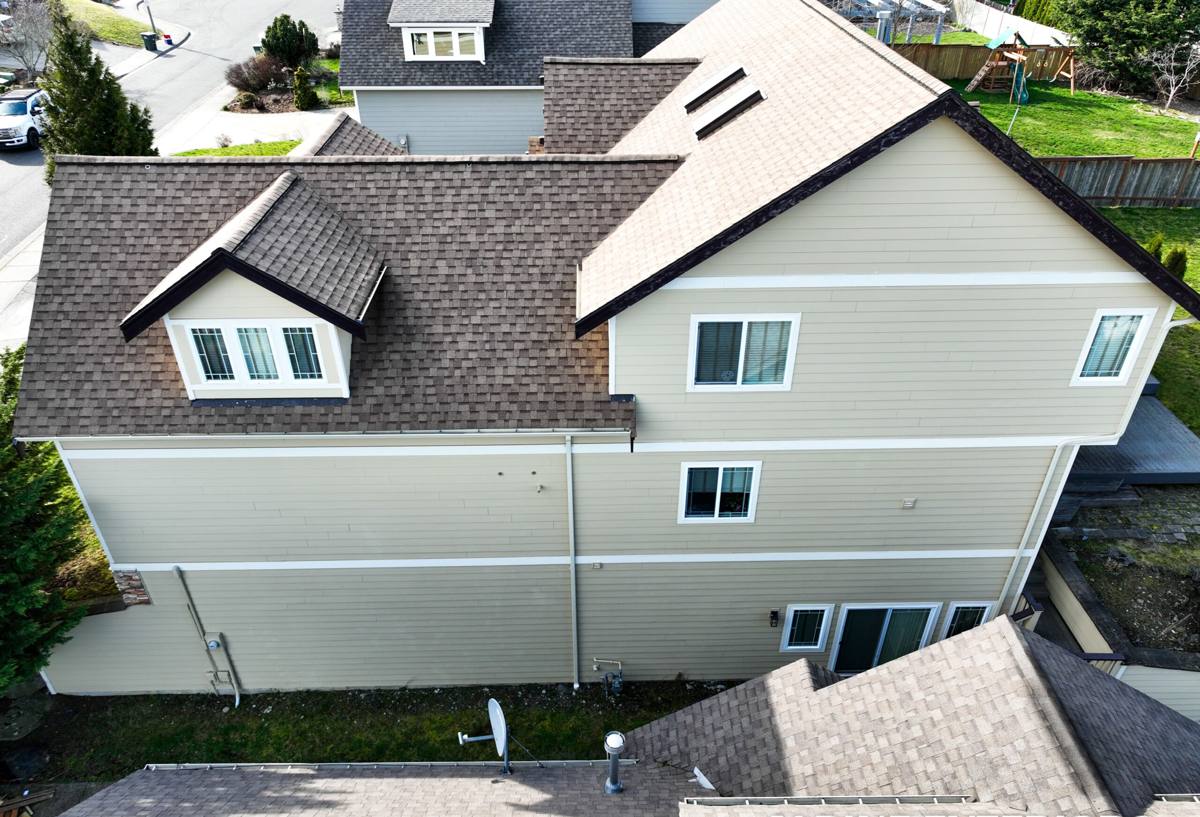
What Kendall's Climate Does to a Deck
Kendall gets the same wet-season soaking as the rest of Whatcom County, plus its own microclimate quirks from being tucked closer to the foothills — more shade in places, slower-drying ground, and a longer moss season than open, sun-exposed lots closer to town. None of that is exotic, but it's exactly the kind of thing a deck design has to account for.
The Main Stress Points
- Ledger board rot: where the deck attaches to the house is the single most common failure point when flashing and waterproofing are skipped or done wrong.
- Moss and algae growth: shaded, north-facing, or tree-covered sections of a Kendall lot hold moisture longer, and moss on decking isn't just ugly — it's slippery and it traps water against the wood.
- Fastener corrosion: standard hardware rusts and stains decking over time in a climate this wet; it needs to be matched to the material, not just whatever's cheapest.
- Footing movement: saturated soil during the wet months can shift under-built footings over several seasons, leading to a deck that feels bouncy or slowly pulls away from the house.
- End-grain saturation: cut ends of boards soak up water fastest, and if they aren't sealed or capped, that's where rot starts even on decking rated for outdoor use.
What a Correctly Built Deck Actually Involves
Footings and Framing
Everything starts below grade. Footings need to be sized and set below the frost line and rated for the actual load of the deck plus people, furniture, and snow load in a bad winter. In this soil and moisture environment, we don't shortcut footing depth or diameter just to save a half-day of digging — that's the part of the job nobody sees again once the decking goes on, and it's the part that determines whether the deck is solid in ten years or wobbly in three.
Ledger Attachment and Flashing
If the deck attaches to the house, the ledger connection gets proper flashing that sheds water away from the band joist and wall sheathing, plus structural fasteners rated for the load — not just deck screws. This is the single spot inspectors and insurance adjusters look at hardest, and for good reason: get it wrong and water gets behind your siding, not just under your deck.
Joist Layout and Spacing
Joist spacing needs to match the decking material's span rating. Composite and PVC decking often need tighter joist spacing than solid wood — installing composite over a wood-spec frame is a common corner-cutting mistake that leads to bounce and premature sagging.
Fasteners and Hardware
All structural hardware should be hot-dip galvanized or stainless, rated for ground contact and treated lumber contact (modern treated lumber's chemical makeup corrodes standard electroplated fasteners faster than older formulations did). Hidden fastener systems for decking need to be matched to the specific board profile, not forced to fit.
Drainage Under and Around the Deck
Grading beneath the deck should carry water away from the house foundation, not let it pool. On lower or shaded Kendall lots this matters more than usual — standing water under a deck is what keeps the whole structure damp long after a storm has passed and is a major contributor to the moss and mildew problem homeowners fight every spring.
Decking Material Options for This Climate
There's no single "best" decking material — there's a right tradeoff for your budget, your sun exposure, and how much maintenance you're willing to do. Here's how the common options actually perform in Whatcom County conditions.
| Material | Moss/Moisture Resistance | Maintenance | Typical Lifespan | Notes |
|---|---|---|---|---|
| Pressure-treated wood | Fair — needs sealing | Annual cleaning + sealing recommended | 15–20 years with upkeep | Lowest upfront cost; most sensitive to skipped maintenance |
| Cedar | Good — naturally rot-resistant | Periodic staining/sealing | 20–25 years with upkeep | Natural look many homeowners want; still needs seasonal care |
| Composite decking | Very good — won't rot | Occasional washing to prevent surface moss/algae | 25–30+ years | Higher upfront cost, no staining or sealing ever needed |
| PVC/capped polymer decking | Excellent — fully moisture-sealed | Low — wash as needed | 30+ years | Best moisture performance; premium price point |
Composite and PVC decking have become the more common choice for shaded or heavily wooded Kendall lots specifically because they don't give moss anything to grip into the way porous wood surfaces do — surface growth wipes off instead of embedding. Wood is still a legitimate choice if you're willing to stay on top of sealing every couple of years; it's a maintenance commitment more than a durability weakness.
Railings, Stairs, and Code Requirements
Whatcom County building code sets specific requirements for deck height, railing height, baluster spacing, and stair geometry, and a deck over a certain height off grade requires a permit and inspection. We handle the permit process as part of the job rather than leaving it on the homeowner, and we build to code minimums as a floor, not a target — the guardrail and stair details are exactly where a deck either passes inspection cleanly or gets flagged and delayed.
How We Handle a Kendall Deck Project
- On-site assessment: we walk the actual lot, check sun/shade exposure, existing drainage, soil condition, and how the deck will tie into the house.
- Design and material selection: we go over size, layout, and decking material tradeoffs based on your budget and how much maintenance you want to take on long-term.
- Permitting: we pull the required Whatcom County permit and schedule inspections as part of the project timeline, not as an afterthought.
- Footings and framing: proper depth footings, correctly flashed ledger, joist spacing matched to your decking choice.
- Decking, railing, and stairs: installed to the fastener and code spec for the material chosen.
- Final walkthrough: we go over the finished deck with you, including basic maintenance expectations for the material you picked.
Why Hire a Crew That Already Works in Kendall
A deck built by a crew unfamiliar with this specific area tends to make the same mistakes: standard fastener specs pulled from a warmer, drier climate; drainage plans that assume soil drains faster than Whatcom County clay actually does; decking material recommendations that ignore how much shade and moss exposure a given lot actually gets. A crew that already builds in Kendall and the surrounding Ferndale area has already seen which details matter here and doesn't have to learn that on your project.
We also know the local permitting process and inspection expectations, which keeps the project moving instead of stalling on paperwork or a failed rough-in inspection.
Maintenance Checklist for a Kendall Deck
Whatever material you choose, a little seasonal attention goes a long way in this climate:
- Sweep debris and standing leaves off the deck surface regularly, especially under overhanging trees
- Check and clear drainage paths underneath and around the deck before the wet season starts
- Wash the surface at least once a year to knock back moss and algae before it embeds
- Inspect the ledger board area and flashing annually for any signs of water staining
- For wood decking, reseal or restain on the schedule the product calls for — don't wait until it looks bad
- Check railing and stair connections for looseness each spring
What This Costs
Deck costs vary a lot based on size, material, height off grade, and how much structural work the ledger and footings require. Pressure-treated wood decks are the lowest upfront cost option; composite and PVC decking run higher upfront but cost less in maintenance over the deck's life. Rather than throw out a number that doesn't fit your specific lot, we'd rather walk the site and give you an honest, itemized estimate based on what your project actually needs.
If you're planning a new deck or replacing an aging one in Kendall, we're happy to come take a look and put together a free, no-pressure estimate — just fill out the form below.