 Ferndale Siding
 Siding That Actually Holds Up in Kendall
Kendall sits inland from the coast but still lives inside the same wet, marine-influenced weather system that shapes Whatcom County year-round. Homes here see long stretches of driving rain, humidity that never fully lets go between storms, and tree cover that keeps roofs, siding, and trim shaded and damp far longer than a sunnier climate would allow. That combination is exactly why moss season in this part of the county runs long, and why siding that isn't built for sustained moisture exposure tends to fail here faster than it would somewhere drier.
We install fiber cement siding on Kendall homes because it's the one product category that consistently handles this climate without the maintenance headaches or moisture risk that come with the alternatives. This page covers what that actually means in practice — not marketing language, but the real mechanics of what a correctly installed fiber cement system needs to do on a house in this specific area.
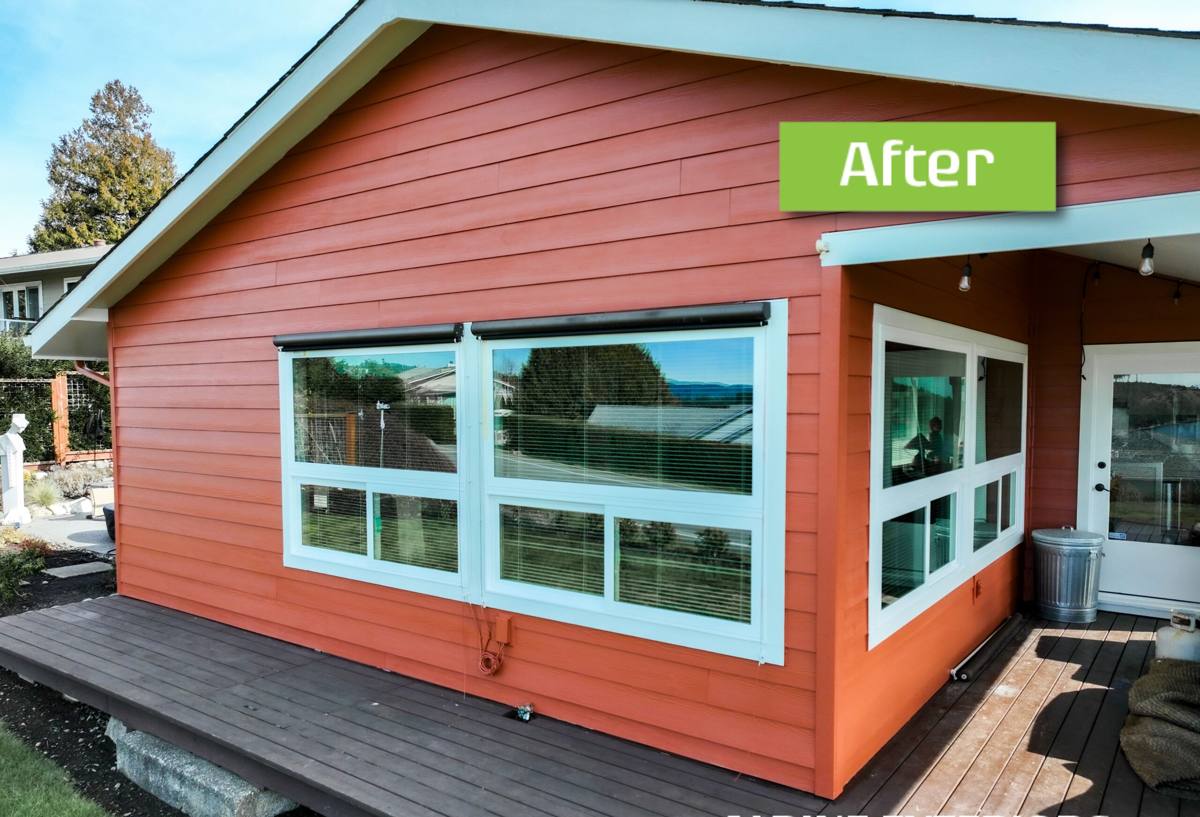
What This Climate Does to the Wrong Siding Choice
Every siding material eventually meets water. The difference is what happens next. In a climate with Kendall's rain volume and slow drying conditions, that difference matters more than almost anywhere else in the state.
Wood and Wood-Based Products
Wood siding and engineered wood products absorb moisture at cut edges, fastener penetrations, and any spot where the factory coating gets compromised during installation or over time. Once moisture gets into the substrate, it doesn't dry out quickly under a tree canopy or during a wet Pacific Northwest winter. That trapped moisture is what feeds rot and gives moss and algae a foothold on the siding face itself, not just the roof.
Vinyl Siding
Vinyl doesn't absorb water the way wood does, but it isn't a moisture-management system on its own — it's a rain screen that relies on whatever is behind it to actually shed water correctly. It also expands and contracts with temperature swings, which loosens fastener contact over years and can let wind-driven rain work its way behind panels during the kind of driving storms this area gets.
Salt Air Exposure
Whatcom County's proximity to Puget Sound means salt-laden air reaches well beyond the immediate shoreline, and it accelerates corrosion on fasteners, flashing, and any exposed metal trim. Siding systems and installation hardware that aren't rated for that exposure show premature wear at seams, corners, and fastener heads well before the field material itself gives out.
Why We Only Install James Hardie Fiber Cement
We don't install LP SmartSide, vinyl, Cemplank, Allura, primed spruce, or cedar. That's a deliberate standard, not a limitation on what we're capable of installing. Fiber cement as a category resists moisture absorption, doesn't feed mold or moss growth the way organic materials can, and is non-combustible — a real advantage during Washington's increasingly active wildfire seasons even for homes well outside the immediate fire zone.
Within fiber cement, we standardized on James Hardie specifically because their HZ product lines are engineered by climate zone. The HZ5 formulation used in the Pacific Northwest is built for high-moisture, freeze-thaw conditions rather than a one-size-fits-all mix. Combined with the ColorPlus factory finish and a transferable warranty backed by a manufacturer with decades in this exact product category, it's the system we're willing to put our name behind on a Kendall roof.
What a Correct Fiber Cement Job Actually Involves
Fiber cement siding fails prematurely almost exclusively because of installation mistakes, not the material itself. In a climate like this one, the margin for error on moisture detailing is smaller than in drier regions.
Moisture Management Behind the Siding
Correct installation starts with a properly lapped weather-resistive barrier, correctly integrated flashing at every window, door, and roofline intersection, and a rainscreen gap where conditions call for it so water that does get past the siding face can drain and the wall assembly can dry. Fasteners need to land in framing at the manufacturer's specified pattern and depth — overdriven or underdriven nails are one of the most common causes of early siding failure we see.
Clearances and Gaps
Fiber cement panels need proper clearance from grade, roofing, decks, and any other abutting surface so water doesn't wick into the cut ends or sit against the bottom edge. This is a detail that's easy to shortcut and hard to notice until moisture damage shows up years later.
ColorPlus Finish vs. Field Painting
ColorPlus is a factory-applied, baked-on finish that's substantially more consistent and durable than field-applied paint over primed board, and it comes with its own finish warranty. We install it as specified — including using Hardie's touch-up and caulk products where the system calls for them — so the finish warranty stays intact rather than getting voided by an off-spec repair.
Our Process for a Kendall Siding Project
- Assessment: We look at your current siding, sheathing, and trim condition, check for existing moisture damage, and identify problem areas like north-facing walls or tree-shaded sections that hold moisture longer.
- Plan and product selection: We walk through Hardie's plank, panel, and shingle options, profiles, and ColorPlus colors, and map out flashing and drainage details specific to your home's exposure.
- Prep and tear-off: Old siding comes off, sheathing gets inspected and repaired where needed, and any rot or moisture damage is addressed before anything new goes up — covering it over is how small problems become big ones.
- Weather barrier and flashing: The water-resistive barrier and flashing package go in first, correctly lapped and sealed at every penetration.
- Installation: Siding goes up to Hardie's fastening and clearance specifications, not a generalized "close enough" standard.
- Final detailing: Trim, caulking, and touch-up work is completed with Hardie-approved products to keep the warranty intact.
Fiber Cement Compared to the Alternatives
| Factor | James Hardie Fiber Cement | Vinyl | Wood / Engineered Wood |
|---|---|---|---|
| Moisture absorption | Very low | Non-absorbent, but relies on drainage behind it | Absorbs at cut edges and damaged coating |
| Moss / algae resistance | Strong (non-organic substrate) | Moderate | Weak once coating is compromised |
| Fire resistance | Non-combustible | Melts / deforms under heat | Combustible |
| Fastener/hardware exposure to salt air | Handled with corrosion-resistant fastening spec | Vulnerable at seams over time | Vulnerable at fasteners and joints |
| Finish durability | Factory-baked ColorPlus finish, warrantied | Color molded in, can fade and chalk | Field-applied paint, needs recoating |
| Long-term maintenance | Low, mainly caulk checks | Low, but panels loosen/warp over time | Higher — recoating, caulking, spot repair |
Signs Your Kendall Home May Need New Siding
- Soft or spongy spots when you press on the siding, especially near the bottom edges or below windows
- Persistent moss, algae, or dark streaking that comes back shortly after cleaning
- Visible warping, buckling, or panels that have pulled away from the wall
- Peeling or bubbling paint that keeps recurring in the same spots year after year
- Rising energy bills that suggest the wall assembly isn't sealing and insulating the way it should
- Cracked or crumbling caulk lines at corners, trim, and window edges
- Visible rot at butt joints, corner boards, or anywhere siding meets trim or roofline
Any one of these on its own might just need a repair. Several showing up together, especially on the shaded or weather-exposed side of the house, usually means the siding system itself is losing the fight against moisture.
Living With Fiber Cement in a Moss-Prone Climate
Fiber cement doesn't eliminate the need for basic upkeep — nothing does in a climate this wet — but it changes what that upkeep looks like. Instead of recoating, patching rot, or replacing warped panels, maintenance on a correctly installed Hardie system is mostly periodic washing to keep organic growth from building up on the surface, checking caulk lines at penetrations every year or two, and keeping gutters and downspouts clear so water isn't sheeting down the wall unnecessarily. Trimming back vegetation that shades and dampens a wall section also goes a long way toward keeping moss from establishing itself in the first place.
Why Local Experience in Kendall Matters
Siding specifications on paper are the same everywhere Hardie sells its product. What changes is how those specifications get adapted to a specific house — its orientation, its tree cover, how exposed it is to wind-driven rain off the Sound, and what the existing wall assembly is actually doing before we open it up. A crew that's already worked houses in this part of Whatcom County has seen how these conditions play out on real walls, not just in a manual, and builds that experience into where we pay the closest attention on your project.
If you're weighing a siding replacement or repair on a Kendall home, we're happy to walk the exterior with you, point out what we're seeing, and put together a straightforward, no-pressure estimate — just fill out the form below to get started.