 Ferndale Siding
 Fairhaven's Roofs Face a Different Set of Problems
Fairhaven sits close enough to the water that homes here deal with a version of Pacific Northwest weather that's a notch harder on a roof than what you'd see further inland. Salt-laden air off the bay works on metal flashing, nails, and gutter hardware year-round. Driving rain — the kind that comes in sideways during a fall or winter storm — finds every gap in flashing and underlayment that calmer weather would never expose. And the long stretch of wet, shaded months each year gives moss and algae months to get established on north-facing slopes and anywhere tree cover keeps shingles damp longer than they should be.
None of that means a Fairhaven roof needs to be babied. It means the repair work has to account for those specific stresses instead of treating every roof like it's sitting in a dry climate. A patch that would hold up fine in a drier region can fail here in a single wet season if it doesn't respect what this coastal corner of Whatcom County actually throws at a roof.
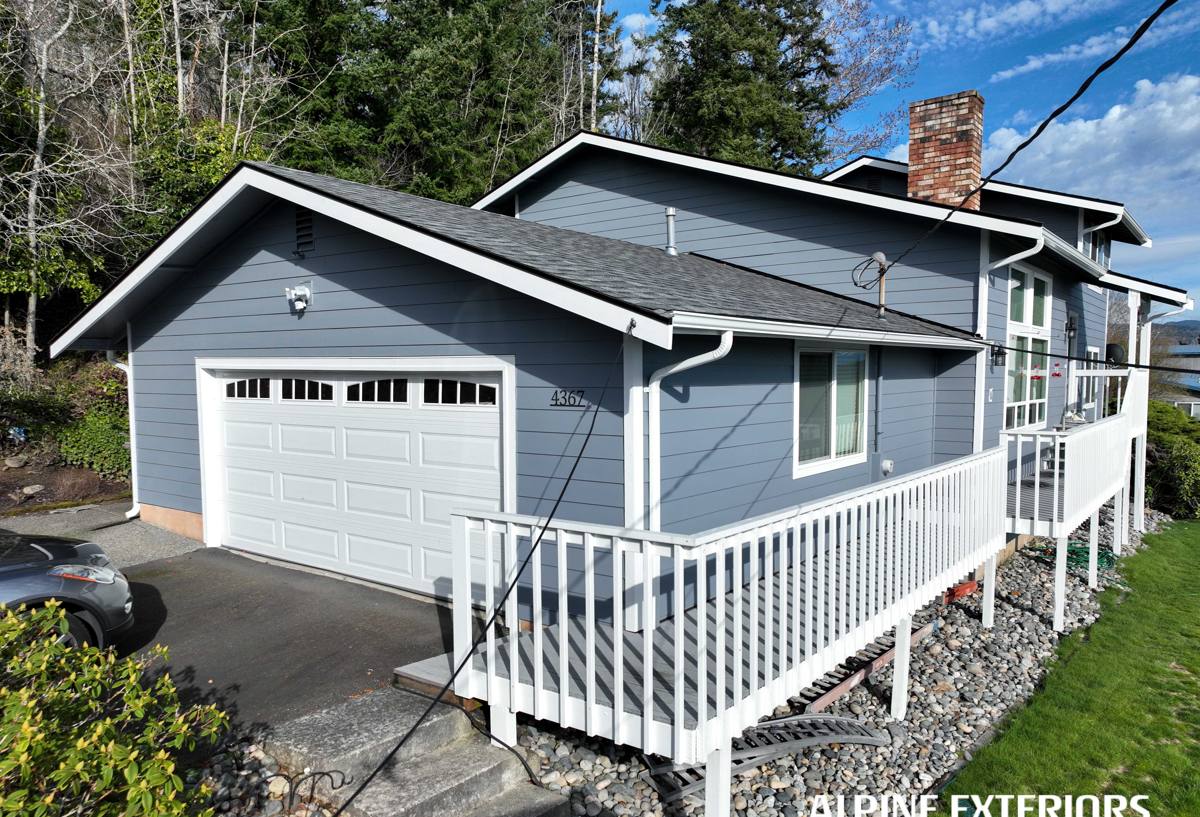
The Roof Repair Issues We See Most Often in This Area
Moss and Organic Growth
Moss doesn't just sit on top of shingles looking messy — it holds moisture against the roofing material, lifts shingle edges as it grows, and works its way under tabs and around fasteners. Left long enough, it turns small maintenance items into real leaks.
Flashing and Fastener Corrosion
Salt air accelerates corrosion on exposed metal — step flashing, valley metal, roof jacks, and the fasteners holding them down. Corroded or loosened flashing is one of the most common sources of leaks we find on roofs that homeowners assumed were simply getting old.
Wind-Driven Rain Intrusion
Storms that bring rain in at an angle push water into places gravity-based drainage was never designed to handle — under ridge caps, around vent boots, along valleys, and at the transition points where a roof meets a wall or chimney. These are almost never full-roof problems; they're localized failures at a seam or penetration, and they need to be repaired as such.
Gutter and Drainage Backups
When gutters clog with moss, needles, and debris, water backs up under the roof edge instead of running off it. This shows up as rot at the fascia and roof sheathing long before it shows up as a visible leak inside the house, which is why gutter condition is part of any real roof inspection.
What an Honest Roof Repair Actually Involves
A lot of "roof repairs" are really just a bead of sealant smeared over a symptom. That buys a little time but doesn't fix the underlying problem, and on a roof exposed to the kind of driving rain and salt air common here, it usually fails again within a season or two. A repair done right involves several distinct steps, not just one:
- Identifying the actual entry point of the water, which is often several feet away from where the stain or drip shows up inside
- Removing and replacing damaged shingles, underlayment, or sheathing — not just covering them over
- Re-flashing with corrosion-resistant materials suited to a coastal climate, not simply re-sealing old flashing
- Clearing moss or debris from the surrounding area so the new repair isn't undermined again within a few months
- Confirming ventilation and drainage in the repaired section are working correctly, since trapped moisture is what turns a small leak into structural rot
Skipping any of these steps is how a homeowner ends up paying for the same repair twice within a couple of years.
Our Roof Repair Process
1. Inspection and Diagnosis
We start on the roof itself, not with a guess based on where a stain appeared on the ceiling below. We look at flashing, valleys, penetrations, moss coverage, and gutter condition together, because on this coast those factors interact — a clogged gutter and a corroded flashing joint often cause the exact same interior leak.
2. A Straight Answer on Scope
We tell you plainly whether you're looking at a targeted repair or something that points toward a larger issue. We're an exterior contractor, not just a roofer, so we look at the whole building envelope — how the roof edge, gutters, fascia, and siding meet — rather than treating the roof as a system that stands alone.
3. The Repair Itself
We replace what's actually damaged, re-flash with materials suited to salt-air exposure, and address the moss or drainage issue that contributed to the failure in the first place. We don't leave the contributing cause in place next to a fresh patch.
4. Follow-Through
We walk you through what we found, what we did, and what's worth keeping an eye on — including a realistic sense of how much moss maintenance your particular roof will need given its slope, shade, and exposure to the weather off the water.
Roof Repair or Roof Replacement? How We Help You Decide
Not every roof problem in Fairhaven needs a full replacement, and not every roof is a good candidate for another round of patching. The honest answer depends on a handful of factors, not a sales pitch:
| Factor | Leans Toward Repair | Leans Toward Replacement |
|---|---|---|
| Age of roofing material | Well within its expected service life, in otherwise good condition | Near or past its expected service life |
| Extent of the problem | Isolated to a flashing point, valley, or small section | Multiple leak points or widespread moss and wear |
| Underlying structure | Sheathing and decking are still sound | Soft spots, rot, or sagging present |
| Repair history | First or second repair on this roof | Repeated repairs to the same area |
| Cost relative to replacement | Repair cost is a small fraction of a full re-roof | Repair cost starts approaching replacement territory |
A targeted flashing or shingle repair is typically a modest, bounded expense; a full re-roof is a much larger investment. We'll give you a straight recommendation either way, and we won't push a replacement when a proper repair will genuinely hold up for years.
Material Considerations for This Climate
Fairhaven has a mix of roofing types — asphalt composition shingle is the most common, with some older homes still carrying cedar shake and some outbuildings or additions using metal or low-slope membrane roofing. The right repair approach depends on which one you have:
- Asphalt composition shingle: the most straightforward material to spot-repair; matching the existing shingle color and profile matters more the older the roof gets
- Cedar shake: repairs need to respect how the wood moves with moisture; poor technique here traps water instead of shedding it, which does more harm than good
- Metal roofing: fastener and sealant condition matter more than the panels themselves, especially with salt air steadily working on exposed hardware
- Low-slope or membrane sections: often found over porches or additions, these fail at seams and penetrations rather than across the open field of the roof
We don't push a material change during a repair unless the existing material is genuinely at the end of its useful life. The goal of a repair is to extend what you already have, done correctly — not to upsell a different roofing system you didn't ask about.
Staying Ahead of Moss and Salt Air Between Repairs
A repair fixes what's already failed. Keeping the rest of the roof from reaching that point is a separate, ongoing job — one that matters more in this part of Whatcom County than it would in a drier inland climate. A few habits make a real, measurable difference over time:
- Keep gutters clear so water sheds off the roof edge instead of backing up underneath it
- Have moss removed before it fully establishes rather than after it's visibly thick and lifting shingles
- Trim back tree cover that keeps certain sections of the roof shaded and damp longer than the rest
- Have flashing and fasteners checked periodically, since salt-air corrosion is gradual and easy to miss until it fails outright
Signs You Need a Roof Repair Now
Some warning signs are obvious; others are easy to write off as normal wear until they've caused real damage underneath. Watch for:
- Water stains on ceilings or upper walls, especially right after a wind-driven rain event
- Visible moss buildup, particularly on north-facing or shaded slopes of the roof
- Granules collecting in gutters, a sign that asphalt shingles are wearing thin
- Daylight visible through the roof deck when you look up from inside the attic
- Sagging areas, soft spots, or unusual discoloration on the roof surface
- Rust streaks or visibly corroded flashing around vents, chimneys, or valleys
Any one of these is worth a look before the next storm rolls through, not after it.
Why Hire a Crew That Already Works in Fairhaven
A roofer who mostly works in drier, inland areas doesn't necessarily think about salt-air corrosion, or how much moss a shaded, north-facing valley near the water will grow in a given year. A crew that regularly works this stretch of coastal Whatcom County already knows which materials and details hold up here and which ones don't, and applies that knowledge without needing to relearn it on your roof at your expense. As a local exterior contractor based in Ferndale, we see how roofing, gutters, and siding interact on homes in this climate every day, and we bring that whole-envelope perspective to a repair instead of treating the roof as a problem that exists on its own.
Local also means accountability. If a repair doesn't hold up through the next storm season, we're not a truck that drove in from somewhere else and moved on — we're still working in this area next month and next year.
If you're dealing with a leak, visible moss, or just want an honest opinion on whether a repair will actually hold up on your roof, we're happy to take a look. Reach out for a free, no-pressure estimate using the form below.