 Ferndale Siding
 Storm Damage Roof Repair Built for Whatcom County Weather
Everson and Ferndale don't get hit with the kind of headline hurricanes that make national news, but that's part of the problem. Homeowners here are used to living with wind and rain, so a storm has to do a lot of visible damage before anyone calls a roofer. In reality, most of the roof damage we see in this part of Whatcom County builds up quietly — a few lifted shingles after one windstorm, a cracked flashing seal after the next, moss working its way under a tab over a wet winter. By the time there's a stain on the ceiling, the roof has usually been compromised for months.
This page is specifically about storm damage roof repair for homes in and around Everson and Ferndale — not a general roofing overview. If you've had a windstorm come through, noticed shingles in the yard after a heavy blow, or you're just not sure whether recent weather did any damage, this is what you need to know before you call anyone out.
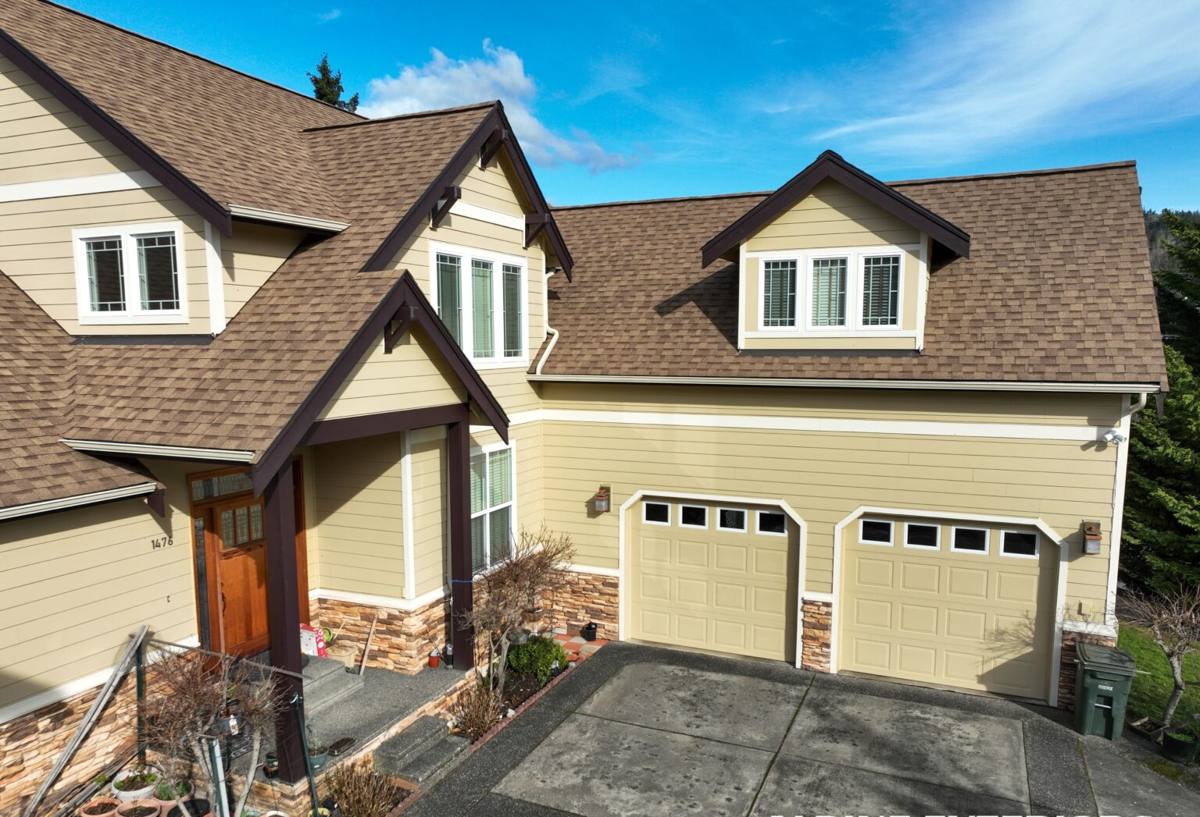
What Local Storms Actually Do to a Roof
The Pacific Northwest doesn't usually damage roofs with one dramatic event. It's the combination of factors that adds up over a wet season:
Driving Rain and Wind-Driven Water
When wind pushes rain sideways instead of letting it fall straight down, water gets forced up under shingle tabs, around flashing, and into any seam that isn't sealed tight. A roof that would shed a normal rain just fine can still leak during a windstorm because the water is being driven uphill against the shingle laps.
Wind Uplift
Gusts don't need to be extreme to loosen shingles — they just need to catch an edge that's already a little worn or under-sealed. Once a tab lifts even slightly, the adhesive strip underneath won't reseal on its own, and that spot stays vulnerable in every storm after.
The Long Moss Season
Whatcom County's mild, wet climate gives moss and algae a long window to establish themselves on north-facing slopes and shaded valleys — often much longer than drier parts of the state. Moss holds moisture against the roofing material, works its way under shingle edges as it grows, and adds weight and friction that speeds up wear in exactly the areas storms already stress.
Salt Air and Corrosion
Proximity to Bellingham Bay and the Sound means some homes in this area deal with a mild salt-air element in addition to rain — enough over the years to accelerate corrosion on exposed metal flashing, fasteners, and gutter hardware if they aren't a corrosion-resistant grade to begin with.
Signs Your Roof May Have Storm Damage
Some damage is obvious. A lot of it isn't. After any significant wind or rain event, it's worth doing a quick check from the ground and inside the attic if you have access:
- Shingles or shingle pieces in the yard, gutters, or against the fence line
- Shingle tabs that look lifted, curled, or out of alignment with the rest of the field
- Granules collecting in gutters or at downspout outlets (a sign of accelerated shingle wear)
- Visible gaps or movement in flashing around chimneys, vents, or skylights
- New or spreading moss, especially in valleys and on north-facing slopes
- Water stains, discoloration, or soft spots on ceilings or upper interior walls
- Any musty smell in the attic that wasn't there before
- Dented or displaced gutters and downspouts
None of these on their own always mean a major problem, but any of them is a reason to get a roof looked at rather than wait for a leak to show up inside.
What a Correct Storm Damage Repair Actually Involves
Start With a Real Inspection, Not a Guess
A proper storm damage assessment means getting on the roof (weather permitting) and checking the field, valleys, flashing, penetrations, and edges — not just eyeballing it from the driveway. Wind and rain damage is often worse than it looks from below, and sometimes less extensive than a homeowner fears once it's actually inspected up close.
Match the Repair to the Damage, Not the Other Way Around
Isolated wind damage — a handful of lifted or missing shingles, a compromised flashing seal — usually calls for a targeted repair: replacing the affected shingles, resealing or replacing flashing, and checking the underlayment underneath for water intrusion. Trying to stretch a patch repair over damage that's actually widespread just delays a bigger problem and can void manufacturer warranties on the surrounding material.
Check What's Underneath, Not Just What's Visible
Shingles are the layer you see, but underlayment is what actually keeps water out if a shingle fails. Any storm repair worth doing includes checking whether water reached the underlayment or decking, because replacing shingles over damaged sheathing just hides a problem that will resurface as a leak.
Match Materials Honestly
If your roof is more than a few years old, an exact color and product match isn't always possible — shingle lines get discontinued and weathering changes the look of existing shingles over time. A contractor should tell you that upfront rather than let you find out after the repair is done.
Repair vs. Replacement — How to Think About the Decision
| Factor | Points Toward Repair | Points Toward Replacement |
|---|---|---|
| Extent of damage | Isolated to one area (a slope, a valley, around one penetration) | Spread across multiple slopes or found in more than one storm event |
| Roof age | Roof is well within its expected service life | Roof is already near or past the age where the material is due for replacement |
| Underlying decking | Decking is sound, no rot or soft spots found | Decking shows water damage or soft spots in multiple areas |
| Material match | Matching shingles are still available | Product is discontinued or heavily weathered elsewhere on the roof |
| Cost range | Generally a few hundred to a couple thousand dollars depending on scope | A full tear-off and reroof is a much larger investment, but resets the clock on the whole system |
These are general guideposts, not a formula — the honest answer for your roof depends on what we actually find during inspection, not on a rule of thumb applied from the ground.
Our Process, Start to Finish
- Inspection. We get eyes on the roof, document what we find, and explain it in plain terms — including if the honest answer is that the damage is minor and doesn't need immediate work.
- Written scope and estimate. You get a clear description of what's damaged, what we recommend, and what it costs before any work starts — no vague verbal quotes.
- Documentation for insurance, if needed. If you're filing a storm damage claim, we provide photos and a written description of the damage that you can hand to your adjuster. We're not a public adjuster and don't negotiate your claim for you, but we make sure the physical evidence is documented clearly.
- Repair. Tear-off of damaged material, inspection and repair of underlayment or decking as needed, new flashing where called for, and shingle installation matched as closely as materials allow.
- Cleanup and check. Job site and gutters are cleared of debris and nails, and we walk the repair with you before calling it done.
A Note on Storm Damage Insurance Claims
Insurance covers storm damage differently depending on the policy, the cause, and the age of the roof, so we won't promise a claim outcome — that's between you and your insurer. What we can do is give you an honest, documented assessment of what's actually damaged and why, which is the foundation any legitimate claim needs. We'd rather tell you plainly that something looks like ordinary wear rather than storm damage than write it up as storm-caused just to help a claim along.
Why Working With a Crew That Already Covers Everson and Ferndale Matters
Storm damage repair isn't a one-size-fits-all job. A crew that regularly works Whatcom County roofs already knows what driving rain does to flashing details in this climate, how long moss season runs here, and what the salt-air exposure closer to the water does to metal components over time. That local pattern recognition means a faster, more accurate diagnosis instead of a generic repair that doesn't account for what actually causes roofs to fail in this area. It also means being reachable for a follow-up if a repair needs a second look after the next storm — not a crew that did one job and moved on to another region.
Reducing Repeat Storm Damage
A repair fixes what a storm already broke. A few maintenance habits reduce how much damage the next storm can do:
- Keep gutters and downspouts clear so wind-driven rain has somewhere to go instead of backing up under the roof edge
- Treat and remove moss before it works its way under shingle tabs, rather than after
- Have flashing around chimneys, vents, and skylights checked periodically — these are the most common failure points in wind-driven rain
- Make sure attic ventilation is adequate, since trapped moisture accelerates decking and underlayment problems from the inside out
- Trim back tree limbs that overhang the roof, since falling limbs and constant shade both contribute to storm and moss damage
None of this eliminates storm risk, but it narrows the gap between a roof that shrugs off a windstorm and one that needs a repair call afterward.
If a recent storm has you wondering whether your roof took damage, or you've already spotted something that doesn't look right, we're glad to take a look. We offer a free, no-pressure estimate for Everson and Ferndale homeowners — just fill out the form below and we'll get you scheduled.