 Ferndale Siding
 Building a Deck That Can Actually Handle Custer's Weather
Custer sits close enough to the water that homes here deal with a different set of conditions than decks built further inland. Salt-laden marine air off the Salish Sea, driving rain that comes in sideways more often than straight down, and a moss season that can stretch from October well into spring all put real stress on outdoor structures. A deck that would hold up fine in a dry inland climate can start showing problems within a few years out here if it wasn't built with these conditions in mind.
Composite decking has become the go-to choice for a lot of Custer homeowners for good reason, but "composite" covers a wide range of products and installation approaches — and the difference between a correctly built composite deck and a poorly built one shows up fast in a climate like this. This page covers what actually matters for a composite deck in this specific area, not generic decking advice.
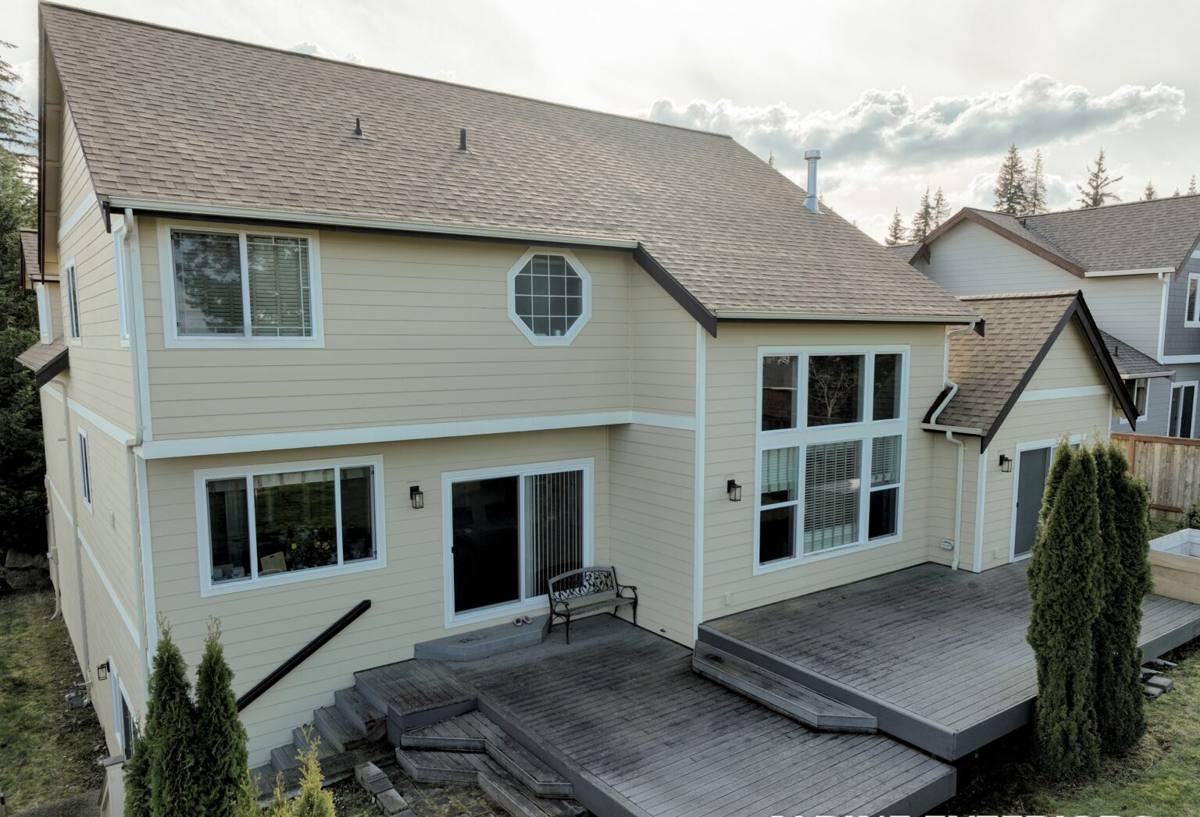
Why Composite Makes Sense for This Climate
Wood decking needs regular staining or sealing to keep water out, and in a marine climate with this much rain and humidity, that maintenance window closes fast — a board that isn't resealed on schedule starts absorbing moisture, and once wood starts cupping or splitting, moss and mildew get a foothold that's hard to fully clean out. Composite decking doesn't rely on a surface coating to stay dry. The material itself resists moisture absorption, which matters when a deck is wet more days than it's dry for a good chunk of the year.
That said, composite isn't maintenance-free — it's maintenance-different. It still needs to be kept clean, it still needs proper airflow underneath to avoid trapping moisture, and cheaper composite products can still stain, fade, or grow moss on the surface if they're not cleaned periodically. The advantage is that the maintenance is lighter and less time-sensitive than wood, not that it disappears entirely.
Composite vs. Wood vs. PVC — What Actually Holds Up
Homeowners in Custer usually end up comparing three basic options. Here's how they stack up against the specific conditions of a Whatcom County marine climate:
| Material | Moisture Behavior | Moss/Mildew Resistance | Maintenance |
|---|---|---|---|
| Pressure-treated wood | Absorbs water; swells and shrinks with weather cycles | Low — porous surface holds spores | Annual cleaning and resealing |
| Composite (capped) | Low absorption; core is protected by an outer shell | Moderate to good; smoother cap sheds spores better | Periodic washing, no staining/sealing |
| PVC | Essentially non-absorbent | Good, but can still surface-stain without cleaning | Periodic washing |
We install composite most often because it hits the practical middle ground for this climate — better moisture and moss performance than wood without the higher material cost of full PVC systems, and it still gives a natural wood-look surface a lot of homeowners want. PVC is a reasonable option too and we'll talk through it honestly if it fits your budget and goals better.
What a Correct Composite Deck Installation Involves
The board itself is only part of what determines how a deck performs. Most of the problems we get called out to fix on composite decks trace back to the substructure or the details underneath, not the decking material itself.
Substructure and Framing
Composite boards are heavier than wood and behave differently under load and temperature swings, so joist spacing that's fine for a wood deck can be too wide for composite — sagging and bounce show up over time if the framing wasn't sized for the specific product being installed. We check manufacturer joist-spacing requirements against the actual board being used rather than assuming standard spacing is close enough.
Fastening Systems
In a coastal-influenced climate, fastener corrosion is a real long-term issue. Standard fasteners can react with treated lumber and salt-laden moisture over years, leading to staining and weakened connections. We use fasteners and hidden clip systems rated for the specific decking product and for exterior/coastal exposure, not whatever's cheapest at the yard.
Ledger Board, Flashing, and the House Connection
Where the deck attaches to the house is the single most common failure point on any deck, wood or composite. Without proper flashing, water gets behind the ledger board and into the rim joist or wall framing, and with the amount of driving rain this area gets, an unflashed or poorly flashed ledger connection can lead to hidden rot long before anything looks wrong on the surface. We flash this connection properly every time, and we'll flag it if we find an existing deck that wasn't.
Airflow and Drainage Under the Deck
Composite doesn't rot the way wood does, but trapped moisture underneath a low deck still creates a damp environment that promotes moss and mildew growth on the underside of boards and on the framing itself. Proper board spacing, grading of the ground below, and clearance for airflow all matter more here than they would in a drier climate.
Moss, Mildew, and Salt Air — the Maintenance Reality
Even a well-built composite deck in Custer needs some attention to stay looking and performing the way it should:
- Sweep debris and organic buildup out of board gaps regularly — trapped leaves and needles hold moisture against the surface and give moss something to grip.
- Wash the deck surface periodically with a soft-bristle brush and a mild cleaner rather than letting a season of grime build up before addressing it.
- Avoid high-pressure power washing directly on composite boards — it can damage the surface cap on some products; a lower-pressure wash or hose-and-brush approach is safer.
- Keep nearby shrubs and low branches trimmed back where possible to let more light and airflow reach shaded sections of the deck, which slows moss growth.
- Check the ledger flashing and any fastener points once a year for early signs of water staining or corrosion.
Cost Factors for a Custer Composite Deck
Every deck is different, so we don't quote a number without seeing the site, but these are the main factors that move the price up or down:
| Factor | Why It Matters |
|---|---|
| Deck size and shape | Larger footprints and complex angles or cutouts increase material and labor |
| Board tier (base vs. premium capped composite) | Higher-tier boards cost more upfront but generally resist staining and fading better |
| Substructure condition | An existing deck with rotten or undersized framing needs rebuild work before new decking goes down |
| Railing system | Composite or metal rail systems cost more than basic wood rail but match the low-maintenance goal of the deck itself |
| Site access and height | Elevated decks or difficult access add labor time for framing and material handling |
As a broad range, homeowners in this area are typically looking at a mid-to-upper thousands figure for a modest composite deck replacement and more for larger or elevated projects — but the only way to get a real number is a site visit, because framing condition and access change the math more than people expect.
Our Process From First Call to Finished Deck
- Site visit and assessment — we look at the existing deck or build site, check ground drainage, sun/shade exposure, and any framing already in place.
- Design and material selection — we walk through board tiers, colors, and railing options based on your budget and how the deck will actually be used.
- Permitting — where required by Whatcom County or local code, we handle the permit process rather than leaving it to the homeowner.
- Demo and framing — old decking is removed and framing is repaired or rebuilt to meet the load and spacing requirements for the composite product being installed.
- Decking, fastening, and railing installation — boards go down with corrosion-resistant fasteners or hidden clip systems, followed by railing and any trim or stair work.
- Final walkthrough — we go over the finished deck with you, including basic care and what to watch for over the first year.
Why a Crew That Already Works in Custer Matters
A lot of what determines whether a deck holds up here isn't visible on a spec sheet — it's knowing how this area's weather actually behaves. That means understanding which weeks of the year give a reliable dry window for framing and fastening work, how exposed a given lot is to wind-driven rain, and how quickly moss establishes itself on a shaded north-facing deck versus a sun-exposed one nearby. A crew that's worked other decks in and around Custer has already seen how different products and details perform under these specific conditions over time, rather than guessing based on general manufacturer specs written for a national market.
Local familiarity also matters for permitting and code requirements specific to Whatcom County, and for knowing which suppliers actually stock the fastener and flashing materials rated for this kind of exposure without a long special-order wait.
What to Check Before You Hire
- Ask whether joist spacing will be adjusted specifically for the composite product you're choosing, not just built to standard wood-deck spacing.
- Ask what fastening system will be used and whether it's rated for coastal/marine exposure.
- Confirm the ledger board connection will be properly flashed, not just bolted to the house.
- Ask about board spacing and underside airflow planning, especially for low or ground-level decks.
- Get manufacturer warranty details in writing, and confirm what workmanship warranty is offered separately from the product warranty.
- Ask for a written estimate that breaks out framing repair separately from decking material, so you know what you're actually paying for.
If you're thinking about a new composite deck or replacing an aging one in Custer, we're happy to take a look and walk you through what your specific site needs — no pressure, no obligation. Use the form below to request a free estimate.