 Ferndale Siding
 Siding Installation for Cordata-Area Homes
Cordata sits close enough to Bellingham Bay and the Nooksack lowlands that the same weather pattern hits it year-round: damp air moving in off the water, long stretches of steady rain rather than hard downpours, and short, mild summers that never really dry the ground out. For siding, that combination matters more than most homeowners realize. It's not one big storm that wears out a wall system here — it's months of low-grade moisture exposure, repeated freeze-thaw cycles in the shoulder seasons, and shade from mature trees that keeps north and east-facing walls damp longer than they should be. Siding installed for a drier climate, or installed correctly but for the wrong product, tends to show it within a few years: soft trim edges, swelling at butt joints, or a steady creep of moss and algae across the field of the wall.
We install James Hardie fiber cement siding exclusively, and we've built our process around what Whatcom County homes specifically need — not a generic install that happens to work here too. This page covers what that looks like for a Cordata-area project: what the climate does to siding, what a correct installation actually involves, and how we run the job from estimate to final walk-through.
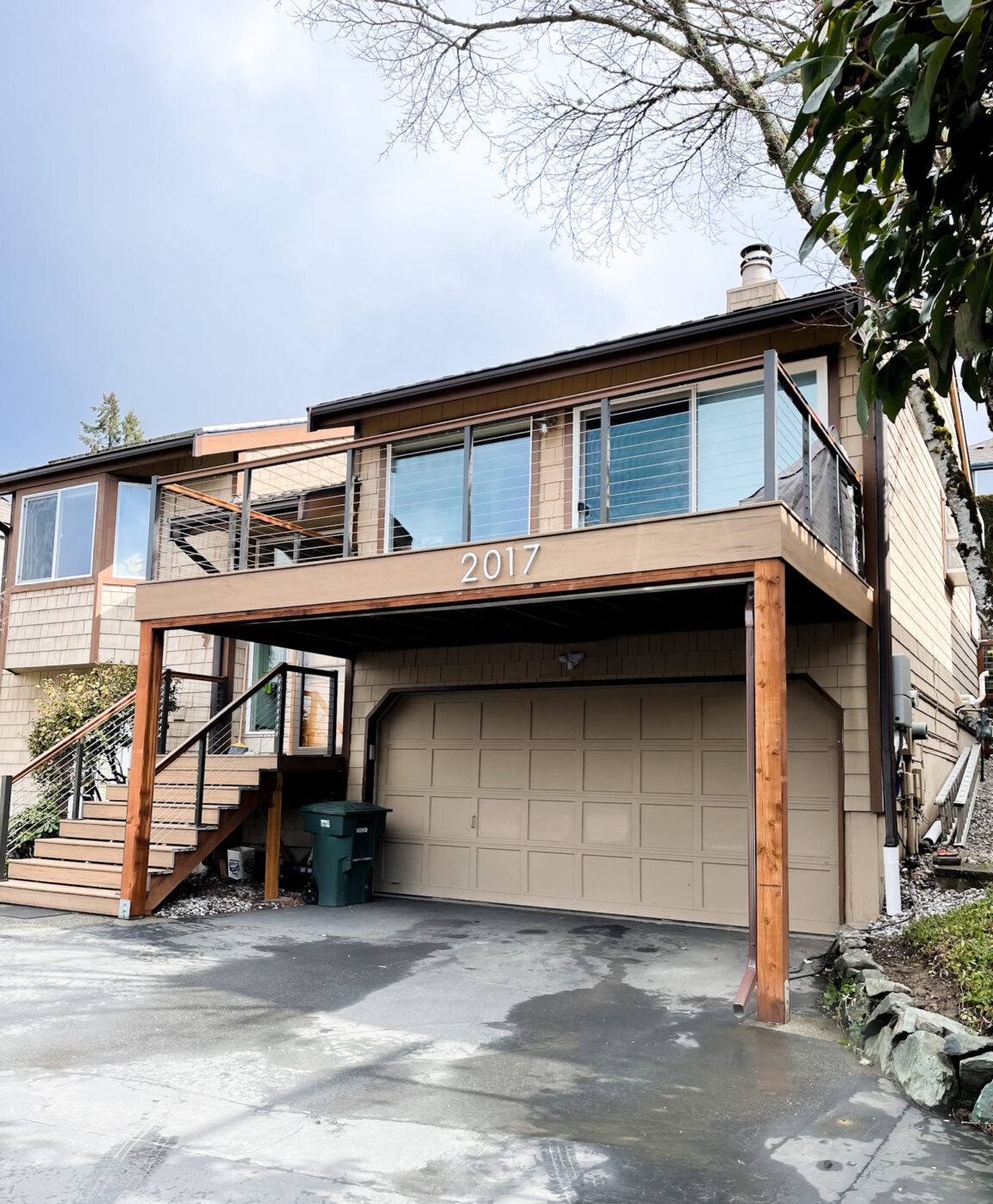
What Salt Air, Rain, and Moss Do to Siding Over Time
Salt-influenced air
Ferndale and the surrounding Whatcom County lowlands sit close enough to Puget Sound and Bellingham Bay that airborne salt is a real factor, especially on west- and south-facing exposures that catch prevailing wind off the water. Salt-laden moisture accelerates corrosion on exposed fasteners and metal flashing, and it can degrade lower-quality paint finishes faster than inland climates would. A siding system that isn't engineered for coastal-adjacent exposure will chalk, fade, or corrode at the fastener heads years before it should.
Driving rain
This isn't a region of brief thunderstorms — it's a region of prolonged, wind-driven rain that can push moisture sideways into laps, seams, and butt joints if they aren't detailed correctly. The failure point is almost never the siding panel itself; it's the water management behind it. Weather-resistive barriers, flashing at every penetration, and correct lap spacing are what actually keep water out over a 30-year timeframe.
A long moss season
Between the shade cover common in established Cordata neighborhoods and the extended damp season, moss and algae growth on siding is close to a given if the product and finish don't resist it. Moss holds moisture against the wall surface, which accelerates whatever underlying problem already exists — soft wood, degraded paint, or an unsealed cut edge.
Why Product Choice Matters More Than Most Homeowners Assume
A lot of the siding problems we get called out to inspect in this area trace back to the product, not the installer. Wood-based and wood-composite sidings (cedar, primed spruce, engineered wood products like LP SmartSide) depend on an intact factory coating and perfect field sealing at every cut edge to resist moisture. In a climate that stays damp for months at a stretch, that's a high bar to maintain year after year, and it only takes one missed or worn seal point for water to get in and start breaking down the substrate from the inside. Vinyl siding sidesteps the rot question but has its own limits here — it can warp or distort in temperature swings, and its color is baked through a thin material that fades and chalks with UV and salt exposure over time, with no way to touch it up short of replacement.
James Hardie fiber cement is what we install because it's engineered around exactly this problem. It's non-combustible, doesn't support rot, and is manufactured with regional climate performance in mind — Hardie's HZ5 product line, for example, is engineered for climates with more moisture and freeze-thaw cycling. The ColorPlus factory finish is baked on under controlled conditions, which holds color and resists fading, chalking, and moss adhesion far better than field-applied paint on wood siding. That's a direct answer to the three stressors — salt, rain, and moss — that define this climate.
What a Correct Siding Installation Actually Involves
The siding panel is the last thing installed and the least likely thing to fail. Everything underneath it is what determines whether the job lasts 10 years or 40. A correct installation in this climate includes:
- A continuous, correctly lapped weather-resistive barrier behind the siding, with no gaps at seams or penetrations
- Properly integrated flashing at every window, door, and roofline intersection — this is where most water intrusion actually starts
- Correct fastener type, spacing, and depth per Hardie's published installation specs, not generic "close enough" nailing
- A minimum clearance gap between the bottom of the siding and grade, decks, or roof lines to prevent wicking
- Factory-cut and factory-primed edges used wherever possible, with any field cuts properly sealed per manufacturer spec
- Correct caulking at trim and butt joints — the right product, applied correctly, not oversealed in a way that traps moisture instead of shedding it
Skipping or shortcutting any one of these doesn't show up on day one. It shows up in year three or four as a soft spot, a stain, or a section of siding that starts absorbing moisture it was never supposed to see.
Our Process for a Cordata-Area Siding Project
1. On-site assessment
We walk the exterior and look specifically at exposure direction, existing moisture damage, trim condition, and how the current water management is (or isn't) working. This is where shaded, damp-prone walls and salt-exposed elevations get flagged for extra attention in the plan.
2. Tear-off and substrate check
Old siding comes off and we inspect the sheathing underneath before anything new goes up. If there's hidden rot or moisture damage from a prior installation, that gets addressed first — covering over a compromised substrate just delays and hides the problem.
3. Water management first
Weather-resistive barrier and flashing get installed and inspected before a single piece of siding goes on. This step matters more here than in drier climates, and we don't shortcut it.
4. Hardie installation to spec
Panels, fasteners, and joints are installed per James Hardie's published specifications, not a generalized industry standard. This is also what protects the manufacturer's warranty coverage.
5. Final walk-through
We review the completed work with the homeowner, cover basic care and what to expect over the first year, and answer questions before calling the job done.
Comparing Siding Options for This Climate
| Factor | James Hardie Fiber Cement | Wood / Engineered Wood | Vinyl |
|---|---|---|---|
| Moisture resistance | High — cement-based, doesn't rot | Moderate — depends on intact coating | High, but can trap moisture behind panel |
| Salt air / coastal exposure | Engineered finish resists chalking/fading | Coating degrades faster near salt air | Fades and chalks over time |
| Moss/algae resistance | Factory finish resists adhesion | Porous surface holds moisture, invites growth | Can grow moss in shaded, damp areas |
| Fire resistance | Non-combustible | Combustible | Can melt/deform under heat |
| Long-term maintenance | Low — occasional wash, no repainting cycle needed for color | Higher — recoating, caulking, edge sealing | Low, but limited repair options if damaged |
What Drives Cost on a Job Like This
Every Cordata-area project is priced on its own specifics, but the main cost factors are consistent:
- Home size and wall complexity — more corners, dormers, and trim detail increase labor time
- Existing substrate condition — hidden rot or water damage found during tear-off adds repair scope
- Siding profile and accessory selection — lap width, trim style, and ColorPlus color affect material cost
- Access and site conditions — mature landscaping, tight lot lines, or multi-story sections affect labor
- Current water management condition — a home with failing or absent flashing needs more attention during tear-off than one that's been well maintained
We give a straight, itemized estimate after the on-site walk so you know exactly what you're paying for and why.
Why Hiring a Crew That Works This Area Matters
Siding installation isn't a one-size-fits-all trade. A crew that mostly works drier inland climates will default to installation practices that don't account for sustained coastal moisture and moss pressure. Working regularly in Ferndale and greater Whatcom County means we already know which exposures need extra flashing attention, which lots hold moisture longer because of tree cover, and how to sequence a tear-off around the region's rain patterns so the substrate isn't left exposed longer than it needs to be. That local pattern recognition is the difference between a siding job that looks right on install day and one that actually performs for 30 years in this specific climate.
Get a Straight Estimate for Your Home
If you're in Cordata or elsewhere around Ferndale and thinking about new siding, we're happy to come take a look, walk the exterior with you, and give you a clear, no-pressure estimate. There's no obligation — just an honest read on your home's condition and what a correct James Hardie installation would involve.