 Ferndale Siding
 Building Decks in Cordata for Whatcom County Weather
Cordata sits close enough to the water and low enough in elevation that outdoor structures take a real beating over time. A deck built the way it would be in a dry inland climate doesn't hold up here. Salt-laced air off the Sound, months of driving rain, and a moss season that can stretch from October into May all work against wood, fasteners, and finishes in ways that show up as soft boards, black streaks, and loose railings within a few years if the build wasn't done with this specific climate in mind. We frame, flash, and finish decks in this area with that reality built in from the first footing, not as an afterthought.
This page covers custom decks specifically for Cordata-area homes: what the local weather does to a deck over time, what a correctly built one actually involves, how our process works from first look to final walkthrough, and why it matters to hire a crew that already works this part of Whatcom County regularly.
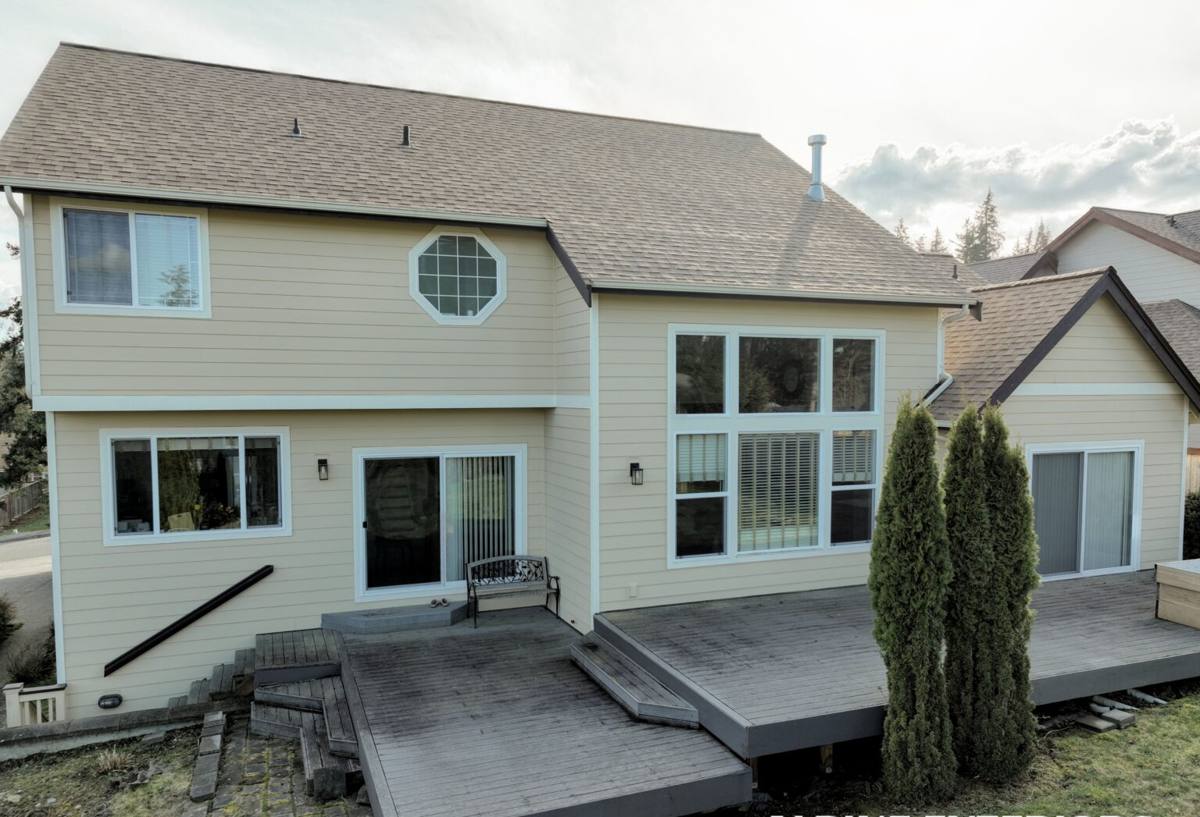
What This Climate Does to an Outdoor Deck
Moisture That Never Fully Lets Up
Ferndale and the surrounding Whatcom County lowlands get long stretches of steady, low-intensity rain rather than short heavy downpours. That matters for decks because it means wood and framing stay damp for days at a time instead of drying quickly between storms. Any point where water can collect — a poorly flashed ledger board, a joist end without protection, decking laid tight with no drainage gap — becomes a slow rot problem instead of a fast one, which is worse in a way, because it's invisible until the damage is already structural.
Moss and Algae Growth
A shaded deck surface in this region can stay damp enough, long enough, to grow moss and algae on almost any decking material if it isn't detailed for drainage and airflow. Moss holds moisture against the board surface, and on wood decking that accelerates rot; on composite it can stain and make the surface genuinely slick underfoot. Board spacing, joist spacing, and under-deck ventilation all affect how much of this you deal with later.
Salt Air and Hardware
Cordata's proximity to Bellingham Bay and the broader Puget Sound means the air carries salt further inland here than it would in a purely interior valley. Salt air accelerates corrosion on any exposed metal — hangers, screws, bolts, railing hardware. Standard interior-rated fasteners can start rusting and staining decking within a season or two. This is one of the most common corner-cutting spots we see on decks that weren't built by someone who works this specific coastal-influenced climate regularly.
Choosing the Right Decking Material
There's no single "best" decking material — it depends on budget, how much upkeep the homeowner wants to do, and how exposed or shaded the deck location is. Here's how the common options actually compare for this climate specifically:
| Material | Moisture Behavior Here | Maintenance | Typical Lifespan |
|---|---|---|---|
| Pressure-treated wood | Absorbs and releases moisture; prone to moss/algae if not sealed regularly | Needs cleaning and re-sealing every 1-2 years | 15-20 years with upkeep |
| Cedar | Naturally rot-resistant but still needs finish maintained against constant damp | Periodic cleaning and oiling/sealing | 15-25 years with upkeep |
| Composite decking | Doesn't rot, but can grow surface algae/moss in shaded, damp spots without cleaning | Occasional wash; no sealing needed | 25-30+ years, manufacturer-dependent |
| PVC/capped composite | Fully moisture-resistant surface; best resistance to staining and mildew | Lowest — occasional rinse | 25-30+ years |
We don't push one material on every job. A well-drained, sun-exposed deck in Cordata can do fine in cedar or treated wood for years. A shaded deck tucked under trees or against the north side of a house is where composite or capped PVC earns its higher upfront cost, because the maintenance burden of wood in a spot that never fully dries is real and ongoing.
What a Correctly Built Deck Actually Involves
Footings Set to Local Frost and Soil Conditions
Footings need to be sized and set to the depth Whatcom County code requires, and set on soil that's been checked, not assumed. Undersized or shallow footings are one of the more common failure points we find when repairing older decks in this area — they may hold for a while, but ground movement from saturated soil eventually shows up as a deck that's shifted or a set of stairs that no longer sits square.
Ledger Flashing Done Right
The ledger board — where the deck attaches to the house — is the single highest-risk point for water intrusion on any deck in a wet climate. Proper flashing, correctly lapped with the house's existing weather barrier and sealed at every fastener, is what keeps water from tracking behind the siding and rotting the house's rim joist, not just the deck itself. This is not a place to save time.
Fasteners and Hardware Rated for the Air Here
Given the salt air exposure discussed above, we use corrosion-resistant fasteners and connectors rated for coastal-influenced conditions — not the standard interior-grade hardware that's fine two hours inland but starts staining and weakening within a couple of seasons this close to the water.
Railings and Guard Code
Any deck more than a modest height off grade needs a code-compliant guardrail with baluster spacing that passes inspection — this isn't optional and it isn't a place where "close enough" is acceptable, both for the inspection and for the people using the deck.
Our Process From Estimate to Finished Deck
- On-site look and conversation. We walk the property, talk through how the deck will actually be used, note sun/shade exposure and drainage patterns specific to that lot.
- Material and layout discussion. We go over decking material trade-offs honestly, including the maintenance conversation above, and settle on a layout that fits the house and the site.
- Written estimate. Clear scope, materials, and price before any work starts — no surprise change orders for things that should have been caught up front.
- Permitting. We handle the permit application and coordinate inspections with the local jurisdiction so the homeowner isn't chasing paperwork.
- Framing and flashing. Footings, ledger flashing, and framing built to the standards above, inspected at the required stages.
- Decking, railing, and finish work. Final surface, railings, stairs, and any trim or skirting.
- Final walkthrough. We go over the finished deck together and cover basic maintenance expectations for the material chosen.
Permits and Local Code Considerations
Most custom decks above a certain height or attached to the house require a building permit in Whatcom County jurisdictions, and inspections at the footing and framing stages are standard. Skipping this — which does happen with unlicensed or out-of-area labor looking to save time — leaves the homeowner holding the liability if there's ever an issue with a real estate sale, an insurance claim, or a structural problem down the line. We pull permits as a normal part of the job, not an upsell.
Maintenance Checklist for This Climate
Whatever material a homeowner chooses, a bit of seasonal attention goes a long way in a climate that stays damp this much of the year:
- Sweep leaves and debris out of board gaps regularly — trapped organic matter is what starts moss and algae growth
- Rinse or wash the deck surface at least once or twice a year, more often in shaded areas
- Check and re-seal wood decking on the manufacturer's or our recommended schedule, not just "when it looks dry"
- Inspect railing hardware and fasteners annually for early rust or corrosion, especially closer to the water
- Keep gutters and downspouts near the deck clear so runoff isn't dumping extra water onto or under the structure
- Trim back overhanging branches that keep sections of the deck shaded and slow to dry
Cost Factors to Expect
| Factor | How It Affects Cost |
|---|---|
| Decking material | Treated wood is the lowest upfront cost; composite and PVC cost more up front but less over time in maintenance |
| Size and footprint | Larger decks mean more footings, framing, and decking material |
| Height and stairs | Multi-level decks and stair runs add framing and railing complexity |
| Site access and grading | Sloped or hard-to-access lots add labor time for footings and material handling |
| Railing style | Cable, glass, or custom railing systems cost more than standard baluster railing |
We give straight, honest ranges during the estimate visit once we know the specifics of the site — we don't quote a number sight-unseen and adjust it later.
Why a Local Ferndale Crew Matters
A crew that already works Cordata and the rest of the Ferndale area knows which lots hold water longer, which local jurisdictions' inspectors want to see what at each stage, and which hardware and finish choices actually hold up here versus what looks fine on paper. That's not something a crew driving in from outside the region picks up on the first job — it comes from building and repairing decks in this specific climate, on this specific soil, season after season. When something does need attention down the road, we're local and easy to reach, not a phone number from two counties over.
If you're planning a custom deck in Cordata or anywhere else around Ferndale, we're happy to come take a look at the site and talk through what makes sense for your home. Use the form below for a free, no-pressure estimate.