 Ferndale Siding
 Roofing Built for Blaine's Coastline, Not a Catalog Photo
Blaine sits right up against the water, close enough to Semiahmoo Bay and the Strait of Georgia that salt air is part of daily life for every house in the area. Add Whatcom County's long, wet winters and the moss season that comes with them, and you've got a roofing environment that's a lot tougher on materials than most manufacturers' warranty language assumes. A roof that's correctly installed for a drier inland climate can still fail early here — not because the shingles were bad, but because the install didn't account for what this specific location throws at it year after year.
We install new roofs for homes in and around Blaine regularly, and the patterns repeat: salt-laden air corroding exposed fasteners and metal flashing faster than inland homes see, driving rain pushed sideways by wind finding its way under poorly lapped underlayment, and moss taking hold in shaded, north-facing slopes within a couple of wet seasons if the roof wasn't set up to shed water and dry out between storms. None of that is unusual for this stretch of Whatcom County — it's just what a correct installation here has to plan for from the first day of tear-off.
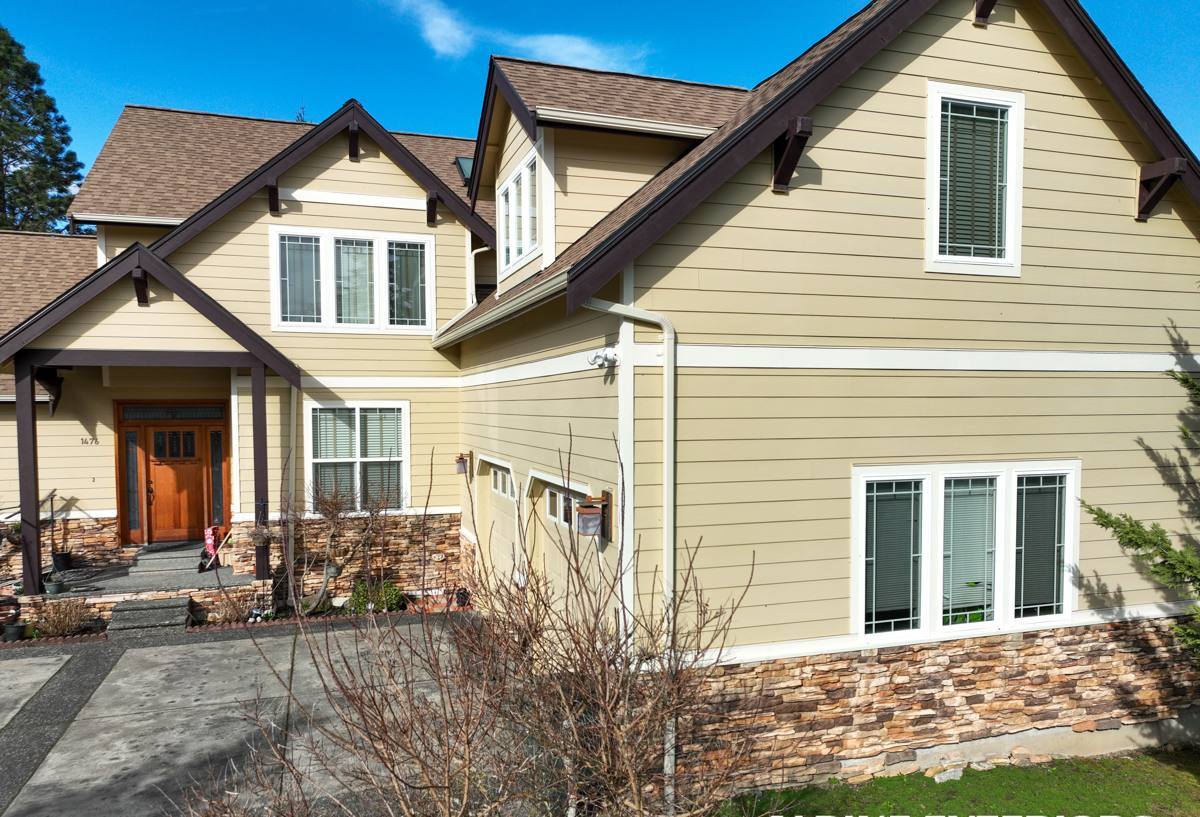
Signs a Blaine Roof Needs Replacement, Not Another Patch
Homeowners often call us after a repair, or after a second or third repair, and ask whether it's finally time for a full new roof. A few signs make that call pretty clear:
- Granule loss showing up in gutters, especially after wind-driven rain events
- Shingles that are cupping, curling, or cracking across multiple slopes, not just one spot
- Moss that keeps returning to the same areas within a season or two of cleaning
- Soft spots or discoloration on the decking visible from the attic side
- Flashing around chimneys, vents, or valleys that's rusted, lifted, or was never properly stepped
- A roof that's 20+ years old, regardless of how it looks from the ground
A single missing shingle or a leak at one flashing point is usually a repair. Widespread wear, especially combined with age, is where a repair stops making financial sense and a new roof becomes the honest recommendation.
What a Correct New Roof Installation Actually Involves
A new roof is more than laying shingles over what's there. Done right, especially in a coastal, moss-prone area like Blaine, it includes several steps that are easy to skip and hard to notice once the roof is finished — until they cause a problem years later.
Full Tear-Off and Decking Inspection
We remove the old roofing down to the deck rather than layering over it. That's the only way to actually see the plywood or OSB underneath, check for soft or delaminated spots from long-term moisture exposure, and replace any sections that won't hold fasteners properly. Skipping this step is the single most common shortcut that leads to early failure on older Whatcom County homes.
Underlayment and Ice/Water Barrier
Given how much driving rain this area gets, we pay close attention to underlayment overlap and the placement of self-adhering ice-and-water barrier at eaves, valleys, and around penetrations — the places wind-blown rain is most likely to force its way underneath standard shingle coverage.
Flashing Done as a System
Flashing at chimneys, skylights, walls, and valleys isn't a caulk-and-hope job. It needs to be step-flashed and integrated with the underlayment so water is directed out and down, not into the wall or attic cavity. Salt air accelerates corrosion on lower-grade or improperly sealed metal, so material choice and installation quality both matter here more than in a drier inland town.
Ventilation
Proper intake and exhaust ventilation keeps the attic and roof deck at a stable temperature and moisture level, which matters for shingle lifespan and for slowing the conditions moss needs to take hold — a shaded, damp, poorly ventilated roof is close to an invitation for it.
Choosing a Roofing Material for Blaine's Exposure
There's no single "best" roofing material for every home — it depends on budget, roof style, and how much long-term maintenance a homeowner wants to take on. Here's how the common options actually compare for a salt-air, high-moisture location like Blaine:
| Material | Salt air / corrosion resistance | Moss resistance | Typical lifespan here | Maintenance |
|---|---|---|---|---|
| Architectural asphalt shingle | Good with quality flashing/fasteners | Moderate — benefits from zinc/copper strips on shaded slopes | 20–30 years | Periodic moss treatment on shaded areas |
| Standing seam metal | Very good with coated/marine-grade fasteners | Good — sheds moisture fast, little surface for moss to grip | 40–50+ years | Low; occasional fastener/seam check |
| Composite/synthetic shingle | Good | Moderate to good depending on product | 30–50 years | Low to moderate |
| Cedar shake | Fair — needs regular treatment near salt exposure | Poor without diligent upkeep | 20–30 years with maintenance | High |
We're upfront that we steer most Blaine homeowners away from untreated wood shake for roofing in this specific location — not because it's a bad product everywhere, but because the maintenance burden to keep it performing well against this much moisture and moss pressure is significant, and the trade-off usually doesn't make sense once a homeowner sees what upkeep actually looks like year to year.
Our Installation Process
- On-site assessment — we walk the roof and attic, check decking condition, ventilation, and existing flashing before quoting anything
- Written scope and material selection — you know exactly what's being installed and why, including flashing and ventilation upgrades where needed
- Tear-off and disposal — old roofing removed and hauled off, deck exposed and inspected
- Deck repair — any compromised sheathing replaced before anything new goes down
- Underlayment and ice/water barrier — installed to current standards, with extra attention at vulnerable points
- Flashing and roofing installation — installed as an integrated system, not separate steps
- Ventilation check — intake and exhaust confirmed to be working together, not against each other
- Final walkthrough — we go over the finished roof with you before calling the job done
What Affects the Cost of a New Roof in Blaine
Every roof is priced based on the specifics of the house, but the factors that move the number the most are fairly consistent:
| Factor | Why it matters |
|---|---|
| Roof size and pitch | More surface area and steeper slopes mean more material, time, and safety setup |
| Number of layers to remove | Tear-off of multiple old layers takes longer and adds disposal cost |
| Decking condition | Rot or soft spots found during tear-off require replacement before installation continues |
| Material choice | Asphalt, metal, and composite options carry different material and labor costs |
| Roof complexity | Valleys, dormers, chimneys, and skylights all add flashing detail and labor |
| Ventilation upgrades | Adding or correcting intake/exhaust vents adds a modest cost but protects the investment |
We don't quote a job without seeing the roof — anyone offering a firm number over the phone for a home they haven't inspected is guessing, and on a coastal roof that guess can be off in either direction.
Moss and Algae Prevention Starts at Installation
Moss in Whatcom County isn't a sign of a bad roof — it's a sign of moisture and shade, both of which Blaine has in steady supply. But how a roof is installed affects how much of a fight moss becomes later. Zinc or copper strip installation near the ridge, proper ventilation to reduce trapped moisture, and keeping overhanging branches trimmed back all reduce how aggressively moss returns. We factor this into the installation itself rather than treating it as an afterthought homeowners have to solve on their own after the fact.
Why a Crew That Already Works in Blaine Matters
Roofing crews that mostly work drier, inland areas sometimes underestimate what a coastal Whatcom County roof needs — lighter flashing details, standard fastener grades, or ventilation specs that are fine somewhere else but undersized for this level of moisture and salt exposure. We work in Blaine and the surrounding Ferndale area regularly enough to know which slopes typically hold moss, which fastener and flashing grades hold up against the salt air here, and how local wind-driven rain patterns actually behave against a roofline — not from a manual, but from doing the work in this specific place.
After Installation: A Simple Maintenance Checklist
- Clear gutters and downspouts at least twice a year so water isn't backing up under the roof edge
- Trim back tree limbs that keep any section of roof shaded and damp
- Have moss treated promptly if it appears, rather than waiting for it to spread
- Check attic ventilation isn't blocked by insulation or debris
- Schedule a visual roof check after any major windstorm
A correctly installed roof still benefits from a little upkeep — it's a much smaller list than what an incorrectly installed one demands.
If your Blaine home needs a new roof, or you're just not sure yet whether repair or replacement makes more sense, we're happy to take a look and give you a straight answer. Fill out the form below for a free, no-pressure estimate.