 Ferndale Siding
 Building New in Blaine? What the Climate Asks of Your Windows
If you're framing a new home or an addition in Blaine, the windows you choose and how they're installed will decide how that building performs for the next 30 years — not just how it looks on move-in day. Blaine sits right on the water at the top of Whatcom County, which means the air carries salt, the rain comes in sideways more often than it falls straight down, and the mild, wet winters here support moss and mildew growth on anything that stays damp too long. None of that is a reason to panic. It's just the baseline any new-construction window install has to be built for from the first flashing strip to the last bead of sealant.
New construction is actually the best time to get this right. Unlike a retrofit into an existing wall, you have full access to the rough opening, the house wrap, and the sheathing before drywall or siding goes on. Mistakes made here — a reversed flashing lap, a missing sill pan, a gap in the weather-resistive barrier — get buried behind finish materials and don't show up as a leak or rot until years later, usually right around the time a home inspector or a new owner finds it.
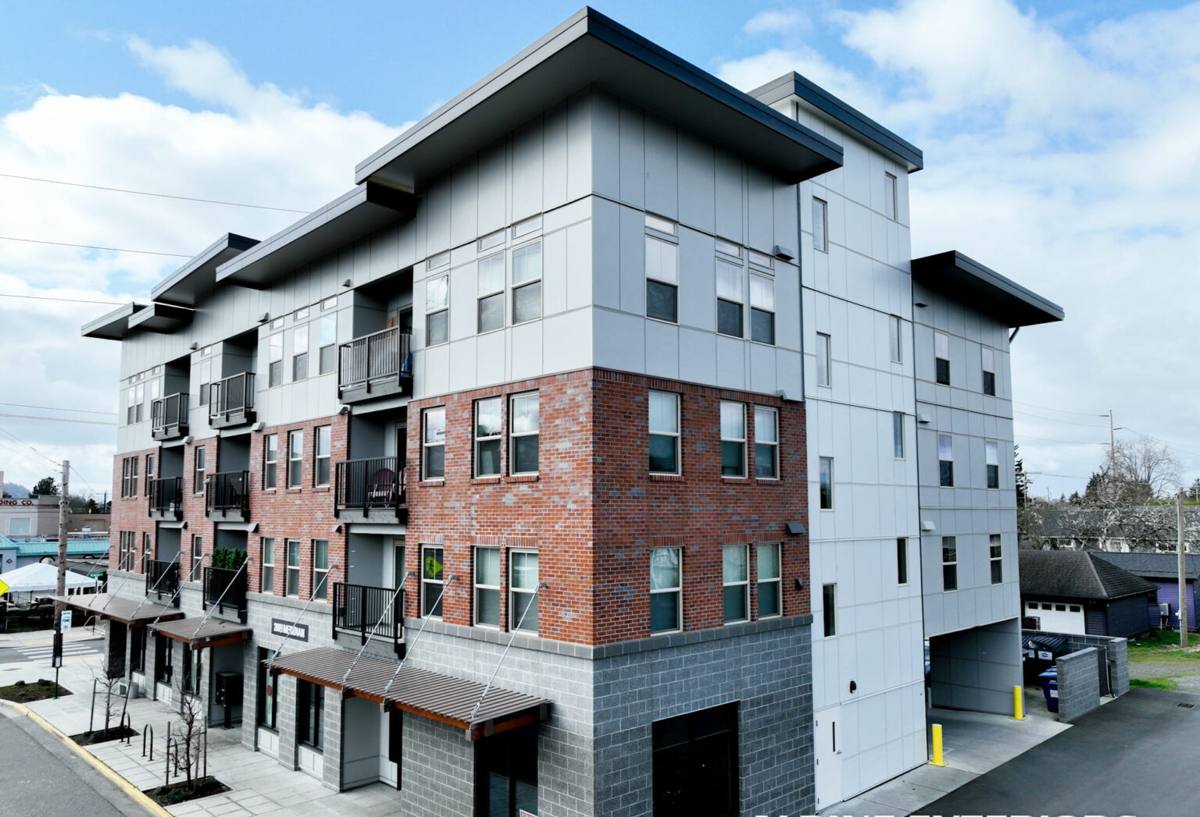
New-Construction vs. Replacement Windows — Why We Treat Them Differently
These are two different jobs with two different sets of rules, and conflating them is one of the more common ways a window install goes wrong.
New-construction (flanged) windows
These have a nailing flange around the perimeter that gets fastened directly to the sheathing and integrated into the wall's water management system — housewrap, flashing tape, sill pan — before siding goes on. This is the standard approach for new builds and additions because it gives the most reliable, long-term seal against wind-driven rain.
Replacement (pocket or insert) windows
These are built to fit into an existing frame without disturbing the surrounding wall. They're the right call on a remodel, but they're not what you want on new construction — you'd be giving up the ability to properly flash the opening for no good reason.
On a new build in Blaine, there's no reason to compromise. You get one shot at the flashing details before the wall is closed up, so we install flanged, new-construction units and integrate them properly the first time.
What a Correct New-Construction Install Actually Involves
"New-construction window install" sounds simple, but the sequence matters as much as the window itself. Here's what we're doing at every rough opening, in order:
1. Sill pan first
Before the window ever goes in, the sill of the rough opening gets a sloped, sealed pan — either a manufactured flexible flashing pan or a built-up one — so that any water that gets past the window in a hard blow has somewhere to go besides into the wall cavity. This is the single most important detail on a coastal, high-rain site like Blaine, and it's also the detail most often skipped on rushed jobs.
2. Jamb and head flashing, shingle-lapped
Flashing tape goes up the jambs and across the head in the correct shingle-style overlap — each layer lapping over the one below it — so water is always directed outward and down, never trapped behind a lap running the wrong way.
3. Window set, leveled, and fastened per the manufacturer's schedule
Shimmed square and plumb, fastened at the spacing and location the manufacturer specifies. Skipping fasteners or over-driving them can void the warranty and cause the frame to bow, which affects how the sash operates for the life of the window.
4. Integration with the weather-resistive barrier
The housewrap gets cut and taped back over the flange in the correct order so the whole assembly sheds water as one continuous plane, not a patchwork of separate pieces.
5. Interior air sealing
A low-expansion foam or backer rod and sealant at the gap between the frame and the rough opening — enough to stop air movement and control condensation risk, without overfilling and bowing the frame inward.
Every one of these steps is inspectable while the wall is still open. That's the advantage of doing it during framing instead of trying to fix it after the siding and drywall are on.
Local moisture behavior worth knowing
Any framing calendar in this region has to account for the amount of built-in stall time. If it looks like rain, you don't tape flashing over a wet sill and hope for the best — you wait, or you tent it, and you're honest with the builder about the schedule.
Choosing Frame Material and Glass for a Coastal Whatcom County Build
Not every window product handles salt-laden air and near-constant moisture the same way. Here's how the common frame materials compare for a Blaine build specifically:
| Frame Material | Moisture/Salt Behavior | Maintenance | Typical Cost Tier |
|---|---|---|---|
| Vinyl | Doesn't corrode or rot; welded corners resist water intrusion well | Low — occasional rinse to keep salt film and grime off | Lower to mid |
| Fiberglass | Excellent dimensional stability; won't swell, rot, or pit from salt exposure | Low — repaint or refinish only if desired, not required | Mid to upper |
| Wood, unclad | Beautiful but needs a sound finish maintained constantly in this climate; end grain and joints are vulnerable to prolonged damp | High — regular inspection and refinishing | Upper |
| Aluminum-clad wood | Cladding protects the exterior face from weather, but any breach at a miter or fastener point lets moisture reach the wood core | Moderate — depends on cladding integrity over time | Upper |
Our standard recommendation for new construction this close to the water is vinyl or fiberglass for the exterior-exposed frame, because they don't give salt air and moss-season humidity anything to work on. If a homeowner wants a wood interior look, a clad unit can deliver that without putting bare wood on the weather side — we just make sure the cladding and flashing details around it are done right, since that's where clad windows succeed or fail.
Glass packages
Double-pane, Low-E, argon-filled glass is the baseline we'd recommend for any new build here — it manages both the region's mild-but-persistent heat loss in winter and glare in summer. If the site is exposed to wind directly off the water, a heavier-duty glazing package or laminated glass in specific openings is worth discussing; we'll walk through what's actually warranted for your exposure rather than upselling across the board.
Our Process on a Blaine New-Construction Job
We work new-construction window installs on a timeline set by the general contractor's framing schedule, so coordination matters as much as craftsmanship.
- Plan review: we look at the window schedule and rough opening sizes against the actual framing before ordering anything, so nothing shows up short or oversized.
- Product selection walkthrough: frame material, glass package, and grid/style options discussed against your budget and the site's exposure.
- Rough opening verification: we check every opening on site before install day — square, plumb, correct size — and flag anything that needs a framing fix before we proceed.
- Flashing and install: sill pan, jamb and head flashing, window set, WRB integration, and air sealing, done in sequence per opening.
- Walkthrough with the builder: visual and functional check of every unit — operation, seals, sightlines — before the wall gets closed up behind siding or interior finish.
We stay in contact with the GC throughout so window install doesn't become the bottleneck holding up siding, or worse, gets rushed to keep the schedule.
Why a Ferndale-Based Crew That Already Works Blaine Matters
Blaine is a short drive from our home base in Ferndale, and we're out on jobs up and down this stretch of Whatcom County regularly enough to know what the coastal sites need without relearning it on your project. That matters in a few concrete ways: we're not guessing at how much lead time to build in around Pacific storm systems, we're not surprised by how quickly moss and green growth take hold on north-facing walls near the water, and if a warranty question or a punch-list item comes up after move-in, we're close enough to get back out to the site without it turning into a scheduling ordeal. Hiring a crew that treats a coastal job the same as an inland one is how flashing details get skipped — not out of dishonesty, just unfamiliarity with what this particular stretch of coastline puts a building through.
Mistakes We Watch For on New Builds
Most window problems that show up years later trace back to a handful of installation shortcuts. On every Blaine job, we're specifically checking for:
- Flashing tape lapped the wrong direction, which funnels water into the wall instead of away from it
- No sill pan, or a sill pan that isn't properly sloped to drain
- Foam-only air sealing with no backer rod and sealant joint on the exterior
- Fasteners skipped or placed off the manufacturer's schedule, which can void the warranty and let the frame rack over time
- Housewrap cut and taped out of sequence, breaking the continuous drainage plane
- Windows installed before the rough opening was verified square and properly sized
- Sealant joints installed over wet or dirty substrate, which fails early and often invisibly
Every one of these is easy to catch while the wall is open and nearly impossible to catch once it's closed up — which is exactly why we build the inspection points into our sequence rather than treating them as optional.
Living With New Windows: Simple Upkeep for Salt Air and Moss Season
A correctly installed window in this climate shouldn't need much, but a little routine attention keeps it performing for decades instead of just years.
Rinse the exterior periodically
Salt air leaves a film on glass and frames over time, especially on the sides of the house facing the water or open exposure. A garden-hose rinse a few times a year keeps it from building up and etching the glass or dulling the finish.
Check sealant joints annually
Exterior caulking has a service life. A quick visual check each fall — before the wet season sets in — lets you catch a cracked or pulled joint while it's a five-minute fix instead of a moisture problem behind the trim.
Keep moss and debris off nearby surfaces
Moss on a roof or in a gutter above a window run can redirect water onto the frame and sill in ways the original design never accounted for. Keeping gutters clear and moss knocked back on adjacent surfaces protects the windows below, even though the windows themselves aren't where the moss grows.
What Affects Cost on a New-Construction Window Package
There's no single "per window" number that means much without knowing the specifics of the build, but the main cost drivers are consistent from project to project:
- Number and size of openings, and how many are standard sizes versus custom
- Frame material — vinyl is typically the most economical, fiberglass and clad-wood run higher
- Glass package — standard Low-E/argon versus upgraded glazing for wind or noise exposure
- Grid patterns, custom shapes, or specialty operating styles (casement, awning, large fixed picture units)
- Site access and timing — coordinating tightly with a framing schedule is more efficient than working around finished interior work
We'll always give you a straightforward, itemized number based on your actual window schedule rather than a rough per-opening estimate that doesn't hold up once the order is placed.
If you're framing a new home or addition in Blaine and want windows installed right the first time — flashed, sealed, and set up to handle what this coastline actually throws at a building — we'd be glad to look at your plans and put together a free, no-pressure estimate. There's a form below to get that conversation started.