 Ferndale Siding
 Building a Deck That Holds Up in Blaine's Marine Climate
Blaine sits right on the water, and that changes what a deck needs to survive. Homes near Drayton Harbor and Semiahmoo Bay deal with salt-laden air moving in off the water, wind-driven rain that gets pushed sideways under railings and into ledger connections, and a long stretch of the year where shaded areas barely dry out between storms. A deck built to a generic spec sheet will show its age fast out here — loose fasteners, soft spots at the ledger, and moss creeping into every board gap by year two or three. A deck built for this specific stretch of Whatcom County coastline is a different thing entirely.
This page covers what we actually do differently for a custom deck in Blaine: the materials we reach for, the fastener choices that matter more here than inland, how we handle framing against a wet climate, and what our build process looks like from first visit to final walkthrough.
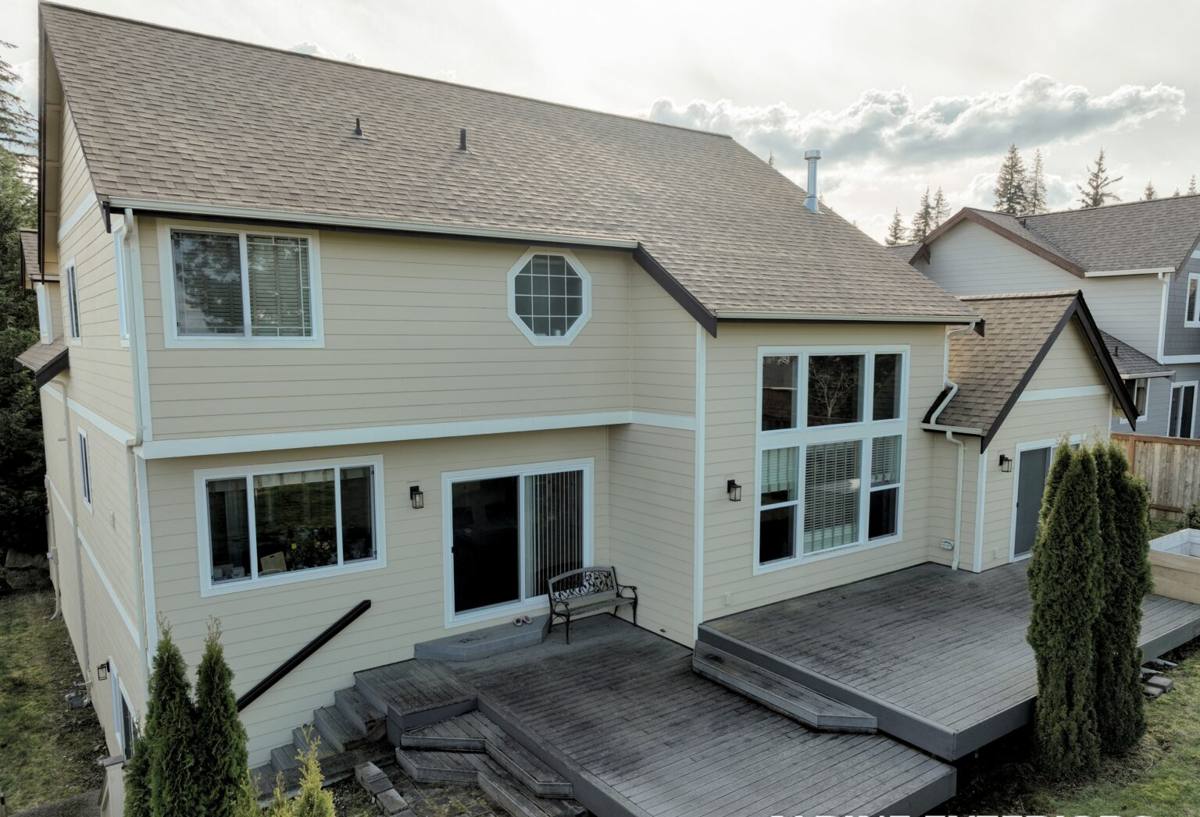
Why Salt Air, Driving Rain, and Moss Season Change the Build
Salt Air and Metal Fasteners
Airborne salt doesn't need direct ocean spray to do damage — it travels on the wind and settles on any exposed metal, where it accelerates corrosion. Standard galvanized fasteners that hold up fine forty miles inland can start showing rust streaks and pitting within a couple of years on a property close to the water in Blaine. Once a fastener corrodes, it loses grip strength, and a deck is only as strong as the connections holding it together.
Driving Rain and Ledger Board Attachment
Rain in this part of Whatcom County rarely falls straight down. Wind off the water pushes it sideways, which means it finds its way into gaps that would stay dry in a calmer climate — especially where the deck ledger board meets the house. If that connection isn't flashed and sealed correctly, water works its way behind the siding and into the rim joist, and you don't find out until there's rot. This is the single most common failure point we see on decks that weren't built with this climate in mind.
Moss, Shade, and Deck Boards
Blaine gets a genuinely long moss season — mild, damp conditions for much of the year that let moss and algae establish on any surface that stays wet, especially in shaded corners or under overhangs. On a deck, that means slippery boards, trapped moisture against the decking material, and, on wood decks, the beginning of surface rot if it's left unaddressed. Board spacing, airflow underneath the deck, and material choice all affect how much of a problem this becomes.
What a Correctly Built Custom Deck Involves
Framing and Structure
Everything starts with the framing, and in a wet climate the framing is where corners get cut without anyone noticing until years later. That means pressure-treated framing lumber rated for ground contact where it's close to grade, proper joist spacing for the decking material chosen, and — critically — joist tape or a comparable flashing membrane on top of every joist. That strip of protection keeps water from sitting directly on the wood every time it rains, which in Blaine is often.
Decking Material Choices
There's no single right answer here — it depends on budget, maintenance appetite, and how exposed the deck is to weather. Here's how the common options actually compare for a coastal Whatcom County property:
| Material | Moisture Behavior | Maintenance | Typical Lifespan Here |
|---|---|---|---|
| Pressure-treated wood | Absorbs and releases moisture; prone to cupping and checking near the water | Annual cleaning and re-sealing recommended | 10-15 years with upkeep |
| Cedar | Naturally moisture-resistant, but still needs sealing in a marine climate | Periodic cleaning and finish maintenance | 15-20 years with upkeep |
| Composite decking | Doesn't absorb water like wood; some early-generation products trapped moisture without proper gapping | Occasional washing, no sealing or staining | 25+ years |
| PVC/capped polymer | Fully sheds water, most resistant to moss and mildew staining | Lowest maintenance of the group | 25-30+ years |
We'll talk through this table with you honestly during the estimate — a wood deck done right with a realistic maintenance plan is still a fine choice for a lot of homeowners, especially on a budget. What matters is that whichever material you choose, it's installed with the spacing and ventilation that material actually needs.
Fasteners and Hardware
Given the salt air issue above, our standard for coastal Blaine projects is stainless steel or heavy-duty coated fasteners rated for corrosion resistance, along with structural hardware — joist hangers, post bases, ledger bolts — built to the same standard. It costs more up front than the cheapest hardware on the shelf. It's also the difference between a railing post that's solid in year ten and one that's wobbling.
Design Considerations Specific to Blaine Properties
Wind and Water Exposure
Properties closer to the water tend to get more direct wind, which affects railing design, how open or enclosed you want the layout, and whether wind-blocking elements like partial walls or well-placed screening make sense. We factor site exposure into layout, not just aesthetics — a deck that catches the full brunt of wind off the bay needs a sturdier railing system than one tucked into a more protected yard.
Sun, Shade, and Moss Prevention
Where a deck sits relative to the house, tree cover, and prevailing weather affects how much moss pressure it deals with long-term. On heavily shaded sites, we'll talk about board spacing, gap width, and whether a solid vs. open-rail design helps airflow underneath. Small layout decisions made at the design stage save a lot of scrubbing later.
Our Process, Start to Finish
- Site visit and consultation — we walk your property, look at sun/shade exposure, drainage, and how the deck will connect to the house, and talk through what you actually want to use the space for.
- Design and material selection — we put together a layout and go over material options honestly, including trade-offs in cost, maintenance, and lifespan for your specific site conditions.
- Written estimate — a clear breakdown of materials, labor, and scope, so there are no surprises once work starts.
- Permitting — we handle the permit application and inspections required for the project.
- Framing and structural work — footings, posts, beams, and joists built to span and load requirements, with flashing and joist protection installed as we go.
- Decking, railing, and finish work — installed to the spacing and fastening standards appropriate to the material chosen.
- Final walkthrough — we go over the finished deck with you, including basic care and what to expect in year one.
Permitting and Local Requirements
Most new deck construction in Whatcom County requires a building permit, particularly for decks attached to the house or elevated above a certain height — the exact thresholds depend on your specific property and jurisdiction, whether that's the City of Blaine or unincorporated Whatcom County. We pull the required permits and coordinate inspections as part of the job rather than leaving that step to the homeowner, which also protects you if you ever sell the house and need to show the work was done to code.
Maintaining a Deck in a Coastal Climate
Whatever material you choose, a little seasonal attention goes a long way in this climate. A basic maintenance checklist we give clients:
- Sweep debris out of board gaps regularly so moisture and organic matter don't sit and feed moss growth
- Rinse salt residue off decking and railings periodically, especially after storms with wind off the water
- Check and re-seal wood decking on the manufacturer's recommended schedule, typically every 1-2 years
- Inspect fasteners and hardware annually for early signs of corrosion or loosening
- Trim back overhanging branches to reduce shade and improve airflow in moss-prone areas
- Clear gutters and downspouts near the deck so runoff isn't draining directly onto or under it
Why It Matters to Hire a Crew That Already Works in Blaine
A lot of deck problems we get called to fix weren't caused by bad intentions — they were caused by a crew building to a spec that works fine in a drier, calmer climate and doesn't account for what happens forty feet from saltwater. Knowing to spec stainless hardware, knowing how to flash a ledger board against driving rain, knowing which corners of a lot will fight moss no matter what you do — that comes from having built decks in this specific area before, not from a general contracting background alone. It also means we're familiar with local permitting expectations and typical site conditions around Blaine and greater Ferndale, so the process moves without unnecessary delays.
Get a Straightforward Estimate
If you're planning a new deck or replacing one that hasn't held up to the weather out here, we're happy to take a look and give you an honest read on what your site needs — no pressure, no inflated scope. Use the form below to request a free estimate and we'll get back to you to schedule a visit.