 Ferndale Siding
 Asphalt Shingle Roofing Built for Blaine's Coastal Climate
Blaine sits right on the water in Whatcom County, close enough to Semiahmoo Bay that salt air is just part of daily life. That's a different environment than roofing a home twenty miles inland. Homes here deal with a steady mix of salt-laden moisture, wind off the water, driving rain that comes in sideways during winter storms, and a moss season that barely takes a break. A shingle roof that's installed correctly for this climate will outlast one that's installed the same way you'd install it in a dry, low-humidity market — and the difference shows up in five to ten years, not right away.
We work on homes in Blaine regularly out of our base in Ferndale, so this isn't theoretical for us. We see what the coastal moisture does to fasteners, flashing, and shingle mat over time, and we build our installs around that reality instead of a generic spec sheet.
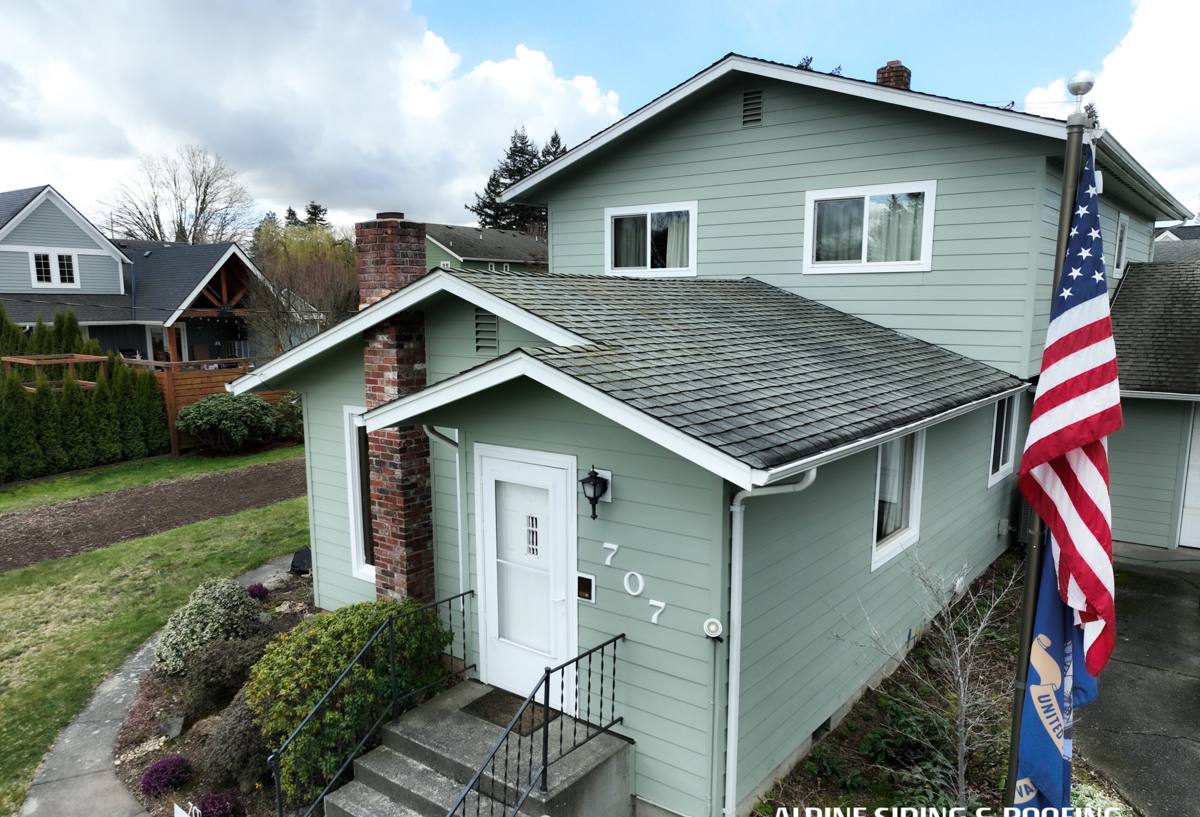
What Blaine's Weather Actually Does to a Roof
Salt Air and Corrosion
Salt in the air accelerates corrosion on exposed metal — nail heads, flashing, vent stacks, and gutter hardware. Standard electro-galvanized fasteners can start showing rust streaks on shingles years before the shingles themselves are worn out. Once fasteners corrode, they lose holding power, and that's how you get lifted shingles in a windstorm.
Driving Rain and Wind-Driven Moisture
Storms off the water don't always fall straight down. Wind-driven rain gets pushed sideways and upward under shingle edges, around chimneys, and along valleys — places a roof installed for calm weather isn't necessarily built to resist. This is where underlayment choice and flashing detail work matter more than the shingle brand printed on the wrapper.
Moss, Algae, and Shade
Whatcom County's long wet season and heavy tree cover mean moss and algae have months to establish themselves on north-facing slopes and shaded roof sections. Moss holds moisture against the shingle surface, works its way under tabs as it grows, and can lift shingles right off the deck if it's left unmanaged for a few seasons.
Signs a Blaine Roof Needs Attention
- Moss or dark algae streaking on north-facing or shaded slopes
- Granules collecting in gutters or at downspout outlets
- Shingle edges that look curled, cupped, or lifted, especially near the roof edge and ridge
- Rust staining around nail heads, flashing, or vent boots
- Soft or spongy spots when walking the roof (usually deck rot underneath)
- Daylight visible through the attic sheathing, or damp insulation after a storm
- Shingles that feel brittle or crack easily when lifted at the edge
Any one of these on its own isn't necessarily an emergency, but they're worth a professional look before the next wet season rather than after it.
What a Correct Asphalt Shingle Install Requires Here
Deck and Ventilation First
Shingles are only as good as what's underneath them. In a coastal, high-moisture climate, we pay close attention to attic ventilation and moisture balance before a single shingle goes down. A roof that traps warm, moist air underneath will rot the deck from below regardless of how good the shingles on top are. Balanced intake and exhaust venting matters as much here as the shingle itself.
Underlayment Upgrade
We don't treat underlayment as an afterthought on Blaine roofs. Synthetic underlayment with strong water resistance, plus self-adhered ice-and-water membrane at eaves, valleys, and around penetrations, gives the roof a real second line of defense against wind-driven rain — because on this coast, water will occasionally find its way past the shingle layer, and what's underneath decides whether that's a non-event or a repair bill.
Flashing Detail Work
Chimneys, skylights, sidewalls, and valleys are where roofs actually fail, far more often than the open field of shingles. Corrosion-resistant flashing, properly stepped and counter-flashed rather than just sealed with caulk, is standard on our installs. Caulk is a maintenance item; correctly formed flashing is a permanent detail.
Fastening for Wind and Corrosion
We fasten according to manufacturer wind specs for this exposure, using corrosion-resistant nails, and we don't rely on hand-nailing shortcuts or under-driven staples. In a location that gets real wind off open water, fastening pattern is a durability decision, not a cosmetic one.
Choosing a Shingle for Salt Air and Long Wet Seasons
Not every shingle line performs the same way in a coastal, moss-prone climate. We steer homeowners toward products with algae-resistant granules and a warranty structure that reflects real-world coastal performance, not just lab conditions.
| Shingle Type | Typical Lifespan Here | Best Fit For |
|---|---|---|
| Standard 3-tab | 15–20 years | Budget-driven projects, rental properties, secondary structures |
| Architectural (laminate) | 25–30 years | Most Blaine homes — better wind rating and moss resistance |
| Premium/designer architectural | 30+ years | Homeowners prioritizing longevity and appearance, higher-exposure roofs |
We generally recommend architectural shingles with algae-resistant (copper- or zinc-infused) granules for anything on this coast. The upfront cost difference over 3-tab is modest compared to the added years of service and reduced moss regrowth you get in exchange.
Our Process on a Blaine Shingle Roof
1. Inspection and Honest Assessment
We start on the roof and in the attic, not just with a drive-by look. We check deck condition, ventilation, existing flashing, and how much moisture damage, if any, has already happened. You get a straight answer on whether you need a full replacement, a partial section, or just repair and maintenance.
2. Tear-Off and Deck Repair
We remove old roofing down to the deck rather than layering over it, so we can actually see and fix any rot or soft sheathing before it's covered again. Layering over problems just hides them for a few more years.
3. Underlayment, Flashing, and Ventilation
This is where most of the long-term performance gets built in — ice-and-water membrane at vulnerable points, synthetic underlayment across the field, corrosion-resistant flashing, and ventilation corrected if it's undersized.
4. Shingle Installation
Shingles go down to manufacturer spec for wind exposure, with attention to nail placement, exposure lines, and valley/hip detail — the parts of an install that separate a roof that looks fine on day one from one that still performs at year fifteen.
5. Final Walkthrough
We walk the finished roof with you, cover what maintenance it'll need given its exposure and shade pattern, and make sure you know what normal wear looks like versus something to call us about.
What Drives the Cost of a Blaine Roofing Project
| Factor | Why It Matters Here |
|---|---|
| Roof pitch and access | Steeper roofs and limited access add labor time and safety equipment |
| Deck condition | Coastal moisture and past moss damage sometimes mean sheathing replacement |
| Shingle tier chosen | 3-tab vs. architectural vs. premium changes material cost and expected lifespan |
| Number of penetrations | Chimneys, skylights, and vents each add flashing labor |
| Ventilation upgrades | Adding or correcting intake/exhaust venting is worth doing at tear-off, not after |
| Layers to remove | Multiple existing layers add disposal and labor cost |
We don't quote a job without walking the roof and attic first — a phone estimate on a coastal home is a guess, and we'd rather give you a number based on what's actually there.
Maintenance That Actually Extends Roof Life on This Coast
- Have moss treated or gently removed before it works under shingle tabs — not scraped aggressively, which damages granules
- Keep overhanging branches trimmed back to reduce shade and debris buildup on north-facing slopes
- Clean gutters and downspouts at least twice a year so water isn't backing up under the eave line
- Check flashing and sealant at chimneys and vents annually, ideally before the wet season starts
- Address small leaks immediately — coastal moisture turns a small deck issue into a bigger one fast
- Have the attic checked for ventilation balance if you notice condensation or musty smell after storms
Why a Crew That Already Works in Blaine Makes a Difference
Roofing crews that mostly work drier, inland climates sometimes under-spec underlayment, skip the ice-and-water membrane at valleys, or use standard fasteners because that's what works fine where they usually build. None of that shows up as a problem on day one — it shows up in year six or seven, as lifted shingles, rusted fasteners, or a rotted deck under a roof that still looks new from the ground.
We're based in Ferndale and already do this work throughout Whatcom County's coastal communities, including Blaine. We know which details matter for salt air and driving rain because we've pulled off enough failed roofs to see exactly where the shortcuts were taken. That experience goes into every install, not just the ones close to home.
Get a Straight Answer on Your Roof
If your Blaine home's roof is showing moss, granule loss, or you just want an honest read on how many years it has left, we're happy to take a look. Request a free, no-pressure estimate using the form below and we'll walk the roof, tell you what we find, and give you options — no obligation either way.