 Ferndale Siding
 Window Replacement for Bellingham Homes, Done by a Crew That Works This Area Every Week
Bellingham sits close enough to the water and to the marine weather patterns that move through Whatcom County that its windows take a beating most homeowners don't fully appreciate until they're dealing with fogged glass, soft trim, or a draft that won't quit. We're based out of Ferndale and spend most of our workweeks on homes in this stretch of the county, which means we're not guessing at what Bellingham houses need — we're replacing the same failure patterns over and over, on streets not far from our own.
This page is specifically about window replacement in Bellingham: what the local climate does to windows over time, what a correctly installed replacement window actually involves, and how our process works from first look to final walkthrough.
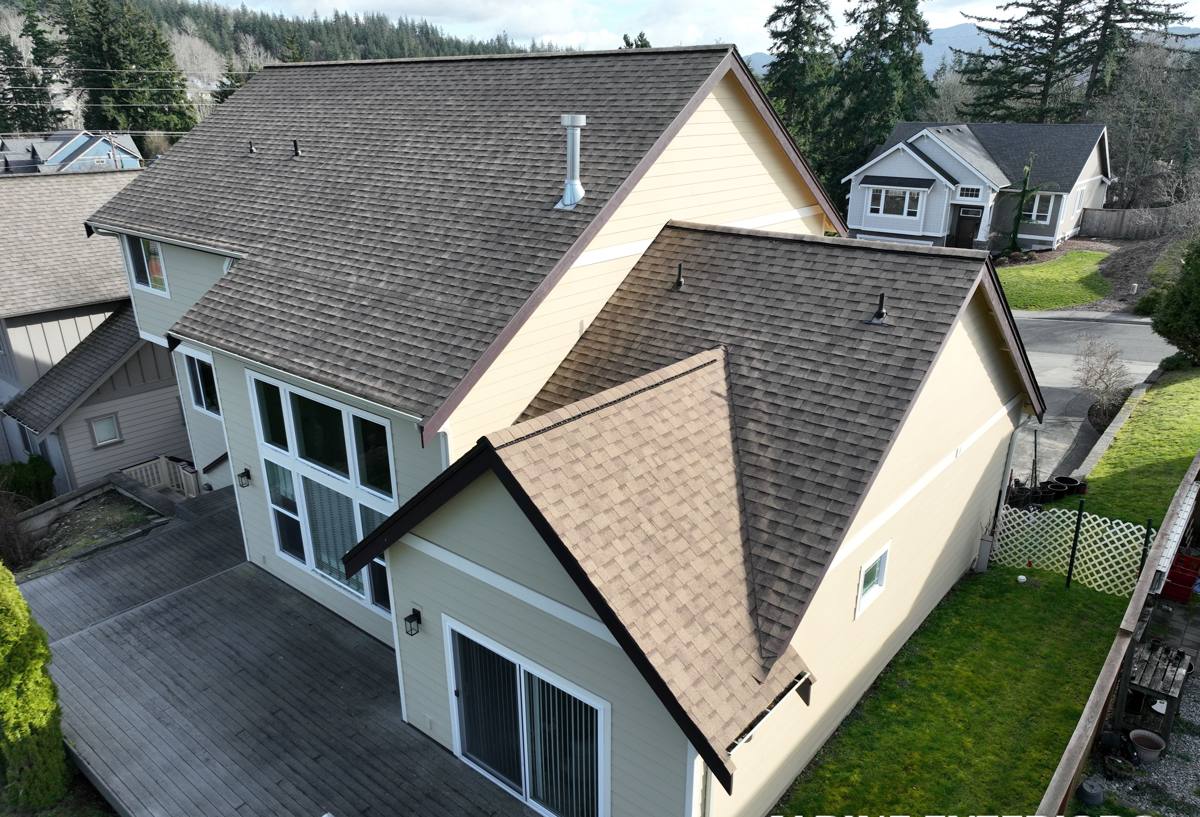
What Bellingham's Climate Does to Windows
Whatcom County's marine climate is mild compared to a lot of the country, but "mild" doesn't mean easy on a house. A few specific conditions drive most of the window failures we see in Bellingham:
- Salt-tinged air off the Sound accelerates corrosion on lower-quality window hardware, screen frames, and unprotected fasteners.
- Driving rain — rain pushed sideways by wind, not just falling straight down — finds any gap in flashing or sealant around a window opening and works it wider over time.
- A long moss and algae season keeps siding and trim around windows damp for extended stretches, which is exactly the condition wood trim and poorly sealed frames need to start rotting from the outside in.
- Temperature swings between damp night air and daytime sun stress seals on older insulated glass units, which is why so many 15-20 year old windows in this area show fogging between the panes.
None of this is unique to any one house — it's just what this part of Washington does to building materials, year after year. A window replacement done right accounts for it; one done fast doesn't.
The Signs Bellingham Homeowners Usually Notice First
- Fogging or a milky haze between the glass panes (a failed seal, not a cleaning problem)
- Visible gaps or soft/spongy wood at the sill or bottom corners of the frame
- A window that's hard to open, close, or lock — frames shift as wood swells and dries
- Cold drafts near the window even when it's fully closed
- Moss or dark staining building up on the trim or siding directly around the window
- Condensation forming on the inside of the glass during cold, damp mornings
What a Correct Window Replacement Actually Involves
Swapping in a new window is not just a size-for-size product swap. In a climate like this, the installation details matter as much as the window itself — arguably more, since a good window installed poorly will fail at the same rate as a cheap one.
1. Assessing the Opening, Not Just the Window
Before we order anything, we check the condition of the rough opening — the wood framing, sill, and any existing flashing behind the old window. If there's rot or water damage from years of moisture intrusion (common on older Bellingham homes that haven't had window work done since original construction), that has to be addressed before a new window goes in. Installing a new window into a compromised opening just hides the problem for a year or two.
2. Flashing and Water Management
This is the step that gets skipped by crews trying to move fast, and it's the single biggest reason windows fail early in wet climates. Proper flashing — building paper or house wrap integration, sill pan flashing, and correctly lapped window flanges — directs water that reaches the opening back out, rather than letting it sit against the framing. Given how much driving rain this area sees, we treat flashing as non-negotiable, not optional.
3. Sealing and Insulating the Gap
The gap between the window frame and the rough opening needs to be insulated (typically low-expansion foam, not just fiberglass batting stuffed in by hand) and sealed on the exterior with the right sealant for the surface. Over-filled or under-filled gaps both cause problems — one bows the frame, the other leaves cold spots and air leaks.
4. Exterior Trim and Finish Work
Once the window is set, the exterior trim gets reinstalled or replaced and caulked at every joint that could let water behind the new window. In a moss-prone climate, we also think about how trim profiles shed water and whether they're going to hold moisture against the wall long-term.
Window Types and What They're Suited For in This Climate
There's no single "best" window brand or style for every Bellingham home — it depends on the exposure of the wall, the existing architecture, and your budget. What we won't do is install a product or configuration we know performs poorly in this climate just because it's cheaper up front, since that trade-off usually shows up as callback work in a few years.
| Window Type | Best Suited For | Climate Consideration |
|---|---|---|
| Vinyl double-hung | Most standard replacements, good value | Low maintenance, holds up well to salt air; quality of the seal system varies by manufacturer |
| Fiberglass frame | Higher-exposure walls, west/south-facing sides | More dimensionally stable through temperature and moisture swings than vinyl |
| Wood-clad | Homes prioritizing interior wood aesthetics | Exterior cladding needs to be fully intact — any breach in the clad exposes wood to constant damp conditions |
| Casement | Walls that catch direct driving rain | Compression seal (rather than sliding seal) generally resists wind-driven rain intrusion better than sliders |
Cost Factors for Bellingham Window Replacement
We don't post fixed prices because window replacement cost depends on real variables specific to each house, but here's what actually moves the number:
- Number of windows and their size — larger picture windows and multi-panel units cost more than standard double-hungs
- Frame material — vinyl is generally the most budget-friendly, fiberglass and wood-clad cost more
- Condition of the existing opening — rot repair or reframing adds labor and material cost beyond the window itself
- Access and second-story work — upper-floor windows on multi-story homes take more time and equipment
- Trim and siding tie-in — matching or replacing surrounding trim adds to the scope
- Energy performance glass options — upgraded low-E coatings or gas fills cost more per unit but reduce heating costs over time
We give a firm number after actually looking at your windows and openings in person — an estimate over the phone for window work in an older home is a guess, and we'd rather not guess on something this specific.
Why a Ferndale-Based Crew That Works Bellingham Matters
Being close by isn't just about drive time, though that helps with scheduling and follow-up. It's that we've already seen what this specific stretch of Whatcom County does to window installations that were done without the local climate in mind — the flashing details that get skipped by out-of-area crews, the trim choices that trap moisture, the sealants that aren't rated for this level of sustained dampness. Working Bellingham regularly means we're not learning those lessons on your house.
It also means if something needs a follow-up visit — a settling issue in the first year, a question about how the new windows are performing through their first wet season — we're a short drive away, not a company that did one job in the area and moved on.
Our Process
- Free on-site assessment — we look at your current windows, openings, and any signs of water or rot damage
- Honest recommendation — we tell you what actually needs replacing versus what can wait, and walk through window type options for your specific exposure
- Written estimate — a clear scope and price, no pressure to sign on the spot
- Installation — proper flashing, sealing, and insulation at every opening, not just a fast product swap
- Final walkthrough — we check operation, sealing, and trim finish with you before calling the job done
A Quick Checklist Before You Call Anyone About Window Replacement
- Note which windows are foggy, drafty, or hard to operate — this helps us prioritize during the assessment
- Check for soft or discolored wood trim around the window exteriors
- Look for moss or dark staining building up near window openings, a sign of prolonged moisture exposure
- Have a rough idea of your budget range so we can tailor frame material recommendations accordingly
- Ask any contractor you're considering how they handle flashing and sealing — not just what window brand they sell
If your Bellingham home has windows showing any of the wear signs above, we'll come take a look, tell you honestly what needs attention now versus later, and put together a free, no-pressure estimate. There's a form below to get that scheduled.