 Ferndale Siding
 Sandy Point Roofs Work Harder Than Most
Sandy Point sits right on the water in Whatcom County, and that location is exactly what makes roof repair here different from a typical Ferndale job a few miles inland. A roof on this stretch of coastline is dealing with salt-laden air moving off the Strait of Georgia, wind-driven rain that gets pushed sideways into flashing and vents, and a moss season that runs long and wet even by Pacific Northwest standards. None of that is unusual for the area, but it does mean a roof repair here has to account for corrosion, wind uplift, and moisture intrusion in ways that a repair on a sheltered inland lot might not.
We work this neighborhood regularly, and the pattern is consistent: roofs that look fine from the ground are often already dealing with early flashing failure, fastener corrosion, or moss-driven granule loss underneath. Catching that early is the difference between a $400 repair and a $4,000 one.
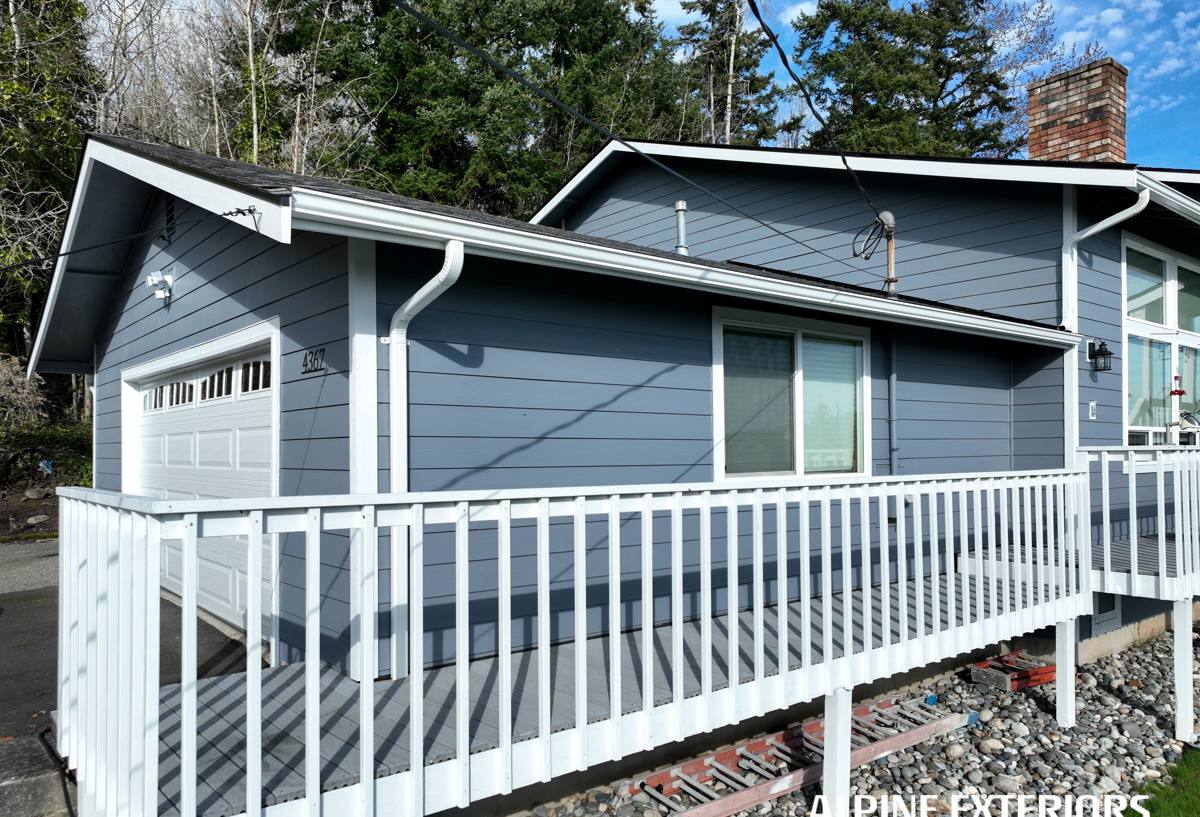
What Salt Air and Coastal Weather Actually Do to a Roof
Salt Air and Metal Components
Salt in the air accelerates corrosion on anything metal — nails, flashing, vent boots, gutter fasteners, and drip edge. Standard electro-galvanized fasteners that hold up fine 15 miles inland can start rusting and losing grip years earlier this close to the water. Once a fastener corrodes, it stops sealing tight, and that's a direct path for water to get under shingles or through a flashing seam.
Wind-Driven Rain
Rain that comes in sideways off the water finds every gap a straight-down rain never would. Ridge caps, valley flashing, and the edges around chimneys and skylights take the brunt of it. A repair that would hold up fine in calmer conditions can fail here if it doesn't account for wind-driven moisture pushing uphill under laps and seams.
Moss and Algae
Whatcom County's wet season runs long, and shaded, north-facing roof sections at Sandy Point often stay damp for weeks at a stretch. That's ideal moss territory. Moss holds moisture against the roofing material, lifts shingle edges as it grows, and works its way under laps over time — which is a slow but very real cause of leaks that homeowners often don't connect to moss until the damage is already done.
Common Repair Issues We See at Sandy Point
- Corroded or backed-out nails around ridge caps and hip lines from repeated wind exposure
- Failed or undersized flashing at chimneys, skylights, and roof-to-wall transitions
- Moss colonies on shaded slopes lifting shingle edges and trapping moisture
- Cracked or brittle pipe boots (the rubber collar around plumbing vents) from UV and salt exposure
- Wind-lifted or missing shingles along exposed eaves and rakes facing the water
- Clogged or sagging gutters contributing to water backing up under the roof edge
- Granule loss and premature aging on southwest-facing slopes that catch the most weather
What a Correct Roof Repair Actually Involves
A proper repair isn't just replacing whatever shingle looks damaged. It starts with figuring out why that spot failed in the first place, because on a coastal roof the visible damage is often a symptom of something happening underneath — a compromised underlayment, a corroded fastener line, or moss that's been holding moisture against the deck for a season or two.
Our repair approach generally includes:
- Full inspection, not just the reported spot. We check the whole roof plane, not just where the leak showed up inside, since coastal wind can move water sideways well away from where it enters.
- Deck check. If water has been getting in for a while, we check the sheathing underneath for soft spots or rot before doing any surface repair — patching over a soft deck doesn't hold.
- Matching materials correctly. Shingle color, weight, and exposure need to match the surrounding roof reasonably well, and any new flashing needs to integrate with the existing system rather than just being caulked over it.
- Corrosion-resistant fasteners and flashing. Given the salt air here, we use fastener and flashing materials suited to coastal exposure rather than standard-grade hardware.
- Sealing for wind-driven rain, not just vertical rain. Laps, step flashing, and valley work get extra attention to how water behaves when it's being pushed by wind, not just falling straight down.
Repair or Replace? What Actually Determines That
Not every issue on a Sandy Point roof means a full replacement, but coastal exposure does shorten the timeline compared to a sheltered inland roof. Here's how we generally think through it:
| Factor | Leans Toward Repair | Leans Toward Replacement |
|---|---|---|
| Age of roofing material | Under roughly 12-15 years | Approaching or past manufacturer's expected lifespan |
| Extent of damage | Isolated to one section, flashing point, or vent | Spread across multiple slopes or recurring in different spots |
| Deck condition | Sheathing is sound underneath | Soft spots, rot, or repeated water staining on the deck |
| Moss/algae history | Light, surface-level, recently addressed | Long-term growth with granule loss and lifted shingles across the roof |
| Fastener condition | Isolated corrosion at a few points | Widespread corrosion visible at ridge, hips, and edges |
When in doubt, we'll tell you honestly which side of that line your roof falls on. A repair that's just delaying an inevitable full replacement isn't a good use of your money, and we'd rather say so upfront than sell a patch job that won't hold through next winter's storms.
Materials That Make Sense for This Location
We don't push exotic or unusual materials on Sandy Point homes — the goal is standard, proven roofing materials installed correctly with hardware and flashing rated for coastal exposure. That means:
- Corrosion-resistant fasteners (stainless or coated) at exposed edges, ridges, and flashing points
- Metal flashing suited to salt-air environments rather than basic mill-finish aluminum where it's exposed to the elements
- Properly lapped and sealed underlayment as a backup layer in case wind-driven rain gets past the surface
- Pipe boots and seals rated for UV and weather exposure, since these are a common early failure point here
We also don't recommend certain lower-maintenance-marketed products for heavily shaded, moss-prone slopes without being upfront about the trade-offs — some materials handle moisture and moss differently, and the right call depends on your roof's specific exposure, not a one-size-fits-all pitch.
Our Process for a Sandy Point Repair Call
Because we already work in this neighborhood, we're not learning the area's weather patterns or access considerations on your job. Our process is straightforward:
- Initial look and honest assessment. We inspect the roof, identify the actual cause of the issue, and explain what we found in plain terms.
- Written estimate. You get a clear scope of work and price before anything starts — no surprise add-ons mid-job.
- Weather-aware scheduling. Coastal weather windows matter for roof work. We plan repairs around conditions that let materials seal and cure properly.
- The repair itself. Done to match the existing roof system, with attention to the flashing, fastener, and moisture details specific to this location.
- Cleanup and walkthrough. We clear debris and walk you through what was done and what to keep an eye on going forward.
Moss Management Isn't a One-Time Fix
If moss caused or contributed to the repair, treating the existing growth is only half the job. Moss comes back on shaded, damp roof sections unless it's kept in check, and that's a maintenance item, not a repair item. We'll point out which slopes on your roof are most at risk and give you a straightforward sense of how often those areas should be checked, rather than trying to sell an unnecessary annual contract.
Why It Matters That We Already Work Sandy Point
Sandy Point is a private, gated waterfront community, and a crew unfamiliar with the area often loses time just getting oriented — figuring out access, understanding how exposed each part of a property is to wind and salt spray, and gauging how weather off the water is going to affect a repair schedule. We've done enough work along this part of the Whatcom County coastline that none of that is a learning curve on your job. We show up knowing what this environment does to a roof and how to repair it so it actually holds up through the next round of coastal storms — not just until the next inspection.
What to Check Before You Call
A few things homeowners can look for that often flag a repair need early, before it turns into a bigger problem:
- Dark streaks or green/black growth on shaded roof slopes
- Granules collecting in gutters or at downspout outlets
- Shingle edges that look lifted or curled, especially on the side facing the water
- Rust staining around vent pipes, chimney flashing, or nail heads
- Water stains on interior ceilings, especially after a windy rainstorm rather than a calm one
- Sagging or debris-clogged gutters along the roofline
If you're seeing any of these, it's worth having it looked at before the next storm cycle rather than after.
If you own a home in Sandy Point and have a roof issue you'd like looked at — or just want an honest read on where your roof stands — we're glad to come out for a free, no-pressure estimate. Use the form below to get in touch.